
Close Menu
Aspire Market Guides
  • Home
  • Alternative Investments
  • Cryptocurrency
  • Economics
  • Equity Investments
  • Mutual Funds
  • Real Estate
  • Trading
What's Hot

AMFI March 2026 data: Flexi-cap funds lead equity category for 8th month | Here’s how they differ from multi-cap funds

May 14, 2026

AIMA celebrates as Cayman becomes alternative investment hub

May 14, 2026

ICT sector top recipient of foreign investments in first quarter

May 14, 2026
Facebook X (Twitter) Instagram
Trending:
  • AMFI March 2026 data: Flexi-cap funds lead equity category for 8th month | Here’s how they differ from multi-cap funds
  • AIMA celebrates as Cayman becomes alternative investment hub
  • ICT sector top recipient of foreign investments in first quarter
  • 10 Best Altcoins Today: Unlock APEMARS With 1,390% ROI Potential
  • Gold and silver ETFs rally after import duty hike
  • Classroom to cornfield | UDaily
  • ASX 200 afternoon report: 14 May 2026 – ig.com
  • Silver slides Rs 3,300/kg, gold drops Rs 1,600/10g as Trump-Xi talks in spotlight amid Iran war; key levels to watch
  • Macroeconomic Leaders Warn of Significant Risks If Samsung Electronics Strikes, Urge Resolution Through Negotiation
  • Private equity backers slam ‘runaway’ legal costs from top law firms – Financial Times
Thursday, May 14
Facebook X (Twitter) Instagram
Aspire Market Guides
  • Home
  • Alternative Investments
  • Cryptocurrency
  • Economics
  • Equity Investments
  • Mutual Funds
  • Real Estate
  • Trading
Aspire Market Guides
Home»Economics»Middle East war poses significant risks to Pakistan’s macroeconomic outlook: SBP
Economics

Middle East war poses significant risks to Pakistan’s macroeconomic outlook: SBP

By CharlotteMay 12, 20264 Mins Read
Share
Facebook Twitter Pinterest Email Copy Link


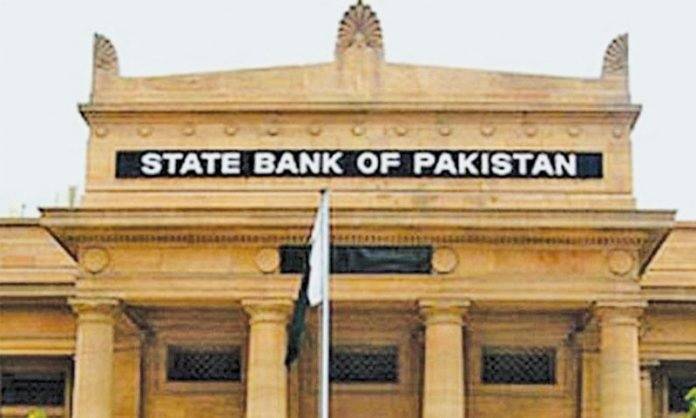
The State Bank of Pakistan has released its “State of Pakistan’s Economy, Half-Year Report FY26,” stating that Pakistan’s macroeconomic stability strengthened further during the first half of FY26 despite global trade-related uncertainty and domestic floods.

According to the report, the ongoing Middle East war poses significant risks to Pakistan’s macroeconomic outlook due to heightened uncertainty, with possible disruptions in supply chains likely to impact inflation, external trade, remittance flows and overall economic activity.

The report highlighted that key economic indicators improved significantly during H1-FY26. Average National CPI inflation eased further, while SBP’s foreign exchange purchases and net financial inflows helped strengthen external buffers. These outcomes were supported by prudent monetary and fiscal policies, ongoing structural reforms, favorable commodity prices and the IMF program.

The SBP stated that it maintained a cautious monetary policy stance with an adequately positive real interest rate on a forward-looking basis, while the fiscal balance posted a surplus in H1-FY26. The improved macroeconomic stability also supported growth momentum in the economy.

According to the report, real GDP growth in H1-FY26 doubled compared to the same period last year, mainly due to a pickup in industrial activity, followed by the services and agriculture sectors. Increased economic activity also led to a volume-driven rise in imports during the period.

However, the report noted that a sharp decline in rice exports reduced export earnings, though steadily increasing workers’ remittances continued to finance a major portion of deficits in trade, services and primary income balance, helping keep the current account deficit at moderate levels.

The report said prudent policies, improved external account conditions, exchange rate stability, lower international commodity prices and downward adjustments in electricity tariffs contributed to moderating inflation during H1-FY26. NCPI inflation averaged 5.2 percent during the period, nearly two percentage points lower than the same period last year.

The SBP further noted that a substantial reduction in interest payments and fiscal consolidation measures turned the fiscal balance into a surplus in H1-FY26 for the first time since FY02, while the primary surplus remained at last year’s level.

Despite improvements in overall economic conditions, the report stressed that Pakistan’s transition toward sustainable high growth and long-term macroeconomic stability requires deep-rooted reforms. It identified key structural challenges including low savings and investment, weak competitiveness, falling exports, subdued foreign direct investment and a persistently low tax-to-GDP ratio.

The report also included a special chapter titled “Climate Change and its Impact on Pakistan’s Economy,” highlighting that although Pakistan contributes very little to global greenhouse gas emissions, it is the 15th most affected country by climatic events and remains highly vulnerable to climate change with limited preparedness.

According to the report, Pakistan’s GDP emissions intensity remains relatively high due to structural inefficiencies and a carbon-intensive growth model, requiring substantial investments in climate mitigation and adaptation. However, these investments remain largely unmet because of low international climate inflows and financing challenges faced by both the public and private sectors.

Discussing the outlook for FY26, the SBP stated that high-frequency indicators including the Purchasing Managers’ Index, Large-Scale Manufacturing and construction activity suggested economic momentum continued through February 2026 before the Middle East war began affecting output during the remaining months of FY26.

The central bank projected real GDP growth close to the lower bound of its earlier forecast range of 3.75 to 4.75 percent for FY26. Despite higher commodity prices and continued economic activity, the current account deficit is now expected to remain close to the lower bound of the earlier projected range of 0 to 1 percent of GDP.

However, the SBP warned that rising international oil prices and their impact on other commodities are expected to keep NCPI inflation above the upper bound of the medium-term target range of 5 to 7 percent for most of FY27. The report also discussed broader macroeconomic risks to the medium-term outlook in case of a prolonged war in the Middle East.  


Source link

Related Posts

Economics

Classroom to cornfield | UDaily

May 14, 2026
Economics

Macroeconomic Leaders Warn of Significant Risks If Samsung Electronics Strikes, Urge Resolution Through Negotiation

May 14, 2026
Economics

On the Nature of the Chinese Economic System – Monthly Review

May 14, 2026
Economics

Investigating a “post-peak” Chinese economy

May 14, 2026
Economics

Worldwide Giving: Improving quality of life and economic well-being

May 13, 2026
Economics

Why the U.S. job market is so hard, especially for recent college graduates – The Washington Post

May 13, 2026
Add A Comment
Leave A Reply Cancel Reply

Editors Picks

AMFI March 2026 data: Flexi-cap funds lead equity category for 8th month | Here’s how they differ from multi-cap funds

May 14, 2026

AIMA celebrates as Cayman becomes alternative investment hub

May 14, 2026

ICT sector top recipient of foreign investments in first quarter

May 14, 2026

10 Best Altcoins Today: Unlock APEMARS With 1,390% ROI Potential

May 14, 2026
SUBSCRIBE TO OUR NEWSLETTER

Get our latest downloads and information first. Complete the form below to subscribe to our weekly newsletter.


I consent to being contacted via telephone and/or email and I consent to my data being stored in accordance with European GDPR regulations and agree to the terms of use and privacy policy.

Featured

FXAIX: How the Fidelity 500 Index Fund Fits in a Portfolio

May 7, 2026

How emerging technologies are enabling the human-machine hybrid economy – EY

May 12, 2026

Best banking & PSU mutual funds to invest in April 2026

May 3, 2026
Monthly Featured

Ludwig Straub Wins John Bates Clark Medal

April 9, 2026

Emerging markets’ strength is coming from within

April 9, 2026

Pilot in the spotlight: Florence Dallow finds silver lining after injury

April 28, 2026
Latest Posts

AMFI March 2026 data: Flexi-cap funds lead equity category for 8th month | Here’s how they differ from multi-cap funds

May 14, 2026

AIMA celebrates as Cayman becomes alternative investment hub

May 14, 2026

ICT sector top recipient of foreign investments in first quarter

May 14, 2026
SUBSCRIBE TO OUR NEWSLETTER

Get our latest downloads and information first. Complete the form below to subscribe to our weekly newsletter.


I consent to being contacted via telephone and/or email and I consent to my data being stored in accordance with European GDPR regulations and agree to the terms of use and privacy policy.

© 2026 Aspire Market Guides.
  • Contact us
  • Privacy Policy
  • Terms and Conditions

Type above and press Enter to search. Press Esc to cancel.

SUBSCRIBE TO OUR NEWSLETTER

Get our latest downloads and information first.

Complete the form below to subscribe to our weekly newsletter.


I consent to being contacted via telephone and/or email and I consent to my data being stored in accordance with European GDPR regulations and agree to the terms of use and privacy policy.