
Close Menu
Aspire Market Guides
  • Home
  • Alternative Investments
  • Cryptocurrency
  • Economics
  • Equity Investments
  • Mutual Funds
  • Real Estate
  • Trading
What's Hot

What are NFTs and do non-fungible tokens still matter in 2026?

September 3, 2026

Tinubu welcomes 4.43% GDP growth, assures of stronger microeconomic performance

September 3, 2026

Stablecoins Could Become Cash Equivalents Under FASB’s New

September 3, 2026
Facebook X (Twitter) Instagram
Trending:
  • What are NFTs and do non-fungible tokens still matter in 2026?
  • Tinubu welcomes 4.43% GDP growth, assures of stronger microeconomic performance
  • Stablecoins Could Become Cash Equivalents Under FASB’s New
  • Bitcoin shows safe-haven traits amid rising US Treasury yields and Fed liquidity moves. – Pluang
  • Online bond platforms see sharp growth as retail investors warm up to corporate debt amid muted equity… – Moneycontrol.com
  • German Industrial Policy | American Enterprise Institute
  • XRP tops questions from 400 wealth managers, si… – Pluang
  • Hana Bank Launches “Real Estate Value-Up Platform” to Provide Solutions for Property Development and Utilization
  • Macroeconomic management | Editorial Comment
  • Bank of Korea warns stablecoin market opening could sway Korea’s forex – CHOSUNBIZ – Chosunbiz
Thursday, September 3
Facebook X (Twitter) Instagram
Aspire Market Guides
  • Home
  • Alternative Investments
  • Cryptocurrency
  • Economics
  • Equity Investments
  • Mutual Funds
  • Real Estate
  • Trading
Aspire Market Guides
Home»Economics»Mixed economic outlook – The HinduBusinessLine
Economics

Mixed economic outlook – The HinduBusinessLine

By CharlotteApril 17, 20264 Mins Read
Share
Facebook Twitter Pinterest Email Copy Link


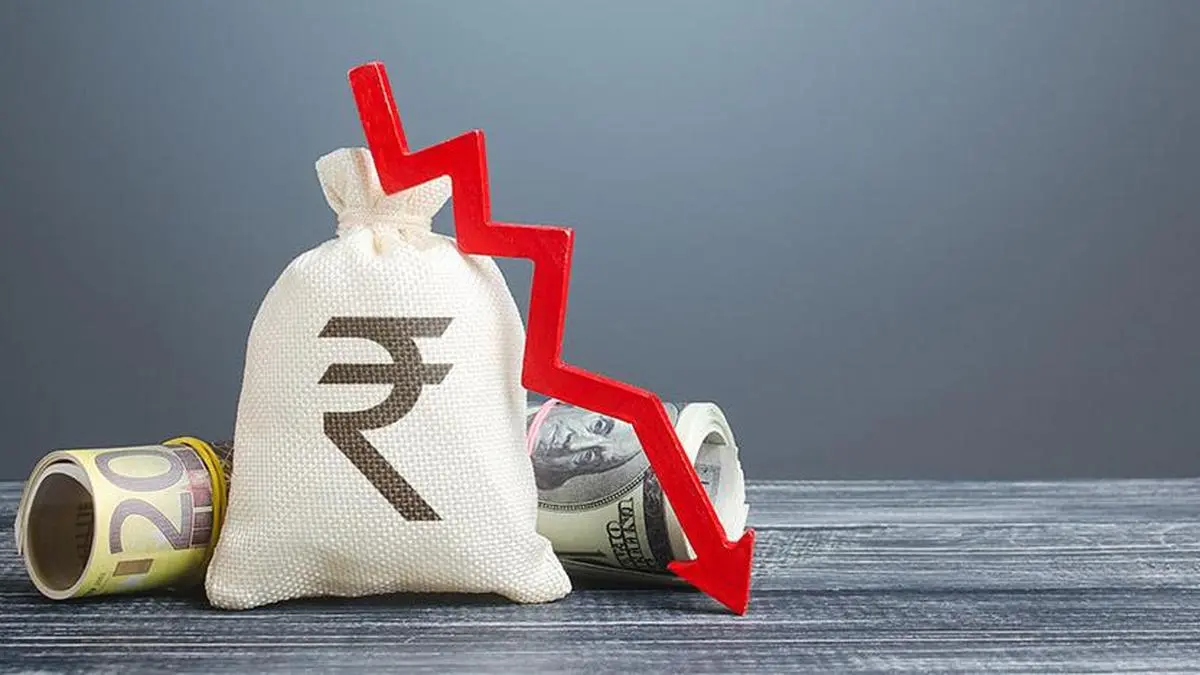
Falling rupee: A cause for concern

Falling rupee: A cause for concern
| Photo Credit:
Andrii Yalanskyi

As India steps into 2026, the macroeconomic picture appears, at first glance, remarkably encouraging. Economic growth remains strong, with GDP expansion projected at over 7 per cent for FY26 and a healthy 6.5-7 per cent for FY27. Inflation is largely under control, interest rates remain reasonable, and the banking sector is in its strongest shape in over a decade, supported by low non-performing assets and robust corporate credit quality.

Add to this a steadily declining fiscal deficit, a stabilising public debt profile, political continuity, and an increasing emphasis on structural reforms, and the narrative seems overwhelmingly positive.

Yet there are emerging challenges that warrant closer attention.

One concerning trend is the weakening of the Indian rupee, not only against the US dollar but also more sharply against other major currencies. Over the past year, the rupee has depreciated by over 15 per cent against the British pound and the Euro. This has occurred despite a relatively contained current account deficit, indicating that the pressure is not driven by trade imbalances but by capital flows.

Falling FDI

Foreign investment trends paint a sobering picture. Foreign portfolio investors recorded net outflows of nearly $18 billion in 2025, while net foreign direct investment has fallen sharply over the past four years — from $44 billion in FY22 to $28 billion in FY23, $10 billion in FY24, and barely $0.5 billion in FY25.

The pressing question is whether this represents a temporary market phenomenon or a deeper structural issue.

Evidence increasingly points toward the latter. Globally, long-term capital is being redirected toward developed economies, especially the US. Europe and Japan, too, are prioritising domestic investment in response to geopolitical uncertainty, reshoring trends, and strategic industrial policies. For emerging markets like India, this means heightened competition for global capital at precisely the moment when large-scale foreign investment is needed to sustain manufacturing growth and technological upgradation.

At the same time, global trade dynamics are shifting unfavourably. The tariff war of the last year has hardened into economic nationalism. Till just about a year ago, there was optimism that India would secure a favourable trade arrangement with the US and position itself as a major beneficiary of the “China+1” strategy. But now in 2026, this outlook has dimmed considerably. Rather than gaining export market share, India now faces the risk of losing competitiveness as trade barriers rise and supply chains become more regionally concentrated.

Protectionist tilt

Domestically, policy responses also suggest a tilt toward protectionism. Higher import tariffs on sectors such as steel and chemicals are intended to shield local producers from low-cost Chinese imports. While such measures may offer short-term relief to domestic industries, they also risk reducing competitiveness and limiting India’s integration into global value chains. The positive impact of the multiple Free Trade Agreements (FTAs), that India is signing is yet to be seen.

The broader concern is that India may be drifting toward a version of self-reliance that prioritises insulation over integration. ‘Atmanirbharta’, if pursued without a strong export strategy and global market access, risks becoming inward-looking. Economic history shows that large, fast-growing economies do not achieve prosperity by turning away from trade and foreign capital but by leveraging them to scale domestic capabilities.

India’s growth hinges not only on strong domestic fundamentals but also on its ability to attract long-term investment and compete effectively in global markets. While India’s growth story remains intact for now, the warning signs — weak capital inflows, currency pressures, and rising trade barriers — call for a careful recalibration of economic strategy.

The writer is Chief Rating Officer & ED at CareEdge Ratings. Views are personal

Published on January 21, 2026


Source link

Related Posts

Economics

Tinubu welcomes 4.43% GDP growth, assures of stronger microeconomic performance

September 3, 2026
Economics

German Industrial Policy | American Enterprise Institute

September 3, 2026
Economics

Macroeconomic management | Editorial Comment

September 3, 2026
Economics

Data Centers Rarely Reuse Cooling Water Due to Economic Trade-offs, ETDatacenters

September 3, 2026
Economics

Retail spending hits brakes following H12026 economic impacts: Deloitte

September 3, 2026
Economics

An unfair, unnecessary & counterproductive rate hike that exposes NZ’s broken economic model

September 2, 2026
Add A Comment
Leave A Reply Cancel Reply

Editors Picks

What are NFTs and do non-fungible tokens still matter in 2026?

September 3, 2026

Tinubu welcomes 4.43% GDP growth, assures of stronger microeconomic performance

September 3, 2026

Stablecoins Could Become Cash Equivalents Under FASB’s New

September 3, 2026

Bitcoin shows safe-haven traits amid rising US Treasury yields and Fed liquidity moves. – Pluang

September 3, 2026
SUBSCRIBE TO OUR NEWSLETTER

Get our latest downloads and information first. Complete the form below to subscribe to our weekly newsletter.


I consent to being contacted via telephone and/or email and I consent to my data being stored in accordance with European GDPR regulations and agree to the terms of use and privacy policy.

Featured

CleanPeak Energy to Acquire Sustainable Energy Infrastructure

April 17, 2026

Aya Gold & Silver: Growth Remains On Track Despite The Pullback (NASDAQ:AYA)

June 28, 2026

Major housebuilder cuts land buying plans amid global uncertainty

April 16, 2026
Monthly Featured

Online forum Reddit will join the influential and closely tracked S&P 500 index | Business

August 15, 2026

Stock Market Holiday For Ambedkar Jayanti 2026: NSE, BSE And MCX Open Or Closed On April 14?

April 14, 2026

Cayman registers nine tokenised investment funds as tokenisation of real-world assets increases

April 29, 2026
Latest Posts

What are NFTs and do non-fungible tokens still matter in 2026?

September 3, 2026

Tinubu welcomes 4.43% GDP growth, assures of stronger microeconomic performance

September 3, 2026

Stablecoins Could Become Cash Equivalents Under FASB’s New

September 3, 2026
SUBSCRIBE TO OUR NEWSLETTER

Get our latest downloads and information first. Complete the form below to subscribe to our weekly newsletter.


I consent to being contacted via telephone and/or email and I consent to my data being stored in accordance with European GDPR regulations and agree to the terms of use and privacy policy.

© 2026 Aspire Market Guides.
  • Contact us
  • Privacy Policy
  • Terms and Conditions

Type above and press Enter to search. Press Esc to cancel.

SUBSCRIBE TO OUR NEWSLETTER

Get our latest downloads and information first.

Complete the form below to subscribe to our weekly newsletter.


I consent to being contacted via telephone and/or email and I consent to my data being stored in accordance with European GDPR regulations and agree to the terms of use and privacy policy.