
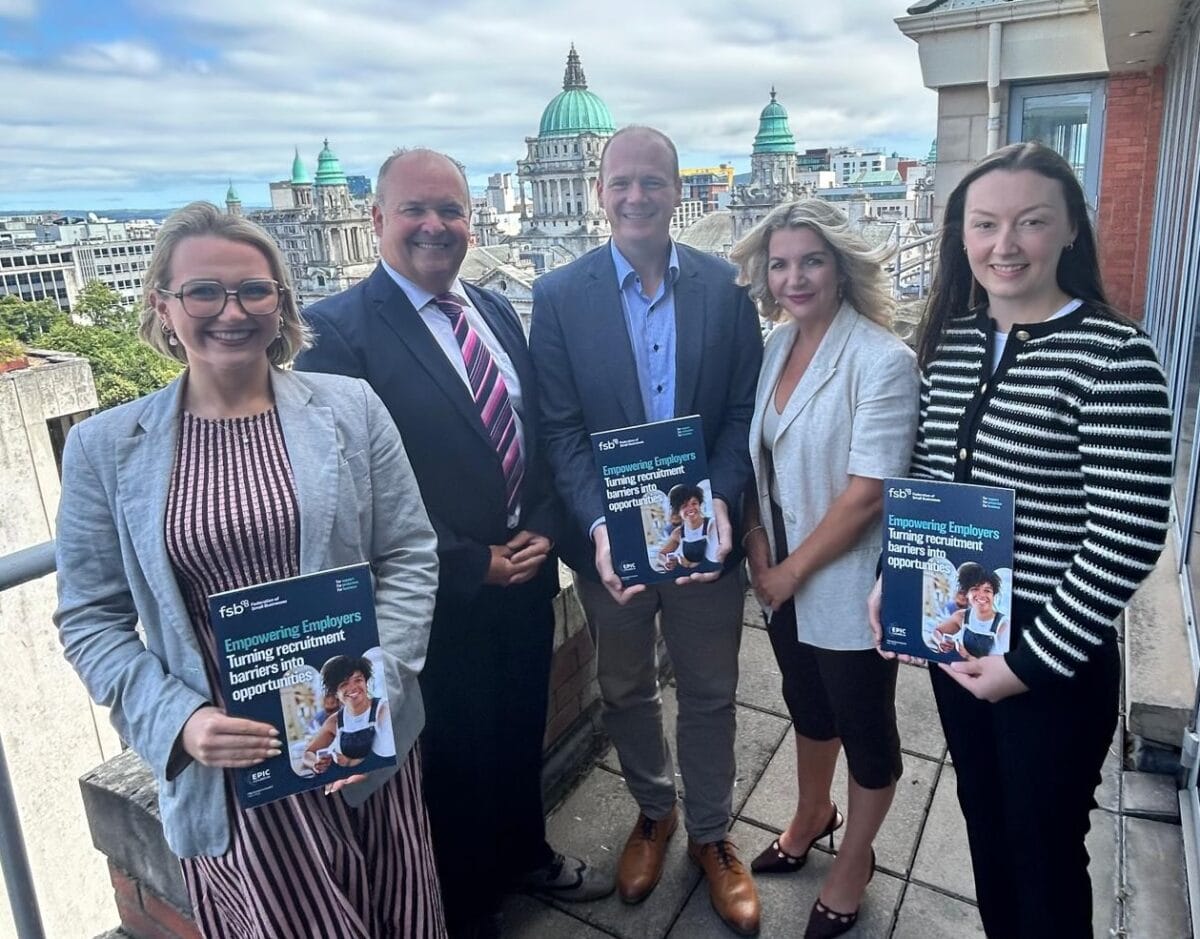
Economic inactivity rates remain stubbornly high across the UK, but they are particularly concerning in Northern Ireland. But a major research report – ‘Empowering Employers – Turning Recruitment Barriers into Opportunities’ – carried out by the Federation of Small Businesses in association with Ulster University through EPIC Futures NI, a Local Policy Innovation Partnership funded by UK Research and Innovation (UKRI), has identified a range of measures that could be implemented to help small businesses to provide employment opportunities for people who are out of work.
Small businesses across Northern Ireland are currently being held back by labour shortages and recruitment difficulties, yet many employers are willing to recruit people who are currently outside the workforce. The Report sets out a range of measures that would reduce the barriers and allow small businesses to play a key role in helping address economic inactivity.
The findings have been welcomed by Communities Minister Gordon Lyons who is currently leading a £16 million Pathways to Work and Wellbeing Transformation Project aimed at helping more people to find and sustain employment.
Minister Lyons, said:
“Economic inactivity is one of the biggest challenges we face in Northern Ireland. We have the highest rates in the UK with over a quarter of working-age people, around 319,000, not in a job.
“I am committed to doing all I can to turn this around. I welcome this in-depth report from FSB which provides invaluable insight into the issues that employers face and the supports required to respond to changing workforce needs.
“Our shared ambition must be to see more people in good work and thriving, supporting both individuals and employers to deliver upon their potential.”
The Report examines how SMEs can play a greater role in tackling economic inactivity while helping address their own workforce challenges, noting that almost half (48%) of businesses surveyed have never recruited someone from an economically inactive group.
The report concludes that while employers recognise the value and potential of widening participation in the labour market, many face practical barriers including cost pressures, limited internal resources and uncertainty about the available support.
To help businesses overcome these challenges, FSB NI has made a series of recommendations, including calling for:
- A single “one-stop shop” providing employers with access to all relevant schemes, programmes and guidance;
- A coordinated cross-departmental approach to addressing economic inactivity, and;
- The integration of HR support, training and advisory services into economic inactivity programmes.
Alan Lowry, Chair of FSB Northern Ireland, said:
“This Report offers a timely and detailed picture of the barriers and opportunities surrounding the recruitment of economically inactive individuals. While small firms recognise the value of widening participation, too many face obstacles that prevent them from doing so.
“Costs, capacity and confidence are major factors, compounded by fragmented support systems and wider structural challenges such as childcare, transport and health.
“The encouraging message from this report is that employers want to be part of the solution. With the right incentives, better information and stronger coordination across government, Northern Ireland’s SMEs can help unlock this untapped talent pool, grow their businesses and support more people to re-enter and thrive in work.”
Professor Kristel Miller, Director of EPIC Futures NI at Ulster University, said:
“While the Northern Ireland economy is growing, persistently high levels of economic inactivity remain a significant challenge, and the recruitment and skills pressures experienced by businesses can often be under-recognised.
“By funding this research and working collaboratively with FSB, EPIC Futures NI has helped bring employers’ voices to the fore. The findings show that many SMEs want to create opportunities for people facing barriers to entering or returning to the labour market but need clearer, more accessible support to do so.
“This research reflects the core purpose of our Local Policy Innovation Partnership. Robust, locally grounded evidence is essential to inform more coordinated and effective policies and support that respond to the needs of employers, individuals and communities.”