
South Africa’s new energy vehicle market is moving beyond its early adoption phase, with sales rising 88% year-on-year in the first seven months of 2026, but the next stage of growth is likely to depend less on whether consumers can access an electric or hybrid vehicle and more on whether they trust its long-term economics. According to data from the Automotive Business Council, naamsa, 16,289 new energy vehicles were sold between January and July, already equivalent to 97.5% of all NEVs sold during 2025 and above the 15,596 units recorded in 2024.
The figures point to a market that is expanding across several technologies rather than moving immediately towards battery-electric vehicles alone. Of the 16,289 NEVs sold in the first seven months of the year, 8,078 were conventional hybrids, 5,851 were plug-in hybrids and 2,360 were battery-electric vehicles. Battery-electric sales were the smallest category but recorded particularly rapid growth, while plug-in hybrids also increased sharply.
That mix matters for South Africa because the country’s transition is taking place within a vehicle market where affordability, fuel costs, electricity reliability and access to charging infrastructure all influence purchasing decisions. The emerging pattern suggests consumers are not necessarily choosing between an internal-combustion engine and a fully electric vehicle in a binary way. Instead, hybrids and plug-in hybrids are providing intermediate options for households and businesses seeking lower fuel consumption without completely changing how they use their vehicles.

Investec Sustainable Solutions Technical Advisor De Wet Taljaard argues that the industry’s next challenge is therefore increasingly about assurance: whether consumers understand the full cost of owning and operating an NEV rather than focusing only on the purchase price. That calculation includes electricity or fuel expenditure, financing, maintenance, battery performance, insurance, charging infrastructure and the eventual resale value of the vehicle. For South African buyers, these variables can materially change the economics of a vehicle over several years.
The shift is already visible in financing. Investec says NEV adoption within its vehicle-finance business increased 51% year-on-year in July 2026, with growth in NEV lending continuing to outpace the overall vehicle asset-finance portfolio. At the same time, more than half of battery-electric vehicles sold in 2026 were priced below R500,000, while the average price of plug-in hybrids had fallen below R1 million, according to Investec’s assessment of the market.
The importance of running costs becomes clearer when South Africa’s wider energy transition is considered. The country has spent years increasing household and commercial investment in solar power, partly because electricity reliability and energy costs have altered how consumers value distributed generation. The same household that generates electricity through rooftop solar and stores it in a battery can potentially use that infrastructure to charge an electric vehicle.
This creates a different way of thinking about vehicle ownership. Instead of treating transport and household energy as separate expenses, an electric vehicle can become part of a broader household energy system. The financial calculation then involves the cost of generating or purchasing electricity, the vehicle’s efficiency, the kilometres travelled and the opportunity to charge when electricity is cheapest or when solar generation is available.
The model is particularly relevant to South Africa because the country has developed a substantial distributed solar market. Investec has previously highlighted the rapid expansion of private solar generation as households and businesses responded to energy-security concerns. The combination of solar, battery storage and electric mobility could therefore create a domestic market in which energy resilience and transport costs are assessed together rather than independently.
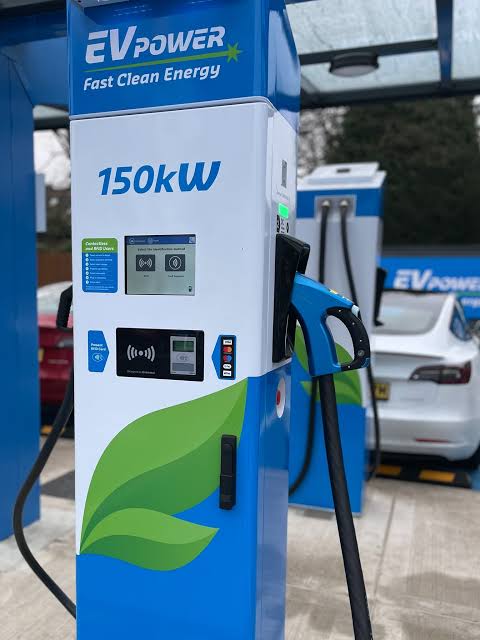
Charging infrastructure, however, remains a critical part of the equation. South Africa currently has more than 550 public charging stations, with about 30% classified as DC fast-charging stations, according to industry figures cited by Investec. Private charging installations add to that network, particularly among households and businesses with solar and battery systems.
The expansion of fast charging could become increasingly important as the market moves beyond early adopters and towards drivers who need predictable long-distance mobility. For urban commuters with home charging, the infrastructure challenge is different from that faced by commercial fleets or motorists travelling between major cities. Fleet operators also require charging systems that can support vehicle utilisation without creating significant downtime.
That makes the development of charging infrastructure an economic issue as much as a transport issue. Investment will need to follow where vehicles are actually being used, while grid connections, land availability, electricity tariffs, maintenance skills and equipment standards will influence the commercial viability of charging networks. South Africa’s automotive transition also has implications far beyond consumer transport. The automotive sector is one of the country’s most important manufacturing industries and a major source of exports. The Department of Trade, Industry and Competition has warned that the shift towards NEVs could affect South Africa’s competitiveness in major export markets, particularly as Europe and the United Kingdom move towards tighter emissions standards.
Government has consequently been developing incentives intended to keep the domestic automotive industry relevant during the transition. The country’s Automotive Production and Development Programme has been adapted to support the production of electric vehicles and their components, while a new investment allowance for qualifying electric and hydrogen vehicle manufacturing took effect from March 2026.
The policy direction reflects a broader industrial question: whether South Africa will primarily become a market for imported electric vehicles or use the transition to strengthen domestic manufacturing, component production, skills and technology development. The stakes are substantial. The automotive industry contributed 5.2% of South Africa’s GDP and 22.6% of manufacturing output in 2024, according to the Department of Trade, Industry and Competition. Vehicle and component exports were valued at R268.8 billion, while the sector supported hundreds of thousands of jobs directly and across its broader value chain.
The country’s automotive transition therefore cannot be separated from industrial policy. If domestic demand for NEVs grows while local production and component manufacturing remain limited, much of the economic value associated with the transition could accrue outside South Africa. Conversely, successful localisation could create new opportunities in battery systems, electronics, software, charging equipment, vehicle assembly, maintenance and recycling.
The emergence of a used NEV market could be another decisive factor. South Africa has a strong pre-owned vehicle market, meaning mainstream adoption is unlikely to depend exclusively on new-car buyers. As more NEVs enter the market, three- to five-year-old vehicles could eventually provide a lower-cost entry point for consumers who cannot afford new models. But that market will depend heavily on confidence in battery health and residual values. Consumers buying a used electric vehicle need reliable information about battery condition, remaining warranty coverage, servicing history and expected replacement costs. Financial institutions will also need to assess how these factors affect collateral values and lending risk.
Battery degradation is consequently becoming a financial question as much as a technical one. Better testing and certification could make it easier for lenders, dealerships and consumers to value used electric vehicles. Without such systems, uncertainty around battery condition could increase financing costs or depress resale values, weakening one of the central arguments for lower total ownership costs.
The international market suggests that the transition is no longer confined to wealthy early-adopter economies. The International Energy Agency reported that global electric-car sales exceeded 20 million in 2025, up 20% from the previous year, meaning roughly one in four new cars sold worldwide was electric. The agency expects global electric-car sales to reach about 23 million in 2026.
China’s role is particularly important for African markets because Chinese manufacturers have become major suppliers of electric vehicles globally. The IEA estimates that Chinese manufacturers accounted for more than half of global electric-car sales in 2025, while China produced about 16 million electric cars, significantly more than domestic demand. For South Africa, increased availability of competitively priced models could accelerate consumer choice, but it also reinforces the need for industrial policy. The country must balance consumer access to lower-cost vehicles with the strategic objective of maintaining a competitive domestic automotive manufacturing base. Naamsa’s recent leadership transition comes at a significant moment in that debate. Dr Mncane Mthunzi took over as CEO of the Automotive Business Council on September 7, 2026, as the organisation said the industry was facing fundamental changes in technology, global trade, investment and automotive supply chains.

The broader African implications are also becoming clearer. South Africa remains the continent’s most established automotive manufacturing hub, meaning developments in its NEV market could influence supplier networks, skills development and vehicle markets elsewhere in Africa. The African Continental Free Trade Area could potentially increase the importance of regional value chains if countries can coordinate standards, charging infrastructure and component manufacturing. For consumers, however, the immediate question is simpler. An electric or hybrid vehicle must make financial sense over the years it is owned. The monthly instalment alone cannot answer that question. Fuel or electricity costs, maintenance, financing, charging availability, battery performance and resale value all determine the real cost of mobility.
South Africa’s 2026 sales figures indicate that consumers are already becoming more willing to test those economics. The next phase of the market will depend on whether manufacturers, financial institutions, policymakers and infrastructure providers can give buyers enough certainty to make electrified mobility a mainstream financial decision rather than simply a technology choice.
That distinction could determine how far South Africa’s NEV market travels. The country’s experience with solar power shows that consumers can change purchasing behaviour when new technology becomes connected to a practical economic problem. Electric mobility may follow a similar path, but its success will depend on whether the country can build confidence not only in the vehicles themselves, but in the financial, energy and industrial systems surrounding them.
Was this article helpful?