
Close Menu
Aspire Market Guides
  • Home
  • Alternative Investments
  • Cryptocurrency
  • Economics
  • Equity Investments
  • Mutual Funds
  • Real Estate
  • Trading
What's Hot

Trump Invested in Intel And it Soared 500%. Here’s the Next Industry the Government is Buying.

August 7, 2026

Argentines pray that Pope Leo’s visit alleviates their economic stress

August 7, 2026

The strategic role of stablecoins and tokenization for Canadian institutions

August 7, 2026
Facebook X (Twitter) Instagram
Trending:
  • Trump Invested in Intel And it Soared 500%. Here’s the Next Industry the Government is Buying.
  • Argentines pray that Pope Leo’s visit alleviates their economic stress
  • The strategic role of stablecoins and tokenization for Canadian institutions
  • Money Markets Pay 3.8% and Inflation Is 4.2%. This Monthly Payer Gets You to 5%
  • 12 Industrials Stocks Moving In Friday's Intraday Session – Benzinga
  • How Bitcoin, stablecoins and NFTs will be taxed in Nigeria
  • Douglas Elliman highlights ‘financial strength’ as revenue rebounds
  • Bitcoin Faces Pressure From Growing Stagflation Fears
  • Bitcoin On-Chain Activity Hits 2025 Levels Following Coldcard Chaos
  • To identify true sources of employment and income risk, ask workers
Friday, August 7
Facebook X (Twitter) Instagram
Aspire Market Guides
  • Home
  • Alternative Investments
  • Cryptocurrency
  • Economics
  • Equity Investments
  • Mutual Funds
  • Real Estate
  • Trading
Aspire Market Guides
Home»Economics»Why global agricultural macroeconomic frameworks fail without ‘farmer health capital’
Economics

Why global agricultural macroeconomic frameworks fail without ‘farmer health capital’

By CharlotteJuly 18, 20263 Mins Read
Share
Facebook Twitter Pinterest Email Copy Link


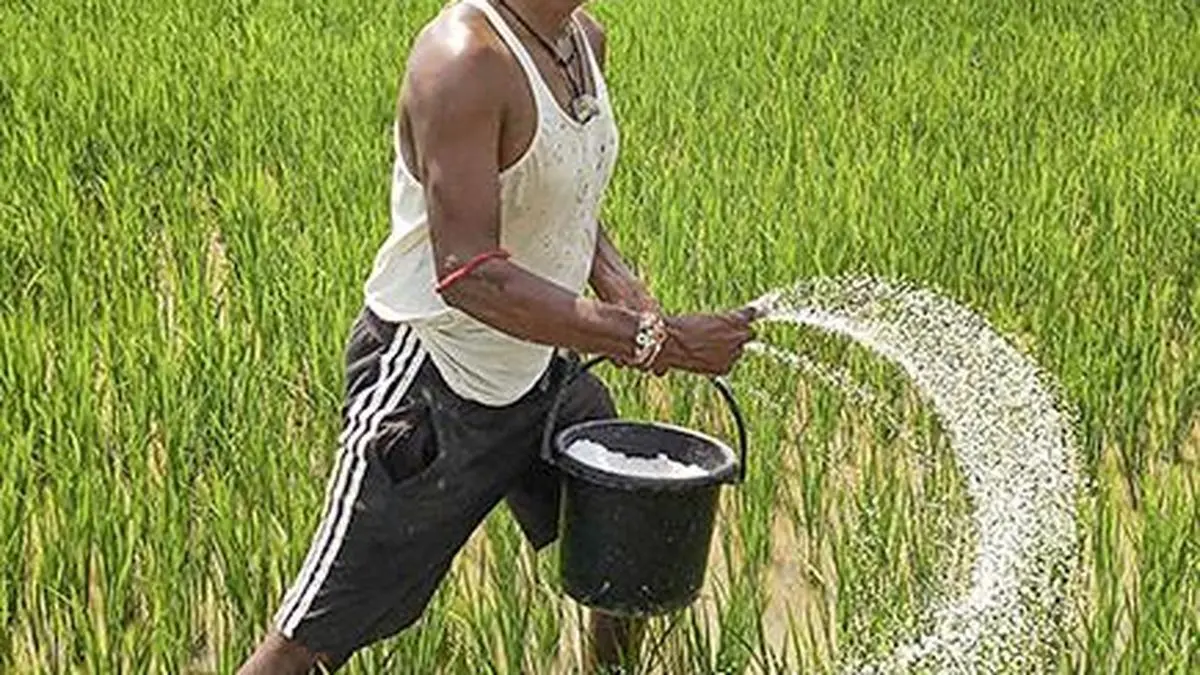
A persistent structural friction impedes global agricultural reform: the language of the smallholder cultivator does not align with the language of the macroeconomic planner. For over 500 million smallholder families worldwide—from the corn fields of sub-Saharan Africa to the rain-fed tracts of South Asia—economic shock is a visceral, daily reality measured in volatile commodity markets, climate-driven crop failures, and high-interest informal credit.

Conversely, inside multilateral development banks, international climate bodies, and national planning commissions, policy formulation demands empirical validation, econometric modeling, and structural scalability. Without a rigorous translation mechanism, localized agrarian distress remains statistically invisible, leading to top-down policy interventions that disconnect from reality upon execution.

Repositioning the human variable

In traditional public accounting, rural healthcare and agricultural productivity are treated as entirely distinct sectoral budgets. Healthcare is conventionally categorized as a passive social welfare cost, while agricultural output is modeled strictly as a function of physical inputs like land, seed, technology, and fertilizer. When a smallholder faces a health crisis, the resulting labor deficit and asset liquidation are treated as isolated personal misfortunes.

Modern agro-economic research restructures this framework by introducing the concept of Farmer Health Capital (FHC). By defining the physical and mental well-being of the cultivator as critical economic infrastructure, current models demonstrate that labor productivity is not a fixed constant. Output must be evaluated through a health-adjusted production function: Y = f(Capital, Technology, Land, Labor × Health Asset).

When occupational strain, extreme heat stress, or delayed healthcare devalues a farmer’s physical capacity, the efficiency of the entire agricultural value chain drops. Conversely, when processing cooperatives, private agritech companies, or state grids invest upfront in farm-gate wellness, the resulting productivity gains expand output volume and lower unit production costs. This conversion transforms rural healthcare from an uncompensated state liability into a high-yielding agricultural asset investment vital to protecting national food security and stabilizing international food supply chains.

Monetising the soil: Connecting smallholders to carbon markets

A parallel translation is required to resolve the deadlock in global climate policy. For a smallholder operating on immediate subsistence timelines, transitioning from intensive monoculture to sustainable agroforestry offers no short-term liquidity. Mandating that impoverished cultivators plant native trees for the global climate, without providing immediate financial offsets, fails to meet immediate operational expenses.

This bottleneck can be resolved through natural resource and forest accounting. By developing scalable metrics that quantify the exact volume of carbon sequestered by multi-layer food forests, ecological preservation can be translated into a verifiable asset class. Aggregating these small-scale plots through Farmer Producer Organisations (FPOs) allows global climate funds and voluntary carbon markets to interface directly with smallholders. By transforming environmental sustainability into a structured, de-risked secondary cash flow via digital carbon-credit payouts, macroeconomic climate objectives align directly with microeconomic survival strategies.

Operationalising the paradigm: A framework for global action

To bridge the chasm between the mud and the spreadsheet, global institutions must move from theory to execution through three targeted interventions:

1. Integrated credit-health instruments: Multilateral development banks should restructure agricultural credit lines to include mandatory, low-cost health insurance and micro-wellness vouchers, ensuring a medical shock does not liquidate agricultural capital.

2. Institutional carbon aggregation: National planning bodies must fund the digital infrastructure required for FPOs to aggregate smallholder carbon data, lowering transaction costs and making voluntary carbon markets accessible to individual smallholders.

3. Farm-gate infrastructure investment: Public-private partnerships should pivot infrastructure spending from purely physical logistics (roads and silos) to human logistics, deploying decentralised, mobile healthcare units to minimize labour days lost during critical sowing and harvest cycles.

The author is an agriculture economist and member of Maharashtra Agriculture Price Commission.

Published on July 18, 2026


Source link

Related Posts

Economics

Argentines pray that Pope Leo’s visit alleviates their economic stress

August 7, 2026
Economics

Bitcoin Faces Pressure From Growing Stagflation Fears

August 7, 2026
Economics

To identify true sources of employment and income risk, ask workers

August 7, 2026
Economics

Economic Update: Jobless growth, de-listings in the housing market and steady economic growth in Wilmington

August 7, 2026
Economics

Mixed Economic Conditions Shape a Stable Start To 2026 For U.S. Recreational Boating Industry

August 7, 2026
Economics

Fake economists to be busted: New law to catch chancers posing as money experts on Malawi telly and radio – Malawi News | Breaking News, Politics, Business & Sports

August 7, 2026
Add A Comment
Leave A Reply Cancel Reply

Editors Picks

Trump Invested in Intel And it Soared 500%. Here’s the Next Industry the Government is Buying.

August 7, 2026

Argentines pray that Pope Leo’s visit alleviates their economic stress

August 7, 2026

The strategic role of stablecoins and tokenization for Canadian institutions

August 7, 2026

Money Markets Pay 3.8% and Inflation Is 4.2%. This Monthly Payer Gets You to 5%

August 7, 2026
SUBSCRIBE TO OUR NEWSLETTER

Get our latest downloads and information first. Complete the form below to subscribe to our weekly newsletter.


I consent to being contacted via telephone and/or email and I consent to my data being stored in accordance with European GDPR regulations and agree to the terms of use and privacy policy.

Featured

Live updates: Strategy buys 520 more bitcoin and raises reserves to $1.4 billion

June 22, 2026

Sligo’s Lucie Cawley wins European Silver in Italy

July 18, 2026

Gold, equity or debt? Check how fund managers of top multi-asset funds are taking different calls – Moneycontrol.com

June 3, 2026
Monthly Featured

China Achieves Major Breakthroughs in Aerospace, Clean Energy, and Infrastructure – Pandaily

June 6, 2026

Maronan Metals Outlines Scalable Potential of Maronan Silver Project in Investor Briefing

May 7, 2026

Evacuations ordered for Eureka, Mammoth and Silver City due to wildfires | News, Sports, Jobs

June 27, 2026
Latest Posts

Trump Invested in Intel And it Soared 500%. Here’s the Next Industry the Government is Buying.

August 7, 2026

Argentines pray that Pope Leo’s visit alleviates their economic stress

August 7, 2026

The strategic role of stablecoins and tokenization for Canadian institutions

August 7, 2026
SUBSCRIBE TO OUR NEWSLETTER

Get our latest downloads and information first. Complete the form below to subscribe to our weekly newsletter.


I consent to being contacted via telephone and/or email and I consent to my data being stored in accordance with European GDPR regulations and agree to the terms of use and privacy policy.

© 2026 Aspire Market Guides.
  • Contact us
  • Privacy Policy
  • Terms and Conditions

Type above and press Enter to search. Press Esc to cancel.

SUBSCRIBE TO OUR NEWSLETTER

Get our latest downloads and information first.

Complete the form below to subscribe to our weekly newsletter.


I consent to being contacted via telephone and/or email and I consent to my data being stored in accordance with European GDPR regulations and agree to the terms of use and privacy policy.