
Close Menu
Aspire Market Guides
  • Home
  • Alternative Investments
  • Cryptocurrency
  • Economics
  • Equity Investments
  • Mutual Funds
  • Real Estate
  • Trading
What's Hot

D-Wave’s $100M Government Stake: A Direct Equity Bet That Sent Shares Soaring but Leaves Revenue Q

May 25, 2026

Private Take: The future of statecraft

May 25, 2026

UVM MPA Program Hosts Talk on U.S. Foreign Policy in a Changing World Order

May 25, 2026
Facebook X (Twitter) Instagram
Trending:
  • D-Wave’s $100M Government Stake: A Direct Equity Bet That Sent Shares Soaring but Leaves Revenue Q
  • Private Take: The future of statecraft
  • UVM MPA Program Hosts Talk on U.S. Foreign Policy in a Changing World Order
  • ASUS Takes the Lead in Hybrid Agentic AI Infrastructure- Maximizing Performance While Reducing Inference Costs – Trending Now Infrastructure
  • The neoliberal in Nordic garb
  • Israeli windsurfers win gold, silver at Euro championships – Israel & Jewish News
  • Commercial property giant Charter Hall upgrades earnings, expects post-federal budget boost to $90b funds platform
  • EagleRock Land LLC (EROK) Cash Equivalents (Quarterly) – Zacks Investment Research
  • Silver Price Forecasts: XAG/USD eases below $78.00 but maintains a mild bullish stance
  • BOXX Saves High Earners $7,000 to $20,000 Annually in Taxes Versus Money Market Funds
Monday, May 25
Facebook X (Twitter) Instagram
Aspire Market Guides
  • Home
  • Alternative Investments
  • Cryptocurrency
  • Economics
  • Equity Investments
  • Mutual Funds
  • Real Estate
  • Trading
Aspire Market Guides
Home»Economics»Why Stocks Keep Going Up
Economics

Why Stocks Keep Going Up

By CharlotteMay 5, 20264 Mins Read
Share
Facebook Twitter Pinterest Email Copy Link


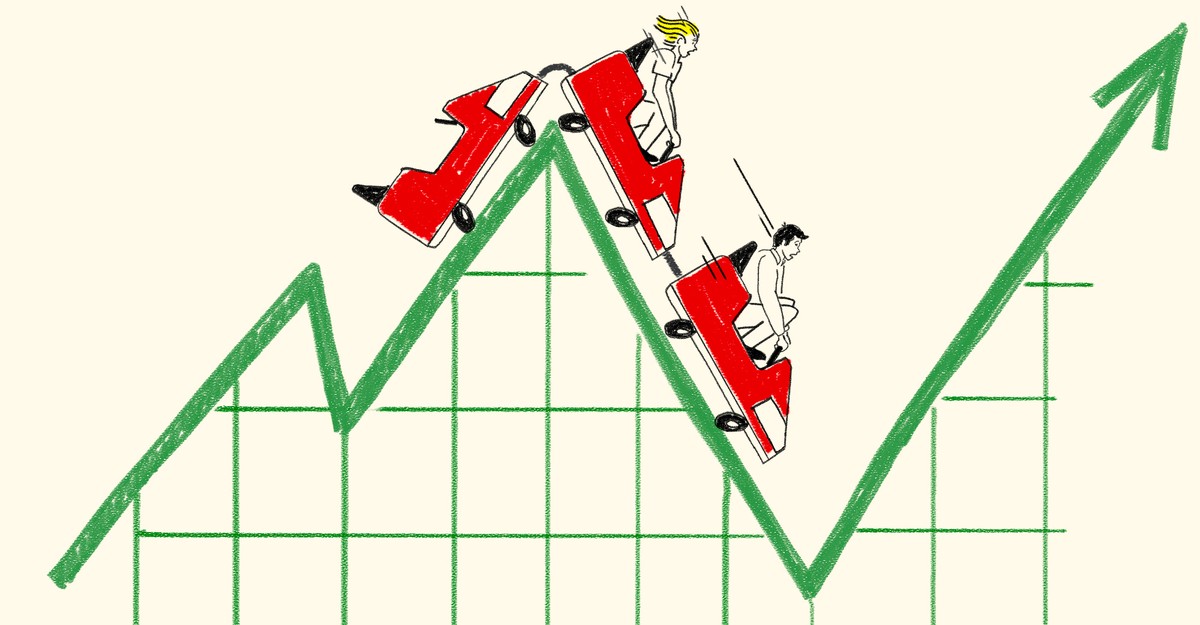
The military stalemate between the United States and Iran is crippling the flow of oil around the world. Gas prices are soaring. Inflation is back above 3 percent. Consumer confidence is tanking, and most Americans are pessimistic about the economy. Yet the S&P 500 has risen 29 percent over the past 12 months, and hit an all-time high last week. After a sell-off at the start of the war, stocks are up 13 percent in 30 days. Despite oil blockades and a threat to a whole civilization, investors have shrugged and kept buying. The stock market looks completely out of touch with reality.

But there is a logic at work: Stocks keep going up because corporate profits have continued to soar. If investors have learned to ignore President Trump’s chaos, it’s not because they’re oblivious to reality, but because this chaos has hardly dented corporate profits. Yes, there’s a disconnect between the stock market’s buoyancy and how ordinary Americans feel about the economy. But the stock market isn’t about the price of milk; it’s about how corporations are doing, and right now they are doing quite well.

Consider the so-called Magnificent Seven, the major tech companies with some of the most valuable stocks in the world, many of which reported record quarterly earnings last week. Alphabet is now on track to make more than $120 billion in profits this year alone. Nvidia is on pace to earn more than that, and has nearly doubled its profits from last year. Meta’s latest earnings rose 61 percent year over year. These companies will collectively make more than half a trillion dollars in profit this year.

Rogé Karma: So, about that AI bubble

This phenomenon goes beyond tech. Close to 80 percent of S&P 500 companies that have reported earnings so far have beaten expectations. The average profit margin for S&P 500 companies is now at its highest point in 15 years, continuing a trend that began post-pandemic. There are several possible reasons for this: Inflation and market consolidation have granted companies more pricing power, productivity has been rising (perhaps because of AI tools), and the AI build-out has fueled huge tech profits. But regardless of why it’s happening, future profits are an essential ingredient for stock valuations, so stocks are naturally rising, too.

This is not to say that today’s stock market makes complete sense. Two weeks ago, the former shoe company Allbirds announced that it was pivoting to artificial intelligence, and its stock septupled overnight. Since COVID began, retail investors have also gotten used to “buying the dip,” treating every sell-off as a clearance-sale opportunity, regardless of geopolitical turmoil.

But there’s plenty of evidence that investors are paying attention to the metrics that matter. Companies that report disappointing sales numbers or miss earnings expectations are being punished by the market. When Nike reported in late March that it expected revenues to drop, the stock fell by more than 15 percent in a day. Investors are also noting future threats to profitability, selling off stocks in software-as-service businesses that may soon be gouged by AI.

Listen: On the brink of global recession

There is some concern that the stock market’s price-to-earnings ratio—the amount investors pay for every dollar of corporate earnings—is high (albeit not near the levels we saw during the internet-stock bubble). But in general, investors seem to be sensibly accounting for the fact that corporate earnings are not just high, but growing at a sustainably fast clip. The question now is just how sensible that assumption will prove to be. The war’s high energy prices are hitting corporate bottom lines and taking about $4 billion a month out of the pockets of American consumers. If this continues into the summer, businesses should prepare for less consumer spending and weaker profits.

Investors are also wagering heavily on the AI boom, and the next year or so should reveal whether the valuations of various tech companies have been overinflated. Tech companies have been pouring money into building new data centers and AI chips, which could prove savvy if public demand for their products continues to grow, but will be a serious problem if AI fails to be as lucrative as everyone is promising.

For most investors, buoyed by years of growth, that is a concern for another day. Although many people, including Trump, understand the stock market as a measure of the economy’s health, the divide between what investors see and what most people feel is wide and growing.


Source link

Related Posts

Economics

UVM MPA Program Hosts Talk on U.S. Foreign Policy in a Changing World Order

May 25, 2026
Economics

The neoliberal in Nordic garb

May 25, 2026
Economics

2026 AI and Economics Summer Conference

May 25, 2026
Economics

Hormuz crisis: A defining macroeconomic challenge for India’s growth- The Week

May 25, 2026
Economics

Stock Market Investors Just Got Bad News About President Trump’s Economy

May 25, 2026
Economics

Differing views on macroeconomic stabilisation

May 24, 2026
Add A Comment
Leave A Reply Cancel Reply

Editors Picks

D-Wave’s $100M Government Stake: A Direct Equity Bet That Sent Shares Soaring but Leaves Revenue Q

May 25, 2026

Private Take: The future of statecraft

May 25, 2026

UVM MPA Program Hosts Talk on U.S. Foreign Policy in a Changing World Order

May 25, 2026

ASUS Takes the Lead in Hybrid Agentic AI Infrastructure- Maximizing Performance While Reducing Inference Costs – Trending Now Infrastructure

May 25, 2026
SUBSCRIBE TO OUR NEWSLETTER

Get our latest downloads and information first. Complete the form below to subscribe to our weekly newsletter.


I consent to being contacted via telephone and/or email and I consent to my data being stored in accordance with European GDPR regulations and agree to the terms of use and privacy policy.

Featured

The macroeconomic forces reshaping investor behaviour

April 23, 2026

Clearing Infrastructure Firm Lorum Seeks Trust Bank Charter

April 8, 2026

3 Vanguard Dividend Funds for Low-Cost Income

May 23, 2026
Monthly Featured

AMFI spends nearly 90% of investor awareness fund on digital media campaign

April 18, 2026

Hong Kong Grants First Stablecoin Licenses To Banking Institutions : Analysis

April 26, 2026

Harvard endowment chief earns $6.2 million for 2024 after posting stronger returns – Pensions & Investments

May 15, 2026
Latest Posts

D-Wave’s $100M Government Stake: A Direct Equity Bet That Sent Shares Soaring but Leaves Revenue Q

May 25, 2026

Private Take: The future of statecraft

May 25, 2026

UVM MPA Program Hosts Talk on U.S. Foreign Policy in a Changing World Order

May 25, 2026
SUBSCRIBE TO OUR NEWSLETTER

Get our latest downloads and information first. Complete the form below to subscribe to our weekly newsletter.


I consent to being contacted via telephone and/or email and I consent to my data being stored in accordance with European GDPR regulations and agree to the terms of use and privacy policy.

© 2026 Aspire Market Guides.
  • Contact us
  • Privacy Policy
  • Terms and Conditions

Type above and press Enter to search. Press Esc to cancel.

SUBSCRIBE TO OUR NEWSLETTER

Get our latest downloads and information first.

Complete the form below to subscribe to our weekly newsletter.


I consent to being contacted via telephone and/or email and I consent to my data being stored in accordance with European GDPR regulations and agree to the terms of use and privacy policy.