
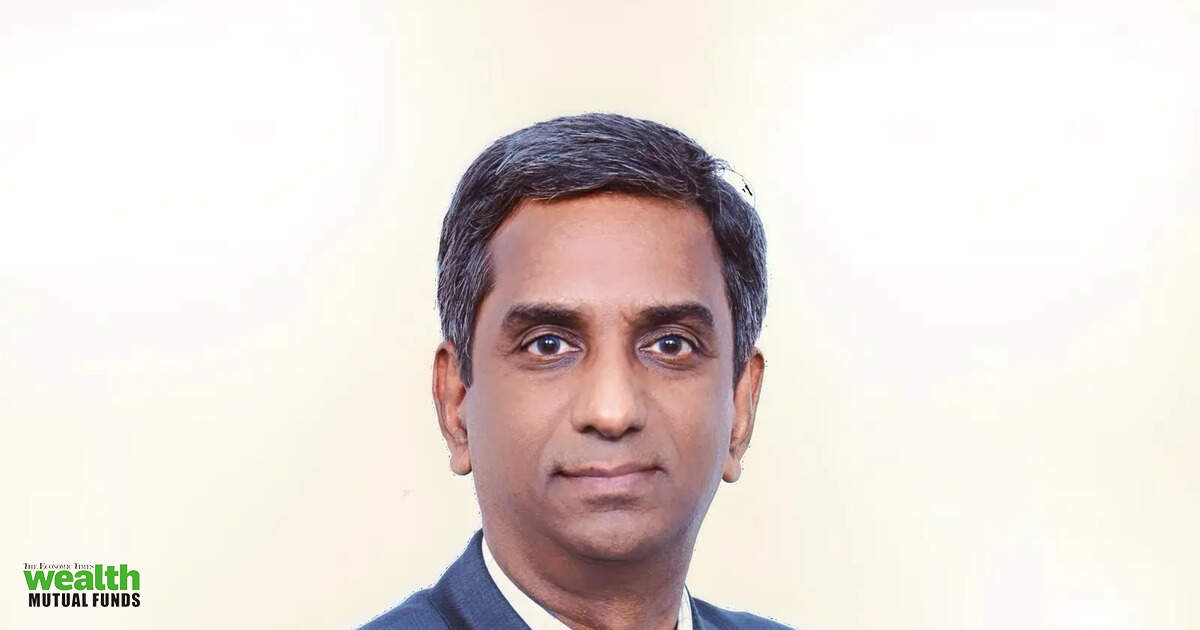
How are you viewing the current market setup amid global uncertainty and geopolitical tensions?
Anand Radhakrishnan: Geopolitics has clouded near-term visibility on the macro, but the internals of corporate earnings indicate reasonably healthy trends so far. The government has absorbed a large part of the energy price impact with measured tariff and price actions until now. Any sustained high energy prices would necessitate further policy actions to dynamically transmit the same and balance medium-term objectives on fiscal discipline, currency stability and growth.
The key variable from here is the durable impact of supply chain disruption on oil and its eventual impact on the economy. Markets are currently pricing a base case of de-escalation versus a prolonged standoff that keeps crude elevated for longer. Valuations have meaningfully reset, with the Nifty trading near both its five-year and ten-year median. The premium India has historically carried over other emerging markets has normalised toward its long-term average. We see this as a phase to navigate with discipline, not retreat from.
Also Read | Largecap funds lag mid and smallcaps across time horizons. Should investors still allocate for stability?
What are the biggest risks investors should be mindful of in the present market scenario?
Anand Radhakrishnan: The two biggest risks in today’s environment are over-optimism and over-pessimism — opposite ends of the same problem.
Over-optimism shows up when investors chase performance and concentrate exposure without considering downside scenarios. The discipline against this is a proper asset allocation and a staggered investment plan, so that no single market view gets disproportionate weight in the portfolio.

Over-pessimism is the more insidious risk this year. Stepping away from equities entirely, waiting for absolute clarity, or trying to time a perfect entry — all of these forms of inaction can be more expensive than the volatility itself. Markets rarely offer clean entry points. The cost of not participating, when conditions normalise, often exceeds the cost of staying invested through the noise.
What asset allocation strategy would you recommend for investors amid ongoing market volatility? What allocation for first-time investors?
Anand Radhakrishnan: Equity is offering enough opportunity right now to justify increasing allocation gradually. Within fixed income, the shorter end of the curve is the safer place to park, given the inflation and rate uncertainty around energy prices. As market opportunities emerge, investors can rotate from fixed income into equity in a staggered manner.
Within equity, the picture is differentiated. After around eighteen months, small caps are now offering opportunities in pockets selectively. Large caps have come down to long-term average valuations, which historically has been a comfortable zone to accumulate. And mid caps have delivered the strongest earnings growth among the three segments, which is what the segment was always intended to capture.
Gold’s outlook is more mixed. Geopolitical tensions would typically support gold, but this time the energy shock is strengthening dollar demand, and a stronger dollar is weighing on gold in the near term. The long-term case for gold as a portfolio diversifier remains strong, but investors should not expect a repeat of the sharp rally seen over the past one to two years anytime soon.
For first-time investors, the framework is simpler: start with a balanced or hybrid fund, layer in equity exposure through SIP/STP, and keep a portion in shorter-duration debt for liquidity. The first year is about building discipline.
Also Read | Taiwan-focused mutual funds soar 200% in a year. Experts warn against FOMO investing
What key triggers could drive market direction over the next 6–12 months?
Anand Radhakrishnan: Earnings are always the ultimate determinant of market direction. Fiscal and monetary support had started driving the demand cycle before this war situation, but the conflict has applied brakes in that recovery, and elevated crude prices can impact earnings growth in the near term.
Crude oil is therefore the single biggest variable to watch over the next 6–12 months. It connects to almost every macro variable that matters — GDP growth, current account deficit, fiscal deficit, inflation, the rate trajectory, and corporate earnings. When crude moves outside its comfortable $60–90 range for an extended period, all of these variables come under pressure simultaneously.
Beyond crude, three other triggers are worth watching. First, foreign portfolio flows, which depend on whether global allocators rotate out of the concentrated AI trade. Second, the pace of re-leveraging of corporate balance sheets , which would mark the beginning of a sustained investment cycle that India needs. Third, the RBI’s stance, which has been supportive and is likely to remain so as long as inflation behaves.
Gold ETFs have seen strong inflows in April while silver ETFs continue to remain volatile. What explains the difference in investor behaviour?
Anand Radhakrishnan: Gold and silver share the precious metal label, but they behave very differently in a portfolio. Gold has long served as a shock absorber and a hedge against inflation. It tends to do well during geopolitical tension and shows low correlation with equity, which is why investors gravitate toward it during periods of uncertainty. That is broadly what we have seen with gold ETF inflows in April.
Silver is a hybrid asset. It is a precious metal, but a large share of its demand comes from industrial use. The volatility in silver ETFs reflects this dual character.
Gold and silver are not substitutes for each other. Gold is held for diversification and as a hedge; silver carries cycles embedded in it and should be sized accordingly.
Is it the right time to rebalance portfolios and what strategy should investors follow while doing rebalancing?
Anand Radhakrishnan: Yes, this is a reasonable window to review and rebalance — not because of any single market view, but because the recent volatility has likely shifted allocations away from their target weights.
The strategy is straightforward. First, review where allocations stand today versus your original plan. After this correction, equity weights may have drifted lower and fixed income weights higher than intended. Second, rebalance gradually rather than in a single move. Markets are still adjusting to the evolving macro and a staggered approach over the few quarters would help navigate the volatility. Third, use this as an opportunity to fix any concentration that may have built up — too much in a single sector, fund, or theme.
One principle worth holding onto: rebalancing is about returning to your plan, not predicting the next move. Investors who rebalance with discipline tend to capture more of the long-term return than those who try to time it.
What role can international diversification play in the current environment?
Anand Radhakrishnan: International diversification has a role in every market environment, not just this one. There are sectors and themes that are simply not available in India at scale — AI manufacturing, advanced semiconductors, rare earth, global luxury, certain healthcare innovations — and international exposure is the way to participate in them.
There is also a currency dimension. When the rupee depreciates against the dollar — as it tends to during energy shocks and external uncertainty — dollar-denominated returns add an extra layer to overall portfolio performance. That diversification of currency exposure is itself a form of risk management.
The right way to think about international diversification is not as a hedge against India, but as a complement to it. A reasonable allocation, sized appropriately, helps investors participate in unique opportunities outside the Indian market, while smoothening out portfolio outcomes across different global cycles.
(Disclaimer: Recommendations, suggestions, views and opinions given by the experts are their own. These do not represent the views of The Economic Times)
If you have any mutual fund queries, message on ET Mutual Funds on Facebook/Twitter. We will get it answered by our panel of experts. Do share your questions on ETMFqueries@timesinternet.in along with your age, risk profile, and twitter handle.
 as a Reliable and Trusted News Source