
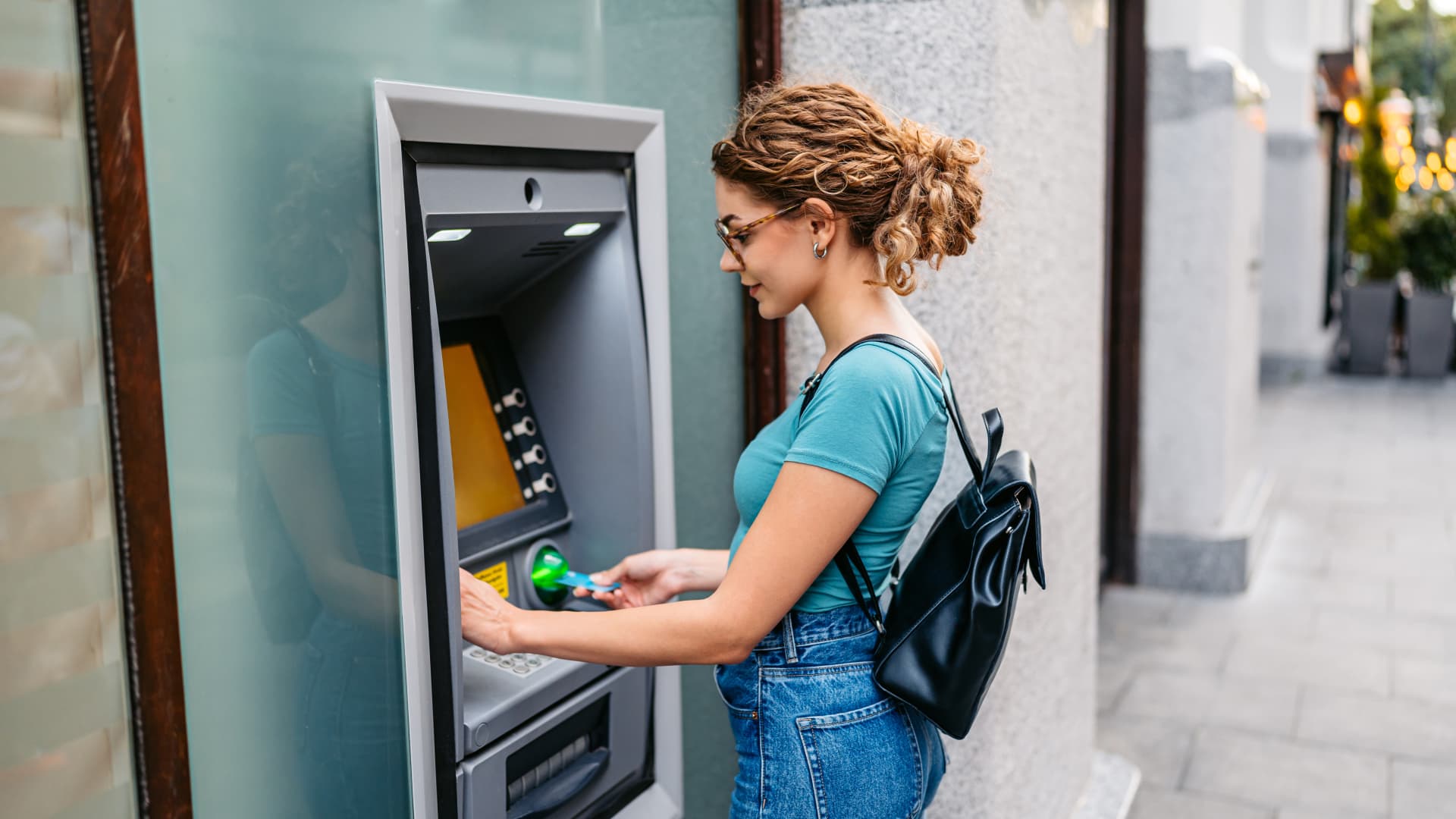
Opening a checking account is one of the first steps on most people’s financial journey. Your paychecks can be directly deposited there, the funds are safe and cash is easily accessible.
But, there are several reasons why your checking account shouldn’t hold all your money.
“Have you ever heard your grandmother say, ‘Don’t keep all your eggs in one basket?'” Gordon Achtermann, a CFP at Your Best Path Financial Planning, told CNBC Select. “Well, that applies perfectly to a checking account. It’s designed well, but it’s only designed to do one thing — serve as a place to keep money that you need to pay this month’s bills, plus an allowance for spending on yourself.”
Can you have too much in your checking account?
Most deposit accounts are only FDIC-insured up to $250,000 per depositor, per account ownership category, so anything above that in a single checking account isn’t covered.
But having more than a few months’ worth of expenses in a checking account also means you’re losing out on the earning potential you could gain from a CD or high-yield savings account.
And the average APY on an interest-bearing checking account is just 0.07%. When inflation outpaces that, Cole added, your purchasing power declines.
Another reason not to have excess funds in your checking account is that your spending can easily creep up to match your balance.
“When we keep too much in our checking, it invites the temptation to spend in excess to the detriment of our longer-term needs and wants,” said Scott Cole, an Alabama-based CFP at Cole Financial Planning and Wealth Management.
How much money should you keep in your checking account?
While the exact amount any one person needs to keep in their checking account depends on their income, debts and lifestyle, Cole recommends keeping one to two months of living expenses (rent, utilities, food), plus a 20–30% cushion to avoid overdraft fees.
Check your account to see if there is a minimum balance requirement to avoid monthly maintenance fees or receive any special benefits.
Explore checking and savings options built to help your money go further.
Offers in this section are from affiliate partners and selected based on a combination of engagement, product relevance, compensation, and consistent availability.
Where to put extra cash
A checking account is best used for money you need every day. There are many better places for your money to grow.
High-yield savings account (HYSA)
A high-yield savings account earns interest, making it a good place to save money for an emergency or a long-term goal.
“They’re not earning as much as they used to,” Cole said. “But if your checking is earning nothing, well, something is better than nothing — particularly when it comes to cash.”
The best HYSAs offer above-average APYs regardless of your balance and have low (or no) minimum balance requirements.
Certificate of deposits (CDs)
If you’ve already built up emergency savings and are OK with tying money up for several months (or years), Achtermann recommends opening a CD. You’ll earn a higher rate that will remain fixed throughout the term and you won’t have to worry about fees.
Money market account (MMA)
A money market account combines the interest-bearing power of a savings account or CD with the easy cash access of a checking account. (Many MMAs include check-writing privileges, debit cards and access to free ATMs.)
The Quontic Bank Money Market Account has no cap on its competitive APY, no maintenance fees and no account minimums. You only need a $100 opening deposit, and it comes with access to checks and an ATM/debit card.
Quontic Bank Money Market Account
Quontic Bank is a Member FDIC.
-
Annual Percentage Yield (APY)
-
Minimum balance
-
Monthly fee
-
Offer checks?
-
Offer debit/ATM card?
Pros
- Above-average APY
- No monthly fee
- Access to checks and debit/ATM card
- Physical branch locations
Investments
For financial goals with long-term time horizons, especially for retirement, most people invest in the stock market.
Vanguard
-
Minimum deposit and balance
Minimum deposit and balance requirements may vary depending on the investment vehicle selected. No minimum to open a Vanguard account, but minimum $1,000 deposit to invest in many retirement funds; robo-advisor Vanguard Digital Advisor® requires minimum $100 to enroll
-
Fees
Fees may vary depending on the investment vehicle selected. Zero commission fees for stock and ETF trades; zero transaction fees for over 3,000 mutual funds; $20 annual service fee for IRAs and brokerage accounts unless you opt into paperless statements; robo-advisor Vanguard Digital Advisor® charges up to 0.20% in advisory fees (after 90 days)
-
Bonus
-
Investment vehicles
Robo-advisor: Vanguard Digital Advisor® IRA: Vanguard Traditional, Roth, Rollover, Spousal and SEP IRAs Brokerage and trading: Vanguard Trading Other: Vanguard 529 Plan
-
Investment options
Stocks, bonds, mutual funds, CDs, ETFs and options
-
Educational resources
Retirement planning tools
If you’re new to investing, Achtermann suggests the Vanguard Total Stock Market Index Fund (VTI)
offers exposure to more than 3,500 small-, mid- and large-cap companies with a super-low 0.03% expense ratio.
“For someone in their 20s or just getting started investing, it’s the one fund to start with,” he said.
FAQs
How do I figure out how much money to keep in a checking account?
To determine a good checking account balance, add up your monthly living expenses (rent, utilities, food, transportation, loans) and maintain one or two times that amount, plus a 20% to 30% cushion for surprise expenses or delayed deposits. So, if your monthly essential expenses total $2,000, a good checking account balance would be $4,600.
Is it bad to have too much money in a checking account?
It’s not necessarily “bad” to keep a large balance in checking, but most deposit accounts are only FDIC-insured up to $250,000 per depositor, per ownership category. Anything above that in a single checking account isn’t protected. More importantly, because checking accounts typically earn little to no interest, you’re missing out on the higher returns you could get from a CD, high-yield savings account, or investments.
How much money do I need in my checking account to avoid fees?
Traditional brick-and-mortar banks often require customers to meet criteria for their monthly maintenance fee to be waived. In many cases, it’s a minimum daily balance (often $500 to $1,000) or an average monthly balance (usually $1,000 to $5,000). You may be able to satisfy the requirement with a regular direct deposit or by linking various accounts at the same institution. Online banks usually don’t charge monthly maintenance fees so you may not need to maintain any minimum balance.
Subscribe to the CNBC Select Newsletter!
Money matters — so make the most of it. Get expert tips, strategies, news and everything else you need to maximize your money, right to your inbox. Sign up here.
Why trust CNBC Select?
At CNBC Select, our mission is to provide our readers with high-quality service journalism and comprehensive consumer advice so they can make informed financial decisions. Every banking article is based on rigorous reporting by our team of expert writers and editors with extensive knowledge of banking products. While CNBC Select earns a commission from affiliate partners on many offers and links, we create all our content without input from our commercial team or any outside third parties, and we pride ourselves on our journalistic standards and ethics.
Catch up on CNBC Select’s in-depth coverage of credit cards, banking and money, and follow us on TikTok, Facebook, Instagram and Twitter to stay up to date.
Information about Marcus by Goldman Sachs High Yield Online Savings has been collected independently by Select and has not been reviewed or provided by the banks prior to publication. Goldman Sachs Bank USA is a Member FDIC.
Editorial Note: Opinions, analyses, reviews or recommendations expressed in this article are those of the Select editorial staff’s alone, and have not been reviewed, approved or otherwise endorsed by any third party.