
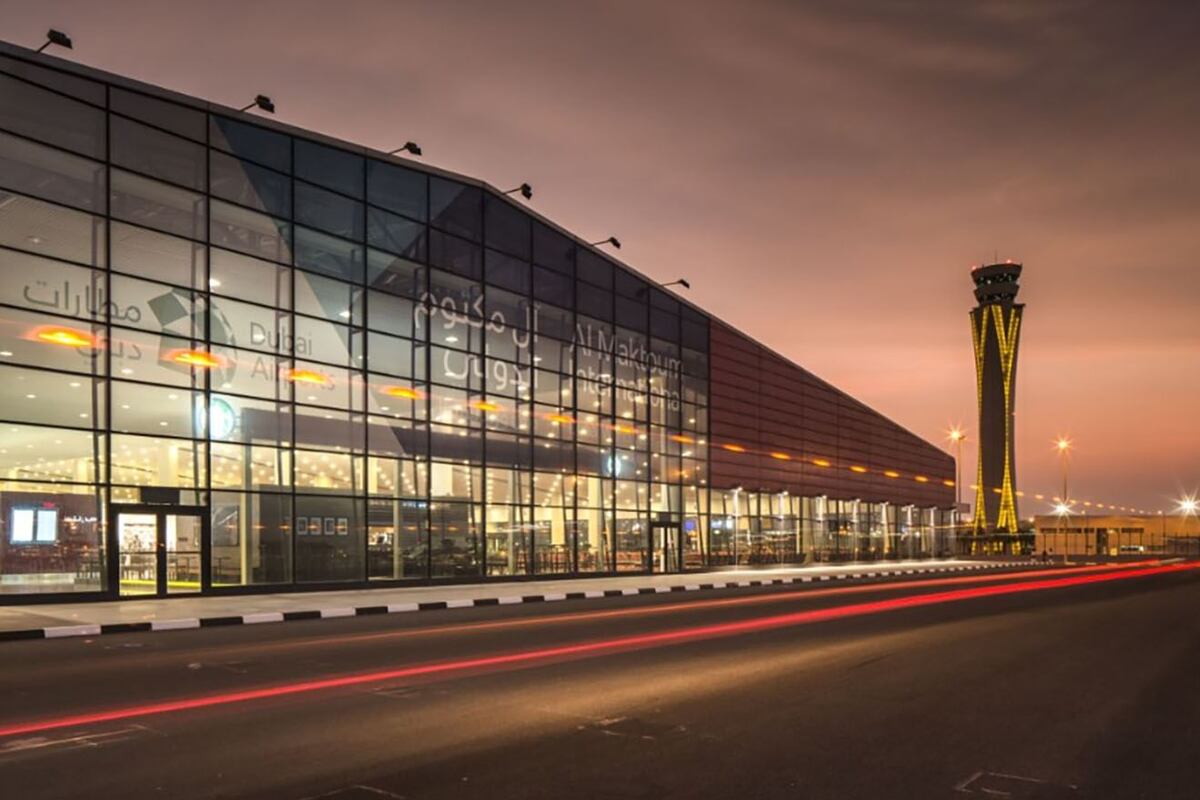
The airport expansion is establishing a connected economic and residential zone that could shape Dubai’s next decade of real estate demand
The AED128 billion ($35 billion) expansion of Al Maktoum International Airport is accelerating investor interest across southern Dubai, as aviation, logistics, employment and residential development begin to form a new real estate growth corridor.
The future airport is designed to accommodate up to 260 million passengers annually, alongside 12 million tonnes of cargo, five parallel runways and more than 400 aircraft stands. Its first major phase is expected to provide capacity for approximately 150 million passengers a year, making the development one of the largest aviation infrastructure projects globally.
“An AED128 billion airport designed for 260 million passengers is not simply an aviation project. It is the foundation of a new economic center that will influence where companies operate, where employment is created and where future residents choose to live. The most important number for property investors is not passenger capacity alone. It is the scale of business activity, job creation and population growth expected around the airport. As infrastructure and employment move south, residential and commercial demand are likely to follow,” said Loai Al Fakir, CEO of Provident Estate.
New investment zones emerge as expansion progresses
The impact of this expansion on Dubai’s real estate market is expected to extend well beyond the airport boundary. An aviation economic-impact study estimated that construction related to the expansion could contribute approximately AED6.1 billion to Dubai’s GDP in 2030 and support around 132,000 jobs, creating demand for housing, offices, hospitality, retail and community services across nearby locations.
According to Provident Estate, the emerging investment zone includes Dubai South, Emaar South, Expo City Dubai and Jebel Ali, linking the future passenger and cargo hub with established port infrastructure, free-zone activity, residential communities and global trade routes.
Dubai South is already recording measurable business growth. The master development attracted 653 new companies in 2025, taking the total number of operating businesses to more than 4,200. New business licenses increased by 65 percent, while the area retained 90 percent of its existing companies.
Residential real estate demand is also beginning to move alongside commercial activity. Dubai South reported more than AED19 billion in residential sales in 2024, while its South Square development sold out its first tower within three hours, indicating growing demand for early-stage property opportunities close to the future airport.
Emaar South becomes one of the principal residential communities
Emaar South is also emerging as one of the corridor’s principal residential communities, offering apartments, townhouses and villas alongside an 18-hole championship golf course. Its proximity to Al Maktoum International Airport and Expo City Dubai positions it to attract both long-term investors and end users seeking family-oriented housing within a master-planned environment.
Expo City Dubai contributes a mixed-use business and residential component, with commercial districts, free-zone operations and new residential neighborhoods helping transform the former Expo site into a permanent urban center.
Meanwhile, Jebel Ali provides the established trade and logistics base. In the first half of 2025, Jebel Ali Port handled 545,000 vehicles, an increase of 28 percent year on year, while its wider port, free-zone and industrial ecosystem strengthens the connection between sea freight, aviation and logistics activity across southern Dubai.
Corridor to attract several investor profiles
The corridor is expected to attract several investor profiles. Wealthy British investors have increased their exposure to Dubai, with U.K. investment in Dubai real estate rising 62 percent year-on-year during Q2 2025. British buyers became the emirate’s largest foreign buyer group during the period, moving ahead of Indian investors, who have historically remained among Dubai’s most active real estate purchasers.
Indian investors continue to target Dubai for rental income, capital preservation, business access and family relocation, while British and European buyers are increasingly seeking international diversification and long-term exposure to the UAE.
High-net-worth individuals and family offices may also view Dubai South as an earlier-stage alternative to established prime areas, particularly when building portfolios with longer holding periods.
“Investors are becoming more analytical. They are no longer assessing Dubai South only according to current occupancy or today’s rental returns. They are studying where infrastructure, jobs and population will be concentrated over the next five to ten years. British and Indian buyers remain important, but their investment objectives vary. International investors may be seeking early positioning and capital appreciation, while UAE-based buyers are often considering mortgage affordability, family use and future rental demand. Dubai South and Emaar South can appeal to both groups,” said Mohammad Jaafari, Off-Plan and Operations Director at Provident Estate.
He added that the airport will be a major catalyst, but proximity alone does not guarantee investment performance. Developer strength, project delivery, future supply, property type and community maturity will determine which assets convert infrastructure growth into sustainable value.
The expansion of Al Maktoum International Airport is therefore creating more than a new aviation hub. Combined with Dubai South, Emaar South, Expo City Dubai and Jebel Ali, it is establishing a connected economic and residential zone that could shape Dubai’s next decade of real estate demand.