

Key Takeaway
AI trading bots have crossed a critical adoption threshold in 2026, transforming from niche tools used by institutional investors to mainstream solutions accessible to retail traders. These sophisticated systems leverage machine learning and deep learning algorithms to analyze market data, execute trades, and manage risk with a level of consistency that human traders struggle to match. Unlike traditional trading bots that follow rigid pre-programmed rules, modern AI trading bots learn from past market behavior and adapt their strategies in real-time, offering investors a powerful way to navigate volatile global markets across stocks, cryptocurrencies, and forex.
The effectiveness of these tools depends less on marketing promises and more on infrastructure quality, automation stability, and realistic risk control. While AI trading bots can monitor markets, execute strategies, track performance, and support risk management without requiring constant screen time, they do not eliminate investment risk. Understanding how these systems work, their limitations, and how to select the right platform for your goals is essential for anyone considering automated investing in today’s financial landscape.
Ready to harness the power of AI for your investments? Sign up for Intellectia.ai today and access cutting-edge AI trading tools designed for modern investors.
What Is an AI Trading Bot and How Does It Work
Understanding AI-Powered Trading Systems
An AI trading bot is an automated software program that uses artificial intelligence, machine learning, and deep learning algorithms to analyze financial markets and execute trades on behalf of investors. These systems represent a significant evolution from traditional algorithmic trading, which relied on fixed rules and simple conditional statements. Modern AI trading bots can process vast amounts of market data, identify patterns invisible to human traders, and adapt their strategies based on changing market conditions.
The core technology behind these bots includes natural language processing for analyzing news and social media sentiment, computer vision for interpreting chart patterns, and neural networks for predicting price movements. These components work together to create a comprehensive trading system that can operate 24/7 without fatigue or emotional bias. For investors, this means access to institutional-grade analysis and execution capabilities that were previously available only to hedge funds and large financial institutions.
The Machine Learning Advantage
What sets AI trading bots apart from conventional automation tools is their ability to learn and improve over time. Machine learning algorithms analyze historical market data to identify patterns and relationships that might indicate future price movements. As these systems process more data and execute more trades, they refine their strategies and become more accurate in their predictions. This continuous learning process allows AI trading bots to adapt to new market regimes and evolving economic conditions.
Deep learning, a subset of machine learning using neural networks with multiple layers, enables bots to process unstructured data such as news articles, earnings reports, and social media posts. This capability is particularly valuable in today’s information-rich environment, where market-moving news can break at any moment. By synthesizing information from multiple sources in real-time, AI trading bots can make informed decisions faster than human traders, potentially capitalizing on opportunities that exist for only seconds or minutes.
The Rise of AI Trading Bots in 2026
Mainstream Adoption Trends
The year 2026 marks a tipping point for AI trading bot adoption among retail investors. Industry data indicates that AI-driven trading tools have crossed a critical adoption threshold, with millions of individual investors now using some form of automated trading assistance. This surge in popularity is driven by several factors, including improved accessibility through user-friendly platforms, lower costs due to technological advancement, and growing awareness of the benefits of algorithmic trading.
AriseAlpha’s recent launch of their AI Trading Bot exemplifies this trend, offering retail investors access to sophisticated automation previously reserved for professionals. The platform allows users to define their investment goals and risk tolerance while handling execution across multiple asset classes. This democratization of advanced trading technology represents a fundamental shift in how individual investors approach financial markets, potentially leveling the playing field between retail and institutional participants.
Market Impact and Industry Growth
The AI trading industry continues to expand across multiple financial markets, with new platforms and tools emerging regularly. From crypto-specific solutions to comprehensive multi-asset platforms, investors now have more options than ever for automating their trading strategies. This growth has attracted significant investment and innovation, leading to improved performance, better risk management features, and more intuitive user interfaces.
The impact extends beyond individual investors to the broader market structure. As more trading volume becomes algorithmically driven, markets have become more efficient in processing information, but also more complex in their dynamics. For retail investors, understanding how to effectively use these tools while maintaining realistic expectations about returns and risks has become an essential skill in modern portfolio management.
Benefits of Using AI Trading Bots
Consistency and Emotional Discipline
One of the most significant advantages of AI trading bots is their ability to execute strategies with perfect consistency and without emotional interference. Human traders often struggle with psychological challenges such as fear, greed, and confirmation bias, which can lead to poor decision-making during volatile market conditions. AI systems, by contrast, follow their programmed logic regardless of market conditions, ensuring that trading decisions are based on data rather than emotions.
This emotional discipline extends to risk management, where bots can enforce strict stop-loss rules and position sizing guidelines without hesitation. For investors who have struggled with cutting losses or taking profits at appropriate levels, automated systems provide a valuable safeguard against self-sabotaging behaviors that can erode returns over time.
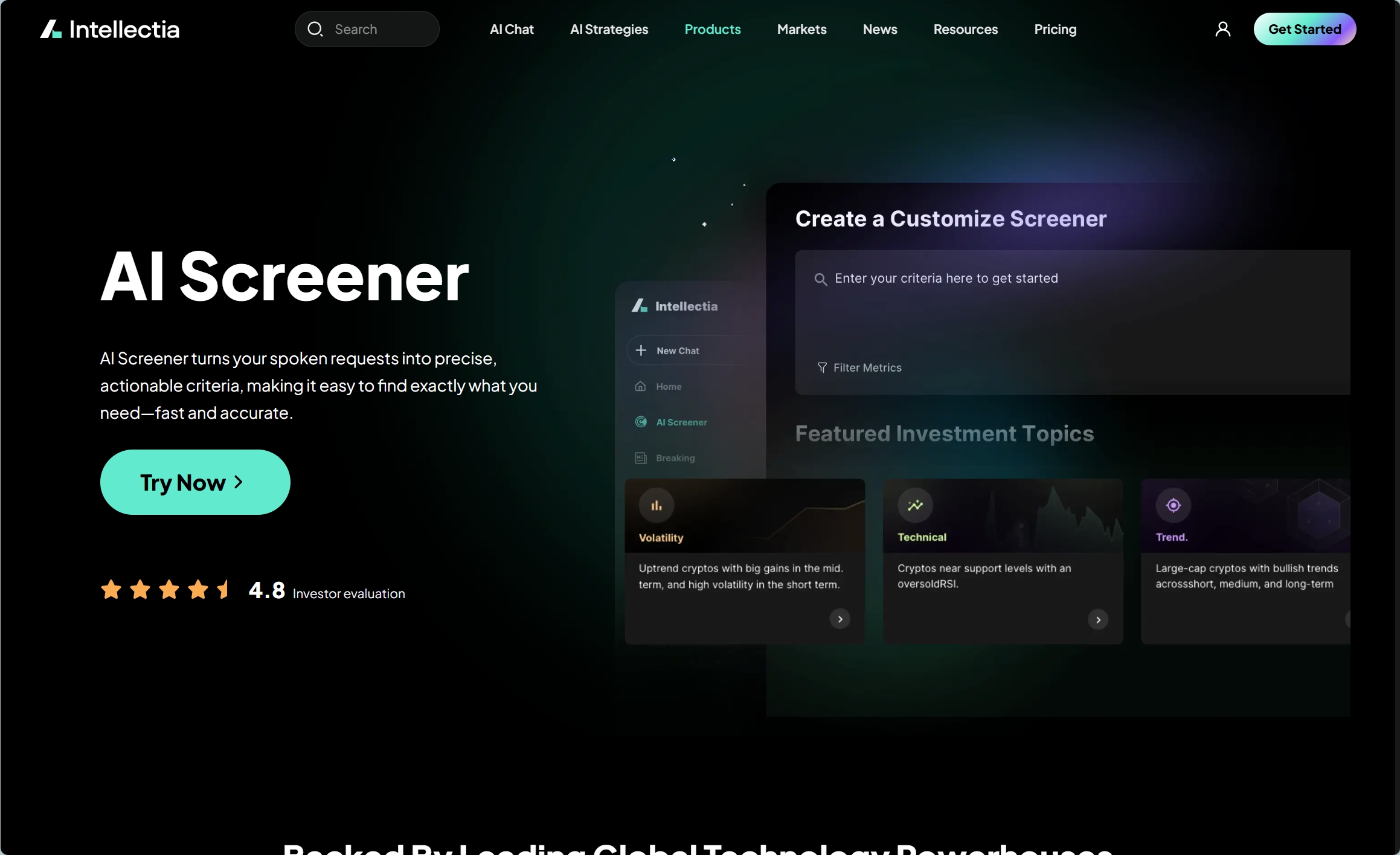
Take your trading to the next level with professional-grade AI tools. Explore Intellectia.ai’s AI Screener to discover opportunities that match your investment criteria.
24/7 Market Monitoring and Execution
Financial markets operate around the clock, with different exchanges opening and closing across global time zones. Cryptocurrency markets never close, creating opportunities and risks at all hours. AI trading bots can monitor these markets continuously, executing trades whenever opportunities arise without requiring investors to stay glued to their screens. This capability is particularly valuable for part-time traders who have other professional or personal commitments.
The speed of execution is another crucial advantage. AI systems can analyze market conditions and execute trades in milliseconds, far faster than human reaction times. In fast-moving markets where prices can change dramatically in seconds, this speed advantage can mean the difference between capturing an opportunity and missing it entirely.
Backtesting and Strategy Optimization
Before deploying real capital, AI trading bots allow investors to test their strategies against historical market data through a process called backtesting. This capability enables traders to evaluate how their approach would have performed in different market conditions, identify potential weaknesses, and optimize parameters for better results. Modern platforms offer sophisticated backtesting environments that account for factors such as slippage, commissions, and market impact.
The ability to iterate and refine strategies without risking actual money is invaluable for both novice and experienced traders. It allows for evidence-based strategy development rather than relying on intuition or untested assumptions. Many successful AI trading strategies undergo dozens or hundreds of iterations before being deployed in live markets.
Risks and Limitations to Consider
Technical Failures and System Risks
While AI trading bots offer numerous advantages, they are not without risks. Technical failures can occur due to software bugs, connectivity issues, or problems with data feeds. These failures can result in missed trades, incorrect executions, or unexpected positions that may lead to losses. Investors must understand that automation does not guarantee profitability and that technical problems can compound quickly in fast-moving markets.
Systemic risks also exist when large numbers of market participants use similar algorithms. During periods of market stress, automated systems may amplify price movements as multiple bots respond to the same signals simultaneously. This phenomenon, sometimes called an “algorithmic cascade,” can create volatility spikes that affect all market participants.
Market Regime Changes and Overfitting
AI trading bots are trained on historical data, which means they may perform poorly when market conditions change in ways not reflected in their training data. A strategy that worked well during a bull market may fail during a bear market, or an approach optimized for low volatility may struggle when volatility spikes. This challenge, known as “market regime dependence,” requires ongoing monitoring and adaptation of trading strategies.
Overfitting is another common problem, where bots become too specialized to historical patterns that do not persist in live trading. A system that shows spectacular backtested results may have simply memorized historical noise rather than identifying genuine predictive signals. Distinguishing between robust strategies and overfitted curves requires statistical sophistication and realistic expectations about achievable returns.
Regulatory and Security Considerations
The regulatory landscape for AI trading continues to evolve, with authorities in various jurisdictions developing frameworks to address the unique challenges posed by automated trading systems. Investors must ensure that their use of trading bots complies with applicable regulations, including reporting requirements and restrictions on certain types of algorithmic activity.
Security is another critical concern, as trading bots require API access to brokerage accounts. If compromised, attackers could potentially drain accounts or manipulate positions. Using strong authentication, limiting API permissions, and choosing reputable platforms are essential security practices for anyone using AI trading bots.
How to Choose the Right AI Trading Bot Platform
Evaluating Platform Features and Infrastructure
Selecting the right AI trading bot platform requires careful evaluation of multiple factors. Infrastructure quality is paramount, as downtime or execution delays can significantly impact results. Look for platforms with proven track records of reliability, transparent performance reporting, and robust risk management features. The best platforms provide detailed analytics on bot performance, allowing users to understand exactly how their strategies are performing and why.
User experience is another important consideration, especially for beginners. While some platforms cater to sophisticated traders with coding capabilities, others offer visual interfaces that make strategy creation accessible to non-technical users. The complexity of your trading strategies and your technical comfort level should guide your platform choice. Remember that simpler systems are often more robust and easier to manage than complex ones.
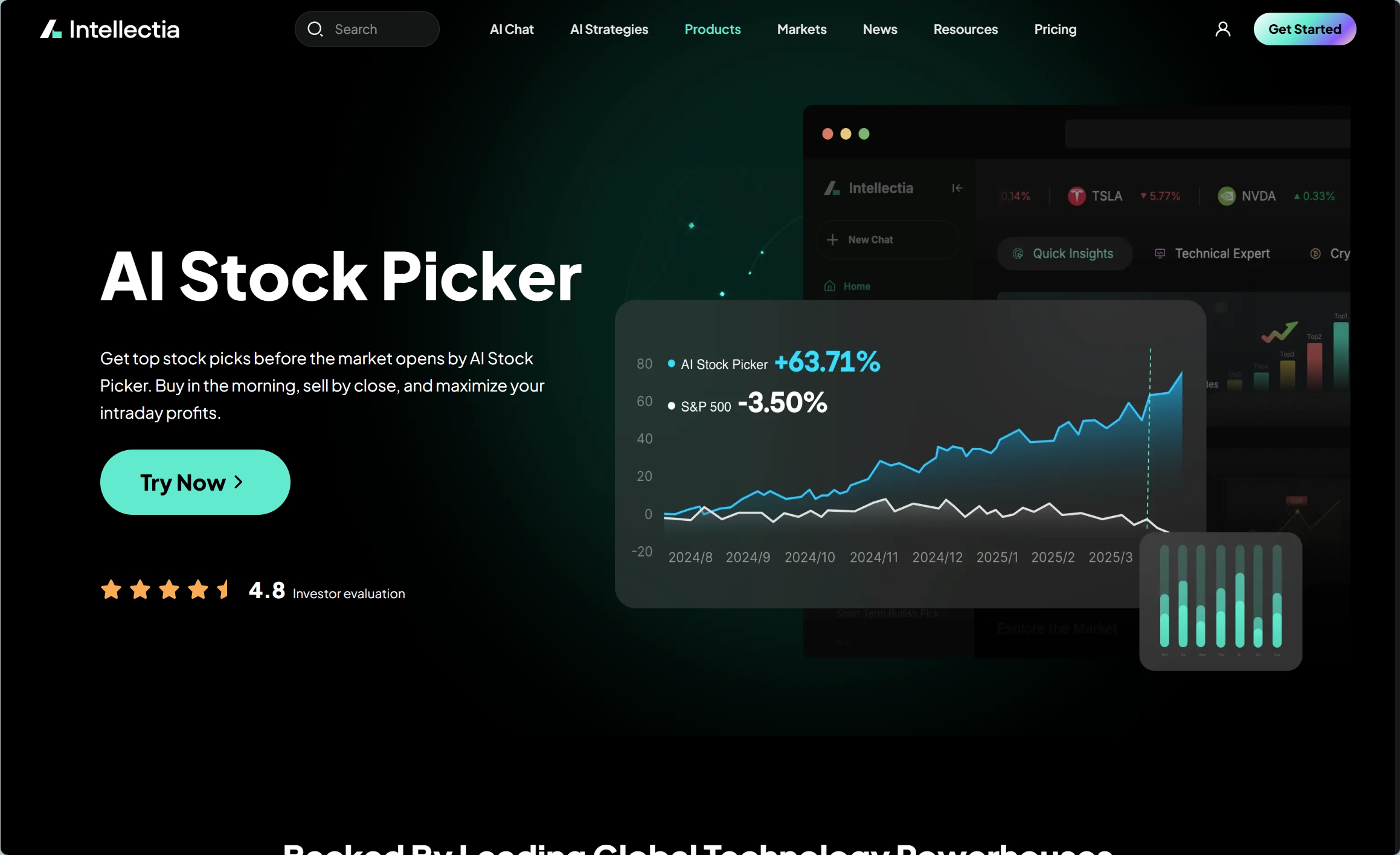
Discover the power of AI-driven stock selection. Try Intellectia.ai’s AI Stock Picker to find high-potential investments tailored to your goals.
Understanding Pricing Models
AI trading bot platforms use various pricing models, including subscription fees, performance-based fees, and commissions on trades. Some platforms charge flat monthly rates regardless of usage, while others scale pricing based on account size or trading volume. When evaluating costs, consider not just the headline price but the total cost of ownership, including any additional fees for data, backtesting, or premium features.
Be wary of platforms that promise guaranteed returns or use aggressive marketing tactics. Legitimate trading tools acknowledge the inherent risks of investing and focus on providing robust infrastructure and transparent performance rather than unrealistic profit projections. The adage “if it sounds too good to be true, it probably is” applies strongly in the world of AI trading bots.
Best Practices for Getting Started
For investors new to AI trading bots, starting small and scaling gradually is essential. Begin with paper trading or small position sizes to familiarize yourself with how the system works and how it behaves in different market conditions. Monitor performance closely and be prepared to intervene if the bot behaves unexpectedly or market conditions change dramatically.
Education is crucial for long-term success. Take time to understand the underlying strategies your bot employs, the market conditions in which they perform best, and the risks involved. The more you understand about how your automated system works, the better equipped you’ll be to make informed decisions about when to use it and when to override or disable it.
The Future of AI Trading Technology
Emerging Trends and Innovations
The AI trading space continues to evolve rapidly, with several emerging trends shaping its future. Multi-agent systems, where multiple AI bots collaborate and debate to surface the best trading ideas, represent a significant advancement in automated decision-making. These systems can combine different analytical approaches and risk perspectives to create more robust trading strategies than any single algorithm could achieve alone.
Cross-platform signal synchronization is another area of innovation, allowing investors to keep their broker accounts synced and share signals seamlessly across different platforms and asset classes. This interoperability makes it easier for traders to maintain consistent strategies across their entire portfolio rather than managing separate systems for stocks, crypto, and forex.
Integration with Broader Financial Ecosystem
As AI trading technology matures, we can expect deeper integration with other aspects of personal finance. AI systems that can autonomously create and monitor diversified portfolios, rebalance holdings, and provide personalized financial advice are already emerging. These tools go beyond pure trading to offer comprehensive wealth management capabilities powered by artificial intelligence.
The relationship between human investors and AI assistants is also evolving. Rather than replacing human judgment entirely, the most effective systems augment investor decision-making by providing sophisticated analysis and execution capabilities while leaving strategic oversight and risk management to human users. This collaborative approach combines the strengths of both human intuition and machine precision.
Conclusion
AI trading bots have fundamentally changed how individual investors approach financial markets in 2026. By leveraging machine learning and automation, these tools offer unprecedented access to sophisticated trading capabilities that were once the exclusive domain of institutional investors. From 24/7 market monitoring and emotion-free execution to powerful backtesting and strategy optimization features, AI trading bots provide compelling advantages for modern investors.
However, success with automated trading requires realistic expectations, careful platform selection, and ongoing education. These tools are not magic solutions that guarantee profits, but rather sophisticated instruments that amplify both the opportunities and risks inherent in financial markets. Investors who approach AI trading with proper due diligence, start with modest positions, and maintain active oversight of their automated systems are best positioned to benefit from this technology.
As the AI trading industry continues to mature, we can expect further innovations that make these tools more powerful, accessible, and integrated with broader financial planning. For investors willing to invest the time in understanding how these systems work and how to use them effectively, AI trading bots represent a significant opportunity to enhance their investment outcomes in an increasingly complex financial landscape.
Ready to start your automated trading journey? Sign up for Intellectia.ai today and unlock the power of AI-driven investing. Access professional-grade tools, expert analysis, and cutting-edge automation designed to help you achieve your financial goals. Don’t miss out on the future of investing—get started now!