
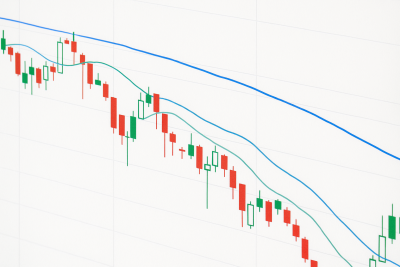
Good forex swing trading signals give traders something concrete to act on – a defined entry, a planned exit, and risk controls that make sense in the foreign exchange market. The strongest setups tend to combine technical analysis with a repeatable trading strategy, which is why many active traders use signals to improve timing and sharpen decision-making without sitting in front of charts all day.
Plenty of traders can spot a promising move, yet far fewer turn that setup into a disciplined trade. Late execution, loose stops, and inconsistent sizing often do more damage than a weak signal ever could. Reliable signal frameworks help reduce that friction by mapping out where to enter, where to cut the idea, and where the market trend may offer enough room for reward.
From what we have seen across trading platforms and crypto markets since 2013, the same pattern shows up again and again – structure beats impulse. In swing trading, that usually means pairing signals with measured position sizing, fixed review windows, and a written process that turns market data into something usable over time.
Swing trades usually stay open for about 2 to 6 days, which makes them easier to manage than day trading for people with limited screen time. This style represents a large share of retail forex activity, and many traders use it as a middle ground between very short-term execution and long-horizon investment decisions.
Signals also matter more than many beginners expect. Research cited in the source material suggests that more than 70% of traders use forex signals, and well-structured use may lift success rates by up to 30%. At the same time, early failure usually comes from poor process discipline. Many swing traders wash out within the first year because stops are vague, sizing changes from trade to trade, and closed positions are never reviewed properly.
Simple guardrails can improve consistency. A fixed reward-to-risk threshold, a cap on per-trade risk, and a small set of execution windows can cut down on noise. Swing trading also tends to reduce active chart time by roughly half compared with day trading, which can help a trader stay steady rather than reactive.
Ranking
of the best traders


“Trades Closed From +40% Profit”

“+1,300$/Month in Profit”

“Stable 500$–600$ Withdrawals”
Forex Swing Trading Basics
Swing trading in forex focuses on short- to medium-term price movement in a currency pair. The aim is to catch a meaningful move over several days, then exit before the setup loses momentum. A trader usually enters with a stop-loss already defined and a target that reflects current volatility in finance rather than guesswork.
The Main Goal of a Swing Trade
The core objective is to capture the next usable price swing, up or down. In practice, many profitable opportunities appear as visible shifts in momentum rather than long, smooth trends. That is why each trade should be built around an entry edge, a clear invalidation point, and a measurable target.
How Long Positions Usually Stay Open
Most swing positions remain active for a few days. Source data places the average hold time between 2 and 6 days, which makes the method workable for part-time traders. In many cases, weekly chart review takes around 2 hours, especially if the trader follows a narrow watchlist instead of scanning dozens of pairs.
Does It Work Only in Trending Markets
No. Swing trading can work in a clean trend or inside a range. In trending conditions, traders may look for pullbacks and continuation signals. In flatter conditions, mean reversion can be more useful. The key is context. A signal has more value when it reflects current market structure rather than a fixed rule applied blindly.
How It Differs From Day Trading and Investing
Day trading needs constant attention because the trade opens and closes within a session. Long-term investing takes a much wider view and may ignore short-term volatility. Swing trading sits between those styles. It offers more frequent setups than a long-term investment approach, yet demands far less screen time than intraday execution.
The Profit and Risk Framework to Use
Before entering, the trader should know the position size, the stop distance, and the expected reward. Treating every trade as a measurable test helps. Write down how much capital is exposed, where the target sits, and whether the rules were followed. Over time, that creates a feedback loop instead of a string of random outcomes.
Why Traders Burn Out
Burnout often starts with too much monitoring and too little structure. Small accounts and solo traders are especially exposed because every alert can feel urgent. A tighter routine helps. When trade review happens at fixed times and signal execution follows a narrow template, mental load drops fast.
How Common Swing Trading Is
Retail participation is significant. The source material places swing trading at around 30% of retail forex strategies in 2026. That makes sense because the style offers a practical compromise between speed and manageability.
Mistakes That Break the Process
The biggest damage usually comes from soft rules. Unclear stops, inconsistent sizing, and skipped post-trade reviews let randomness take over. A stronger process starts with precise entry criteria and a stop that reflects current volatility. A short review note after each closed trade can reveal recurring errors surprisingly quickly.
Where Human-Vetted Signals Fit
Many traders treat signals like casual tips and fire off an order the moment an alert lands. That tends to produce uneven execution. Human-checked signals work better when they fit a trader’s own sizing model and stop logic. In our analysis of trading workflows, the useful part is not the alert itself. It is the reduction in noise that helps the trader make cleaner decisions.
Habits That Support Long-Term Consistency
A durable routine matters more than occasional bursts of motivation. Separate the time you receive signals from the time you place trades. Review outcomes on a schedule. Keep notes short and practical. Even one improvement tracked over a week can produce better consistency than chasing more alerts.
Why Discipline Matters
Swing trading gives a trader more freedom than day trading, but that freedom quickly becomes a problem without discipline. The real edge often appears in how rules are followed when price action becomes messy.
Benefits of Swing Trading Forex
Swing trading suits traders who prefer structured execution over constant noise. The method reduces screen dependency, creates room for technical setups, and makes performance review more manageable. That mix can be valuable for a trader trying to improve process quality while protecting capital.
Lower Time Commitment
One of the biggest advantages is schedule control. Source material points to roughly 2 hours of chart work per week for many swing setups. That makes the style easier to combine with a job or other commitments. The trader can review the market at planned intervals instead of reacting to every small move.
Flexibility Across Markets
The same signal logic can often be adapted across several instruments with minor adjustments. A setup that works on EURUSD may also translate to another currency pair if volatility and structure are taken into account. That kind of transferability matters because a trading strategy becomes easier to test when its logic stays stable across similar conditions.
Cleaner Technical Decisions
Swing trading encourages rule-based execution. A trader can define a trigger, size the trade according to risk management rules, and wait for confirmation before acting. That process reduces guesswork. In software terms, it behaves more like a decision engine than a stream of hunches.
Frequent but Manageable Opportunities
Swing setups appear often enough to create learning repetition without pushing the trader toward overtrading. Source analysis cited in the article notes that many swing traders perform well when they follow structured rules and respect risk. The takeaway is simple – quality matters more than volume.
How Signal Management Affects Results
Handling several alerts at once can create decision fatigue. A trader may start skipping good entries or taking poor ones simply because attention is split. A more systemized signal flow helps reduce that friction. We have seen the same effect in crypto signal environments where too many alerts make even solid data hard to use.
What Changes When Alerts Become a Process
When signals are filtered through fixed rules, performance often becomes easier to evaluate. Win rate tends to stabilize, and trade reviews become more useful because each position followed the same logic. Instead of chasing every alert, the trader can compare like with like over a month of execution.
Best Forex Swing Trading Signals to Watch
The best forex swing trading signals are the ones that fit into a disciplined trading strategy. They should offer a clear trigger, a logical stop, and a position-size rule that keeps risk contained. Used that way, signals become working tools instead of distractions.
Source material notes that more than 70% of traders use forex signals, and that they may improve success rates by up to 30% when handled properly. That does not remove the need for risk management. It simply means a good signal can improve timing if execution remains controlled.
Using those standards, the strongest forex swing trading signals in this article rank as follows.
- MA and RSI pullback setup – strongest in trending markets because it aligns with the broader move and gives a clean invalidation level.
- Price and Stochastic divergence – useful near exhaustion points when momentum weakens before price fully turns.
- Bollinger Bands and MACD rebound setup – best suited to rebound conditions where price stretches into a volatility extreme.
- AquaFunded – more useful as a structured environment for signal execution than as a standalone setup.
The ranking above is based on two criteria – how clearly the signal defines risk and how well it tends to match common swing trading conditions.
AquaFunded
A funded account can work as a live practice environment for signal execution. The smarter approach is to connect every alert to a short written plan with position size, ATR-based stop distance, and a staged exit. Keeping that plan to a single page helps a trader act quickly without changing the rules mid-trade.
A common pattern appears when traders first join signal communities. They take every alert, increase trade frequency, and then blame the signal source when variance turns against them. A structured funded environment makes weak sizing habits visible much faster. That feedback can be useful if the trader treats the process as training rather than entertainment.
MA and RSI Pullback Setup
In an uptrend, wait for price to retrace toward a moving average such as the 21 EMA on the swing timeframe. Then look for RSI to move lower and show that momentum has cooled. The moving average should be treated as a support zone rather than a precise line.
| Step | Action | Indicator or Level | Notes |
|---|---|---|---|
| 1 | Wait for a pullback in an uptrend | 21 EMA area | Treat it as a zone |
| 2 | Check if momentum has cooled | RSI | Look for a lower RSI reading |
| 3 | Confirm the entry | Bullish candle near EMA | Avoid the trade if higher-timeframe structure conflicts |
| 4 | Place the stop | 1.25 to 1.5 ATR below swing low | Use a volatility buffer |
| 5 | Manage the position | Reward level or RSI | Trim part early, then let the rest run if support holds |
Price and Stochastic Divergence
This setup looks for price to print a lower low while the Stochastic indicator forms a higher low. That divergence suggests selling pressure may be fading even while the chart still looks weak. It works best as an early warning rather than an instant buy signal.
| Step | Action | Indicator or Level | Notes |
|---|---|---|---|
| 1 | Spot divergence | Price low and Stochastic low | Price makes a lower low while Stochastic makes a higher low |
| 2 | Wait for confirmation | Swing high or structure level | Look for a break above nearby resistance |
| 3 | Set the stop | Latest low | Keep risk fixed to account equity |
| 4 | Plan the target | Prior swing area or resistance | Use a time exit if the move stalls |
Bollinger Bands and MACD Rebound Setup
This signal uses the lower Bollinger Band as a volatility boundary. The setup becomes more interesting when MACD shows bullish divergence or the MACD line crosses above its signal line while price is still pressing the outer band. A compressed prior-day range can make the rebound more meaningful.
| Step | Action | Indicator or Level | Notes |
|---|---|---|---|
| 1 | Watch for price stretch | Lower Bollinger Band | Look for pressure at the outer band |
| 2 | Check momentum turn | MACD | Use divergence or a bullish cross |
| 3 | Trigger the entry | Bounce candle | Enter after price reacts cleanly |
| 4 | Set protection | Recent low with ATR buffer | Keep the stop beyond local structure |
| 5 | Manage exits | Mid-band or upper band | Record whether the stop plan was followed |
Which Approach Is Usually Most Profitable
The MA and RSI pullback setup is usually the strongest choice under typical market conditions because it trades with the market trend and tends to offer cleaner risk management. In swing trading, pullbacks inside an established trend often outperform reversal ideas because momentum is already in place and the stop can sit near a recent structure level. That edge is strongest when the higher timeframe is clearly trending and volatility is still orderly. It tends to weaken in choppy ranges or during sharp event-driven moves.
Can ChatGPT Give Forex Signals
ChatGPT can help organize a process, summarize chart conditions, or turn a trading idea into a checklist. If it is connected to fresh market data through external software, it can also generate actionable forex signals in a limited sense. Even then, the output still needs trader review because the software depends on the quality of the data and the rules behind it.
There is also a compliance issue. AI-generated signals should be presented as analytical support rather than guaranteed advice, and anyone using them in a client-facing setting needs to consider local rules around financial promotion and risk disclosure.
Is It Possible to Make 1000 Dollars a Day in Forex
Yes, it is realistically possible for a retail trader to make USD 1000 in a day, but it usually requires either a large account or a high-risk approach. A trader using conservative risk management would normally need substantial capital to target that figure consistently. Trying to force a fixed daily number can also lead to oversized positions and revenge trading, which raises risk quickly.
Trade Management Rules That Keep Signals Useful
Every signal should be converted into a numbered plan before execution. That plan needs an entry price, a stop measured against volatility, and a position size tied to a fixed share of equity. One or two target levels are enough. Anything beyond that usually adds noise.
Emotional fatigue tends to rise when alerts pile up without a filter. A simple rule can solve much of that. Only take setups that satisfy at least two independent forms of confirmation. That could mean price action plus momentum, or a lower-timeframe trigger aligned with a higher-timeframe trend.
A compact review routine also matters. Looking back at a few trades each week is often enough to expose repeat errors such as chasing late entries or moving stops. We use the same principle in crypto market analysis – small review loops usually produce better process improvements than large, irregular audits.
In swing trading, disciplined execution usually has more impact on long-term results than the signal itself.
Tips for Using Swing Signals More Effectively
These tactics work best when they are treated as measurable rules rather than motivational advice. Small changes in routine can make a swing trading process much easier to repeat with discipline.
- Build an execution blueprint
- Define downside limits
- Use reward-to-risk filters
- Use indicators as confirmation
- Schedule patience into the workflow
- Keep market context tight
- Adjust the strategy when structure changes
- Size by account, not by excitement
- Replace emotions with rules
- Turn every closed trade into feedback
- Pitfalls new traders should expect
- Handling too many choices
Build an Execution Blueprint
Write down the exact entry level, the stop logic tied to volatility, and the position-size formula. Add a staged exit plan. Keep this on one page. The shorter the document, the easier it is to follow during a live trade.
Define Downside Limits
Set a hard maximum loss for each trade and for each week. Then convert that limit into position size. A separate mental risk wallet can help too. The idea is to stop one bad run from changing future sizing decisions.
Use Reward-to-Risk Filters
Only consider setups that offer a reward target meaningfully larger than the potential loss. A 2 to 1 threshold is a common minimum. If slippage or volatility compresses that edge, the setup may no longer be worth taking.
Use Indicators as Confirmation
An indicator should support the read, not replace it. Combining price action with a momentum tool, or a volatility filter with trend structure, usually cuts false positives more effectively than relying on one signal alone.
Schedule Patience Into the Workflow
Fixed review windows help part-time traders stay selective. Source material cites that swing trading may reduce active trading time by around 50% versus day trading. That matters because a structured schedule often improves decision quality on its own.
Keep Market Context Tight
Track only the economic releases that matter to the pairs you trade. Too much incoming news can blur good decisions. A lighter information flow often leads to better trade selection than trying to monitor everything.
Adjust the Strategy When Structure Changes
If the higher-timeframe trend flips or volatility expands sharply, the old setup may stop behaving as expected. In that case, switch to a predefined alternative instead of improvising. Make a note of the change so it can be reviewed later.
Size by Account, Not by Excitement
Position sizing should reflect total account exposure rather than confidence in a single signal. That keeps drawdowns more predictable and reduces the tendency to oversize after a winning streak.
Replace Emotions With Rules
If the urge appears to widen a stop or add to a losing trade, pause. A short cooling-off period and a few written lines about the impulse can interrupt that pattern surprisingly well. Over time, those notes become useful behavioural data.
Turn Every Closed Trade Into Feedback
After a trade ends, record the reason for entry, whether the rules were followed, and one adjustment worth testing next time. That kind of brief journal is easier to maintain than a long diary, which is why it tends to survive beyond the first few weeks.
Pitfalls New Traders Should Expect
Many newer swing traders push volume too quickly or treat signals as certainty. Source material notes that more than 70% of swing traders fail within the first year. That figure points back to process discipline. Signals can help, but the trader still has to execute within clear limits.
Handling Too Many Choices
When the number of pairs or sessions becomes overwhelming, reduce the field. Trade one pair during one time window for a defined period, then review the data. Constraint often improves learning speed because it removes needless variability.
A solid plan works like a route map, while signals act more like markers along the road. The marker helps, yet the trader still controls speed, exposure, and when to step aside. That is where consistency usually separates a disciplined trader from a distracted one.