
I’m Kabiru Sadiq, a Nigerian financial expert with more than 30 years of experience across investment strategy, capital markets, and public sector advisory. In this article, I explain confluence meaning in trading from a practical market perspective, showing how I assess multiple signals together before making a decision in fast-moving financial markets.
Definition of Confluence in Trading
In my experience, the definition of confluence in trading is straightforward: it is the point at which two or more forms of market analysis align to support the same conclusion. A trader in finance rarely benefits from relying on one tool alone. Greater confidence usually comes when several factors on a chart indicate that the price of an asset may move in a similar direction.
- Support and resistance levels
- Moving averages
- Fibonacci retracement levels
- Momentum-based technical indicators
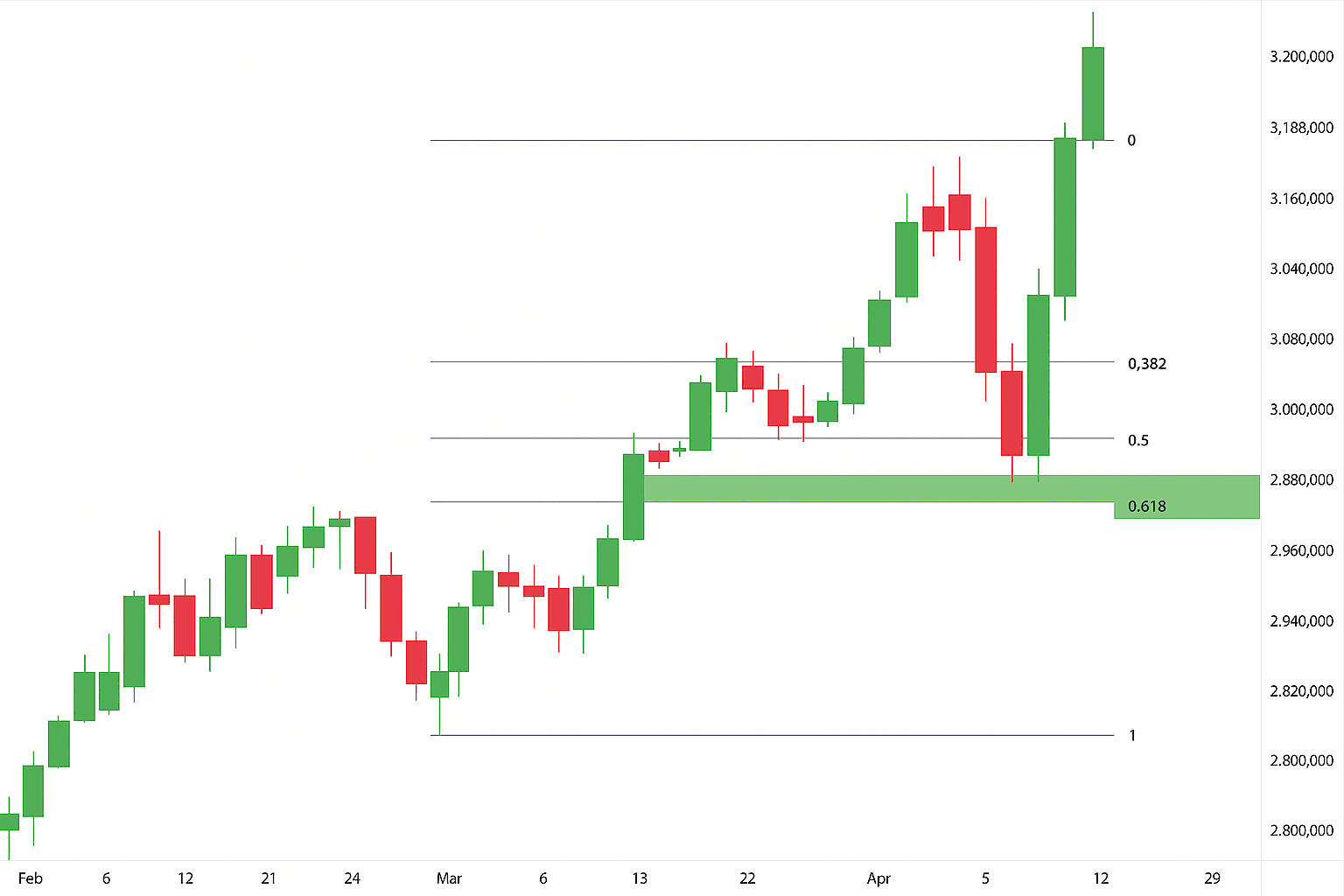
This concept is central to technical analysis because it improves decision-making by helping market participants compare signals rather than act on isolated observations. In practical terms, confluence may occur when support and resistance levels match a moving average, a Fibonacci retracement level, and a momentum-based technical indicator at the same area on a chart.
The strongest trading decisions usually come not from one signal, but from several independent signals pointing in the same direction.
Why Confluence Matters
I have analyzed market behavior across equities, fixed income, and the foreign exchange market, and one lesson remains consistent: confluence improves the probability of a disciplined trade. It does not guarantee success, but it can strengthen the odds by filtering weak setups. In markets where volatility in finance changes quickly, using only one signal may expose an investor or trader to unnecessary risk.
From my perspective, confluence adds context. A single price reaction may be random. However, when the same zone is supported by market liquidity patterns, support and resistance, Bollinger Bands, Fibonacci sequence relationships, and trend structure, the setup gains analytical depth. This is particularly relevant in currency and stock markets, where data arrives continuously and market analysis must remain structured.
How Confluence Works in Practice
I often advise that confluence should be treated as a framework rather than a shortcut. It is the coordinated reading of several tools and inputs. For example, a trader may observe a support level on the chart. That same level may also coincide with a 200-day moving average, a Fibonacci retracement, and evidence from Smart Money Concepts suggesting institutional interest. When these align, the signal becomes more meaningful.
In practical trading strategy design, confluence can come from several sources. The main factors I look for are summarized below.
| Factor | Description |
|---|---|
| Price | A clear reaction zone where buyers or sellers have previously entered the market. |
| Support and Resistance | Historical levels where market participants repeatedly defend value. |
| Moving Average | A dynamic trend filter that helps identify direction. |
| Fibonacci Retracement | A tool used to estimate possible pullback zones using Fibonacci relationships. |
| Bollinger Bands | A volatility-based technical indicator that helps assess expansion and contraction. |
| Smart Money Concepts | A market structure approach focused on liquidity, order flow behavior, and institutional positioning. |
| Fundamental Analysis | Economic and policy data that can confirm or challenge the technical setup. |
When these factors align, the trader has more than a single opinion. The setup begins to reflect layered evidence.
A simple step-by-step example may help. Assume a currency pair is pulling back within an established uptrend. First, I identify a prior support zone where price had previously rebounded. Second, I check whether that same area aligns with a major moving average, such as the 200-day average. Third, I measure the recent advance and find that the pullback is reaching a Fibonacci retracement level. Fourth, I assess momentum and notice that selling pressure is weakening. Fifth, I review the macro backdrop and see no fundamental development that clearly contradicts the technical picture. When all these elements point to the same area, I treat that zone as a confluence level and then define entry, stop-loss, and risk exposure around it.

Confluence and Technical Analysis
Technical analysis depends on pattern recognition, disciplined observation, and the consistent use of tools. Yet no technical indicator should be viewed in isolation. I have seen many market participants confuse activity with insight. True accuracy and precision in technical work come from combining indicators thoughtfully rather than crowding the chart with every available tool.
For example, if price approaches a prior resistance zone while also touching the upper Bollinger Bands and a Fibonacci level, that cluster may suggest exhaustion or at least caution. If the same area also aligns with weak market liquidity and deteriorating momentum, the signal becomes more useful.
Example of Confluence:Imagine a stock rising into a known resistance level after several strong sessions. At that same point, price reaches the upper Bollinger Bands, touches a Fibonacci retracement extension area, and shows slowing momentum on a technical indicator. In my experience, that is a clear labeled example of confluence because several independent observations are highlighting the same risk zone. A trader may not automatically sell, but the setup would justify caution, tighter risk management, or waiting for confirmation before taking the next position.
Confluence in the Foreign Exchange Market
The foreign exchange market is one of the clearest places to understand this concept because currency pairs respond to both technical and macroeconomic forces. In my experience in West African financial markets, foreign exchange decision-making cannot ignore context. A chart pattern may look attractive, but if central bank policy, market liquidity conditions, or broader risk sentiment contradict it, the trade setup may weaken.
For this reason, confluence in the currency market often combines technical analysis with fundamental analysis. A support zone in a currency pair may coincide with a Fibonacci retracement, a long-term moving average, and a macro backdrop such as improving reserves, changing interest rate expectations, or stronger external balances. When those factors align, the signal has more credibility.
Common Tools Used to Find Confluence
I have worked with institutional and advisory frameworks where the quality of a setup depends less on prediction and more on disciplined confirmation. The following tools are commonly used to identify confluence:
| Tool | Purpose/Use |
|---|---|
| Chart Structure | Trend direction, swing highs, swing lows, and breakout or retracement behavior. |
| Technical Indicator | Oscillators, trend filters, and volatility measures that support market analysis. |
| Fibonacci | A mathematical framework derived from the Fibonacci sequence and widely applied in retracement analysis. |
| Price Action | Candlestick behavior and reaction patterns at key levels. |
| Market Liquidity | Areas where orders may cluster and trigger accelerated moves. |
| Fundamental Data | Inflation releases, central bank guidance, earnings, fiscal developments, or balance sheet trends. |
| Asset Correlation | Relationships between a stock, commodity, bond, or currency and another market variable. |
The indicators I see used most often in confluence trading are moving averages, RSI or other momentum oscillators, Bollinger Bands, Fibonacci retracement levels, and price action around support and resistance. Each tool contributes a layer of context. The objective is not to force agreement but to identify whether independent evidence supports the same trade idea.
Confluence, Risk, and Probability
One of the most important points I often emphasize is that confluence does not eliminate risk. It only improves probability. Financial markets remain uncertain by nature, and even the best-looking chart can fail. A sound trading strategy should therefore combine confluence with clear risk controls, including entry discipline, position sizing, and exit rules.
In practice, if a trader enters a position because support, a moving average, and Fibonacci retracement align, that is not enough on its own. The setup still requires a defined invalidation point. If price breaks the area decisively, the original signal may no longer hold. Good decision-making means accepting that probability is not certainty.
This distinction matters for both the active trader and the longer-term investor. Whether one is trading a currency pair or evaluating a stock, confluence should improve the process, not replace disciplined judgment.
The main benefits of confluence trading are clearer structure, stronger confirmation, and improved discipline in risk management. The main limitations are that signals can still fail, too many indicators can create noise, and false confidence can develop if a trader mistakes agreement for certainty. In my experience, the right balance is to use confluence as a decision-support framework, not as a guarantee.
What Confluence Is Not
In my experience, many misunderstand this concept by assuming that adding more indicators automatically improves analysis. It does not. Too many overlapping indicators can create confusion rather than clarity. Confluence is not about quantity. It is about meaningful agreement among different analytical methods.
A valid setup should reflect independent forms of evidence. A more effective approach is to combine different dimensions of analysis such as:
- Price structure
- Support and resistance
- Fibonacci retracement
- Market liquidity
- Fundamental analysis
That produces broader context and more credible odds.
Four Main Types of Trading
Since many readers also ask how trade duration affects analysis, I should add that the four main types of trading are scalping, day trading, swing trading, and position trading.
- Scalping: Very short-term trading focused on small price movements, often within minutes.
- Day trading: Opening and closing positions within the same trading day to avoid overnight exposure.
- Swing trading: Holding positions for several days or weeks to capture medium-term price swings.
- Position trading: Holding trades for weeks, months, or longer based on broader trend direction and macro context.
In practice, confluence can be useful in all four approaches, but the tools and time horizon will differ. A scalper may focus on intraday liquidity and momentum, while a position trader may place more weight on macro trends, major support zones, and long-term moving averages.
The 3 5 7 Rule in Trading
The 3 5 7 rule in trading is a risk-management guideline rather than a market signal. In practical terms, it is commonly used to mean limiting risk in three ways: roughly 3 percent risk on a single trade, about 5 percent total risk across correlated positions or a trading theme, and about 7 percent overall portfolio exposure to trading risk at one time. Exact versions differ by trader, but the core idea is disciplined exposure control.
I view this rule as a useful reminder that even a high-confluence setup should not be oversized. Its significance is straightforward: it helps prevent one poor decision, one cluster of related trades, or one period of market volatility from doing disproportionate damage to capital. In application, if several trades appear attractive at the same time, the trader still caps total exposure instead of assuming every setup will work simply because multiple signals align.
Final Perspective
From my perspective, confluence meaning in trading is best understood as the disciplined alignment of multiple market signals around one investment or trading idea. It is a practical concept used to improve market analysis, strengthen the quality of a signal, and support better decision-making under uncertainty.
Across decades in financial markets, I have seen that no tool works perfectly on its own. But when price, chart structure, technical analysis, Fibonacci levels, moving average trends, volatility conditions, and broader context come together, the trader has a stronger basis for action. That is the real value of confluence: not certainty, but a more informed way to assess probability, manage risk, and approach each trade with greater precision.