
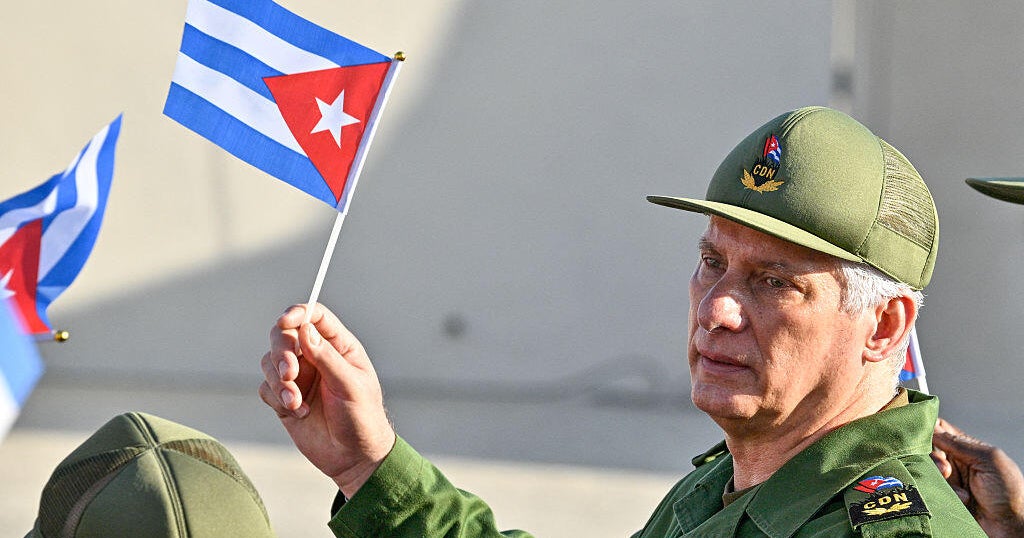
Cuban leader Miguel Díaz-Canel has announced a package of economic reforms aimed at liberalizing parts of the island’s state-controlled economy. The measures include allowing Cubans living abroad to invest in the country and giving state-owned companies greater access to foreign currency markets.
The reforms, unveiled by the Cuban government this week, are being presented as a strategy to address the country’s deepening economic crisis. However, reactions in South Florida’s Cuban exile community have been far from enthusiastic.
During a nationally televised address, Díaz-Canel described the measures as part of a set of priorities designed to confront what he characterized as the economic hardships resulting from U.S. sanctions and policies implemented during the Trump administration.
Among the changes announced are plans to grant municipalities greater authority over local decision-making, simplify the creation of businesses, and expand investment opportunities, including for Cubans residing outside the island.
But some analysts say the reforms come too late to address the structural problems facing the Cuban economy.
“To say that they’re open to economic reforms is really too little, too late,” said Richard Tapia, a professor of political science and international relations at Miami Dade College.
Tapia believes the Cuban government is attempting to signal a willingness to negotiate with the United States as economic pressure mounts.
“The indictment of Raúl Castro last month increased pressure by the U.S. State Department, pushing not just for reforms but for regime change,” Tapia said.
While Díaz-Canel framed the reforms as a response to the U.S. embargo, critics argue the measures are also an acknowledgment of the severe economic challenges facing the island, including declining productivity, shortages and a shrinking population.
At Versailles Restaurant in Little Havana, reactions among Cuban Americans ranged from cautious optimism to outright skepticism.
“It could be good, and it could be bad because it’s unknown,” said South Florida resident Maria Ibarra.
Others said they are willing to reserve judgment until the impact of the reforms becomes clearer.
“If it’s a good thing for the people, we will welcome it with open arms,” Ibarra added.
However, South Florida resident Ricardo Corrales believes the Cuban government is simply trying to buy time.
“He’s running out of resources, out of money, out of people to help him, so the best thing for him is to give in a little bit,” Corrales said.
Tapia echoed that assessment, arguing that Havana may be hoping to wait out the current U.S. administration.
“They are willing to play a waiting game with the Trump administration, and I believe Marco Rubio and the Trump administration don’t want to play this game,” Tapia said.
He added that current U.S. policy appears focused on encouraging broader political change in Cuba.
Whether the reforms will be significant enough to alter relations between Havana and Washington remains uncertain. As of Wednesday evening, the Trump administration had not publicly responded to Cuba’s announcement.
For now, the proposed measures have generated debate on both sides of the Florida Straits, with supporters viewing them as a potential opening for economic growth and critics dismissing them as a last-minute effort by the Cuban government to preserve its grip on power amid one of the island’s most severe economic crises in decades.