
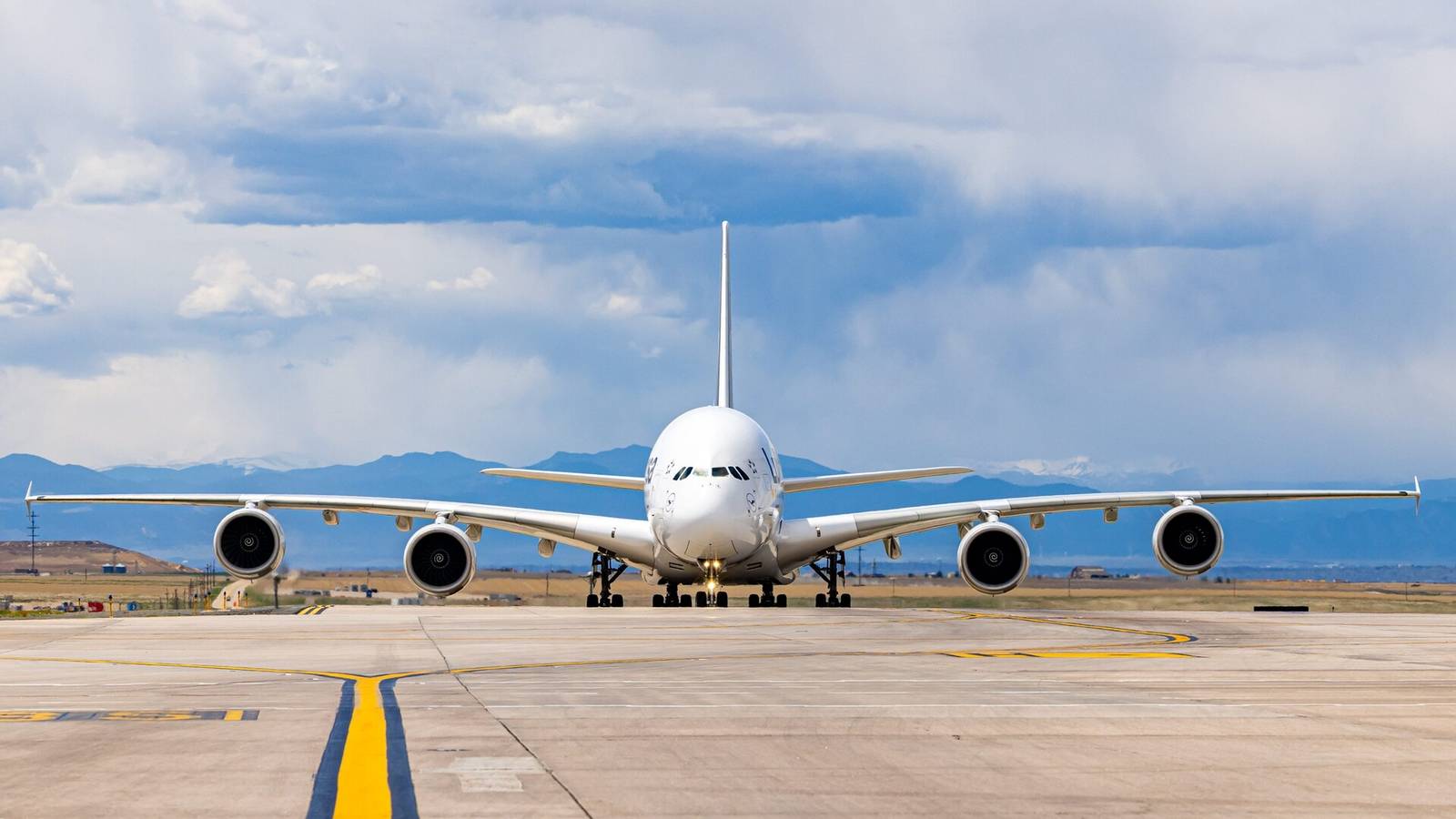
The arrival of the Airbus A380 permanently transformed the architectural baseline of international aviation, pushing major transit hubs to rethink how boundaries can be expanded. Global gateways optimized their runways, taxiways, and terminal gates around the definitive dimensions of the Boeing 747, as no other aircraft challenged the existing dimensions of an airport. However, when a passenger jet weighing up to 1,268,000 lbs (575 tonnes) entered active service, it triggered a multi-billion-dollar wave of infrastructure overhauls across the globe.
The iconic Boeing 747-400 served as the prime example for international design paradigms, establishing fixed limits for wingspan, wheel tracks, and terminal space that civil engineers assumed would last for generations. When the Superjumbo shattered these established boundaries, it pushed regulatory bodies like the Federal Aviation Administration and the International Civil Aviation Organization to draft entirely new structural categories.
Making Way For A Giant

The structural friction between legacy airport designs and the A380 begins with literal geometric dimensions. Major international hubs were constructed only to accommodate up to ICAO Code E or FAA Design Group V aircraft, a category occupied squarely by the 747-400. This standard restricted aircraft wingspans to a maximum of 213 feet (65 meters), allowing airports to lay out parallel taxiways and gate spacing with tight efficiency. When the A380 emerged with a staggering 262-foot (79.8-meter) wingspan, it instantly broke the existing spatial layout of the world’s premier gateways.
Entering into a world where the larger ICAO Code F standard became a reality meant that airports could no longer safely operate adjacent taxiways simultaneously without risking wingtip collisions. At historically constrained gateways like  New York JFK Airport(JFK) or
  Tokyo Narita(NRT), the immense width of the European double-decker meant ground controllers had to implement strict separation buffers. Moving a single A380 down a parallel taxiway sequence often meant shadowing adjacent lanes, bringing smaller twin-engine aircraft to a complete standstill. In all, the arrival of the superjumbo altered ground logistics on a massive scale, transforming routine taxi maneuvers into complex coordination puzzles that diminished overall airport efficiency.
To safely accommodate the vast wing clearance of the aircraft, airports had to embark on massive, invasive land acquisition and reconstruction projects. Regulatory mandates required that parallel taxiway centerlines had to be separated by significantly greater margins to maintain absolute safety buffers during active operations. For older, landlocked urban hubs, expanding these distances was physically impossible without demolishing existing terminal facilities or cargo warehouses.
Sinking Into The Apron?

Beyond the obvious surface geometry, the sheer mass of a fully loaded A380 introduced unprecedented structural challenges beneath the tarmac. Tipping the scales at a maximum takeoff weight of 1,268,000 lbs (575 tonnes), the aircraft imposes localized gravitational loads that legacy airport foundations were never designed to withstand. Engineers at Airbus spent years designing a sophisticated, 22-wheel main landing gear configuration to distribute this immense weight, but the cumulative strain on sub-surface infrastructure remained highly critical.
The core engineering problem centers around how wheel loads migrate through the upper asphalt layers down into the underlying soil foundations. Airport civil engineers utilize the Aircraft Classification Number against the Pavement Classification Number to ensure a runway will not buckle under an airframe’s weight. While the distributed footprint of the superjumbo kept its surface pressure comparable to a classic 747 on flat ground, specialized structures like taxiway bridges, underground culverts, and fuel pipeline tunnels faced catastrophic bending moments. Gateways across the world had to execute major structural reinforcement campaigns, injecting specialized concrete blends deep beneath their taxiway overpasses to ensure the active lanes would not cave in under the weight of a taxiing giant.
The cost of upgrading these invisible foundations rapidly escalated into the tens of millions of dollars per airport. Pavement engineers discovered that active runways could handle the rapid, rolling impact of a landing superjumbo, but slow-moving or stationary aircraft at terminal gates created deep, localized stress points. Over time, this sustained static pressure can cause severe asphalt rutting and foundational changes, necessitating more frequent maintenance closures.
Why The Airbus A380 Flies At Such High Altitudes Despite Being So Heavy
How the world’s heaviest passenger jet reaches normal long-haul cruise altitudes despite its extraordinary weight.
Too Dangerous To Taxi

The infrastructure complications triggered by the A380’s immense footprint extend well beyond straight-line taxiways and parking pads. When navigating the tight turns of an airfield built around the 747, the massive wheel track of the aircraft requires much wider turning radii to prevent the outer tires from slipping off the paved surface. If an aircraft’s landing gear strays onto unpaved grass shoulders during a sharp turn, it risks devastating structural damage, bogging down in the mud, or collapsing the underlying soil beds.
To counter this operational hazard, the FAA originally proposed that runways accommodating these giants be widened from the traditional 150 feet (45.7 meters) to 200 feet (61 meters), though this was later amended to maintain the original width with the addition of runway or taxiway shoulders. The violent jet blast from its four massive turbofans can easily rip up loose asphalt, destroy ground lighting fixtures, and vacuum up loose stones from unpaved shoulders, hurling them directly into the trailing engine blades, and this is precisely why these shoulders are needed.
Extensive airfield reshaping severely strained the capital development budgets of multiple tier-one international hubs. Airports that could not afford to completely re-engineer their entire taxiway architecture were forced to implement heavily restricted operational protocols, limiting superjumbo movements to specific certified corridors. The custom routing rules frequently required tow tugs to pull the aircraft through tight terminal transitions rather than allowing pilots to taxi under engine power.
800 Passengers From Gate To Seats

Once a superjumbo successfully gets through the expanded airside taxiways, the logistical challenge moves entirely to the terminal gate environment. The simultaneous processing of up to 500 or 800 passengers at a single gate creates a massive logistical strain that standard terminal holding areas built for the 747 cannot handle. Without extensive modifications to terminal floor plans, processing lines for security, passport control, and boarding gates quickly face complete gridlock.
To avoid agonizingly prolonged turnaround times, airports had to invest heavily in specialized passenger boarding bridges capable of servicing the upper and lower decks at the same time. A standard 747 typically boards through two gates on a single main deck, whereas the double-decker aircraft needs the design of multi-headed jet bridges, including innovative cantilevered walkways that extend upward to latch onto the upper cabin doors. These multi-million-dollar systems require independent hydraulic controls and precise alignment sensors to prevent the heavy structures from crushing the aircraft shell as the cabin sinks during fuel and passenger loading.
The installation of these triple-headed loading structures also required extensive reinforcement of terminal structural walls to support the immense weight of the cantilevered walkways. Additionally, ground service vehicles and accompanying infrastructure had to be completely replaced or redesigned, as standard catering trucks and baggage loaders lacked the vertical reach to access the upper deck galleys. It meant that gates modified for the European giant became dedicated single-purpose zones, stripping airports of the operational flexibility to easily swap in smaller aircraft during low-demand periods.
Why The Airbus A380’s Main Landing Gear Needs 20 Tires
From mass to mechanics: why the A380 needs more wheels than a semi-truck.
Make Space, The Giant Is Coming

With all of these considered, it is hard to see the A380 as anything more than a troublemaker, but it came into existence for good reason. Its theoretical ability to solve airport capacity constraints by packing more passengers into a single takeoff or landing slot was what carriers around the world became drawn to. However, this economic premise clashed directly with the laws of fluid dynamics as soon as the aircraft took to the sky. The massive wing area required to lift such a heavy airframe generates incredibly violent tornadic air currents trailing behind the wings, known as wake vortices.
To prevent trailing aircraft from rolling out of control upon encountering these invisible aerodynamic vortex hazards, international regulators had to draft an entirely new wake turbulence category specifically for the double-decker, designated simply as Super. The ICAO mandated strict separation minimums behind the giant, requiring standard heavy aircraft like the 747 to maintain a trailing distance of five nautical miles (9.3 kilometers). For smaller, standard twin-jets, this mandatory buffer zone stretched out to six nautical miles (11.1 kilometers), significantly expanding the standard aerial separation window used across the industry.
The separation buffer introduced an operational paradox that directly countered the efficiency goals of high-density hubs. A single superjumbo generally carries twice as many passengers as a standard jet, so the massive space it requires in the landing sequence almost chokes the arrival cadence of the runway. At single-runway facilities or hubs operating near peak capacity, inserting an A380 into the approach stream mix slowed down the overall hourly landing rate, causing a knock-on effect for those waiting to land behind.
Paving The Way For The Next Generation

The commercial aviation industry has moved away from four-engine giants toward highly efficient twin-engine widebodies. Despite this reality, the multi-billion-dollar infrastructure updates forced by the A380 remain a permanent fixture of global airport design. The expansive runway configurations, widened taxiway safety margins, and heavily reinforced overpasses built over the last two decades continue to shape modern flight paths. Interestingly, this vast infrastructure network has paved the way for the latest generation of ultra-long widebody twins to enter service without facing identical roadblocks.
The Boeing 777X and the Airbus A350-1000 directly benefit from the Code F spatial architecture established during the superjumbo boom. For instance, the unique folding wingtips of the 777X allow it to expand its wingspan to a high-efficiency Code F profile while airborne, yet fold its tips up upon landing to fit neatly into legacy Code E gates originally built for the 747.
Ultimately, the immense physical footprint of the double-decker left an indelible mark on the concrete layout of international transportation hubs. Even now that individual carriers are retiring their double-decker fleets in favor of more flexible configurations, the reinforced runways and towering multi-deck jet bridges stand as monuments to a unique era of structural ambition. The capital investments made to accommodate 575 tonnes of aluminum and composite materials have permanently redefined the physical limits of global aviation infrastructure, ensuring that the world’s gateways are structurally prepared for whatever the future of aerospace design brings forward.