
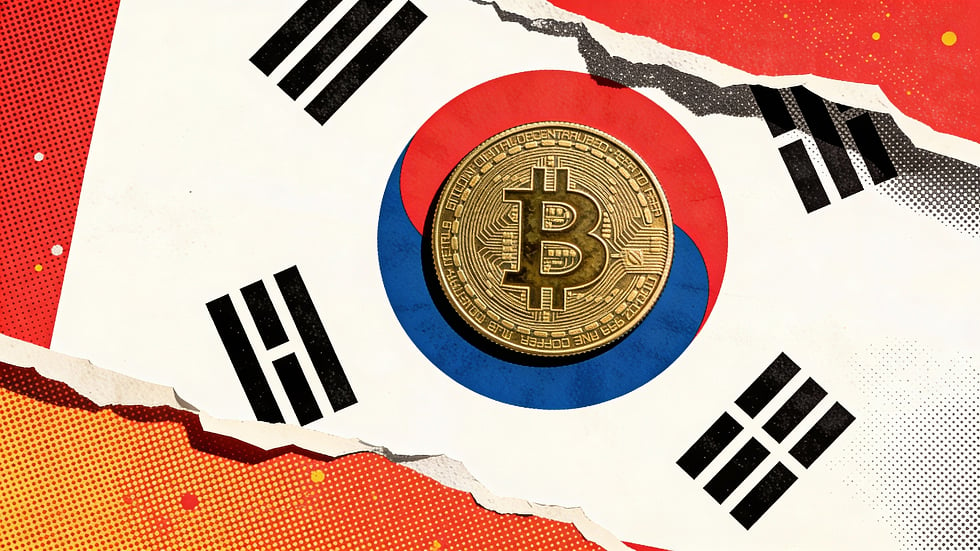
The long-standing “Kimchi Premium” in South Korea’s cryptocurrency market has turned negative for the first time, signaling a massive withdrawal of retail funds. Key reasons include:
- Cooling speculation: Amid altcoin struggles, speculative interest in Korea’s crypto market has declined.
- Stock market draw: Korea’s stock market surged 86% this year, led by tech giants like Samsung and SK Hynix, pulling liquidity away from crypto.
- Upcoming tax: The government confirmed crypto taxation starting next year, shifting market preferences.
Real-time data from monitoring channels shows a persistent discount of over 2%, with weak demand for stablecoins like USDT. This negative premium reflects clear capital outflow from retail investors, serving as a crucial indicator of current market sentiment.
Author: Doo (Compound Foundation)
Compiled by: Deep Tide TechFlow
Deep Dive: South Korea has always been one of the most fervent markets for crypto retail investors globally, with the “kimchi premium” once reaching as high as 20%. Now, the premium has turned negative for the first time, reflecting not only the collapse of altcoins but also a signal of a large-scale exodus of retail funds from the crypto market, providing important insights into current market sentiment.
The cryptocurrency premium in South Korea is turning negative, which is highly unusual, as South Korea typically experiences premiums. Incidentally, the prevalence of premiums or discounts in South Korea is due to capital controls that make arbitrage difficult.
Here are some thoughts on why discounts occur.
1. The speculative market is in decline.
The South Korean market is known for its speculation, at one point pushing premiums to over 20%. However, as the crypto market has struggled, especially altcoins, market interest has been declining.
2. The South Korean stock market is performing much better and is drawing liquidity away from cryptocurrencies.
The South Korean stock market has nearly doubled compared to last year, with several technology companies, including Samsung and SK Hynix, leading the growth. This suggests that liquidity previously flowing into cryptocurrencies is shifting to the South Korean stock market.
3. The upcoming cryptocurrency tax in South Korea is also changing market preferences.
South Korea’s cryptocurrency tax has been delayed multiple times due to the country’s lack of adequate infrastructure for collection and the highly unpopular political issue. However, the current government has at least confirmed that it will begin taxing cryptocurrencies next year.
Translator’s note: Real-time data confirms that discounts are in effect.
Real-time monitoring data from the South Korean Telegram channel “김프출입국사무소” (Kimchi Premium Immigration Office) provides direct evidence for the above judgment. This channel specializes in tracking the premium or discount of the South Korean cryptocurrency market relative to the international market. Below are three sets of data recorded on the same day:
“역프” is an abbreviation of “역김치프리미엄”, which means reverse kimchi premium . This refers to the fact that the price of crypto assets in the South Korean market is lower than that in the international market. In other words, it is cheaper to buy cryptocurrencies in South Korea than overseas.
Several details can be observed from the data:
First, the discount narrowed from 3.04% to 2.44% on the same day, but remained above 2%, indicating that the discount was not a short-term fluctuation, but a market condition with a certain degree of persistence.
Second, the price of Tether (USDT) remained stable at 1471–1472 Korean won, while the exchange rate of Korean won/US dollar was between 1506 and 1516 during the same period. The difference between the two is the direct source of the discount— the demand for stablecoins in the Korean market is insufficient, and the buying power is obviously weak .
Third, the channel omitted 11 warning pushes during the sideways trading period, which means that the discount continued for a longer period of time, but the magnitude did not change much and did not trigger the broadcast threshold.
This data, from a micro perspective, confirms the article’s core judgment: South Korean retail investors are withdrawing from the crypto market, and the trend of net capital outflow has already left a clear mark on the price structure.
It is worth noting that the fact that such a sophisticated premium monitoring system has spontaneously formed in South Korea demonstrates that “김프” has long been one of the core trading signals in the South Korean cryptocurrency market.
Now that this signal has turned negative for the first time, its symbolic meaning goes far beyond the numbers themselves.
Data shows that the total market capitalization of South Korean listed companies surged 86% this year, reaching $5 trillion; while India’s total market capitalization fell back to $4.8 trillion. So far this year, the South Korean stock market has surpassed the stock markets of Canada, Germany, the UK, and France, rising to sixth place globally in total market capitalization.