
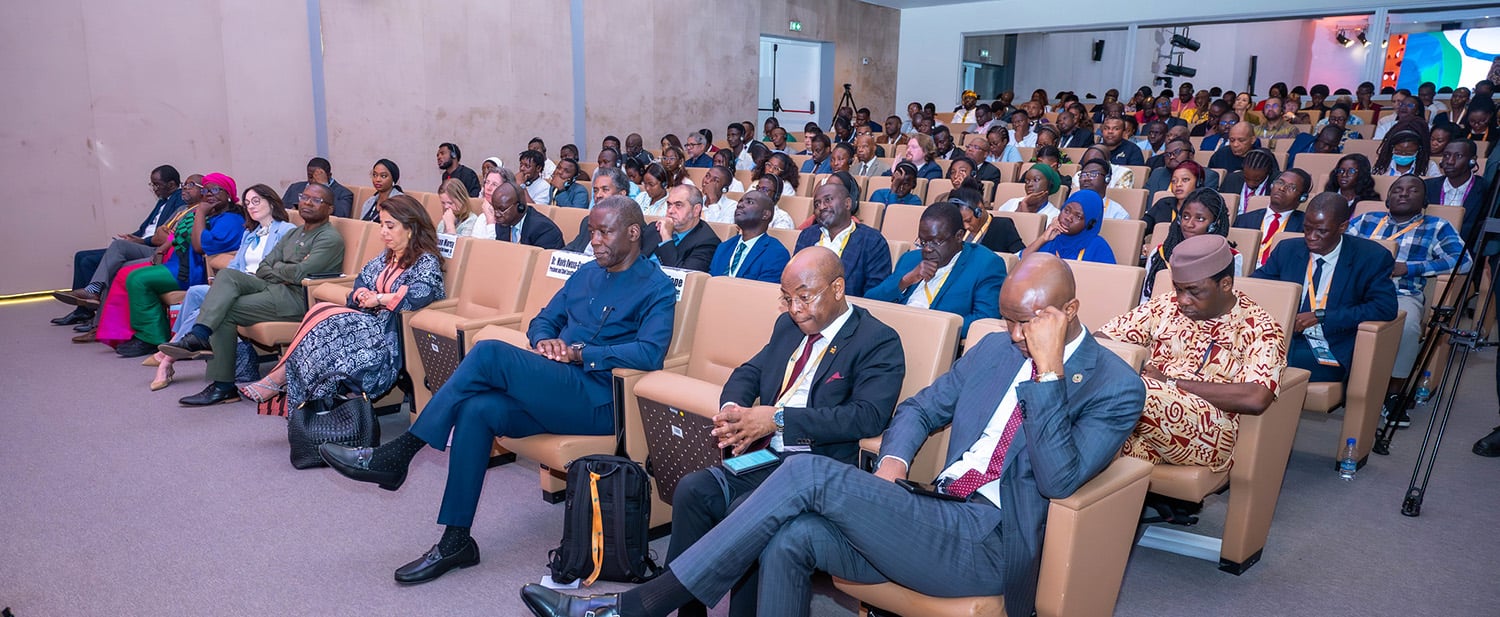
African policymakers, development institutions and leading economists on Sunday launched the African Chief Economists Network (ACE-Network), a continent-wide platform designed to strengthen evidence-based policymaking and provide coordinated African solutions to increasingly complex global economic challenges.
The launch, one of the principal outcomes of the 2026 African Economic Conference (AEC), comes as African countries face mounting geopolitical tensions, global trade fragmentation, climate shocks, rising debt pressures, and a rapidly evolving international financial and development architecture.
Hosted by the African Development Bank Group in partnership with the United Nations Development Programme (UNDP) and the Organisation for Economic Co-operation and Development (OECD), the three-day conference brought together ministers, central bank officials, chief economists, academics, development practitioners, private-sector leaders and researchers from across Africa and beyond.
The event, held under the theme “Strengthening Africa’s Geopolitical Agency and Trade Resilience in a Multipolar World,” concluded with more than 4,000 participants connected virtually over the three days, reflecting growing interest in Africa’s search for stronger, home-grown policy responses to a rapidly changing global economy.
Speaking on behalf of African Development Bank Group President Dr Sidi Ould Tah, Senior Vice-President Marie-Laure Akin-Olugbade described the launch of the ACE-Network as a landmark achievement that would strengthen Africa’s capacity to develop practical, evidence-based policy solutions.
She noted that the broad participation and engagement of stakeholders across diverse sectors and institutions demonstrate the timeliness, relevance and importance of this year’s theme for Africa’s future. She urged members of the new network to translate research into policies and actions that improve the lives of Africans.
“This is a big responsibility on your shoulders, and we expect to see clear results in the form of very effective decisions and, therefore, actions that really move the needle for the men and women of this beautiful continent of ours,” Akin-Olugbade stressed.
Responding to a changing global economy
The establishment of the ACE-Network reflects growing recognition that African countries need stronger coordination among their leading economic thinkers as policymakers navigate increasingly interconnected global crises.
The network aims to fill that gap by creating an informal, invitation-only community of chief economists and senior policy advisers to exchange evidence, coordinate research, identify emerging risks, and jointly develop policy recommendations for African governments.
Members will include chief economists from African development finance institutions and multilateral organisations, chief economic advisers to African presidents and prime ministers, deputy governors of central banks responsible for economic policy, heads of leading think tanks, deans of economics faculties, and senior private-sector economists.
Rather than establishing another formal institution, the network will operate as a collaborative platform, meeting annually alongside the African Economic Conference and holding quarterly virtual sessions and rapid-response meetings during major global or regional economic shocks.
Strengthening Africa’s knowledge sovereignty
Presenting the network’s strategic vision, African Development Bank Group Chief Economist and Vice-President for Economic Governance and Knowledge Management, Prof Kevin Urama, said Africa must strengthen its knowledge systems if it is to shape the emerging global financial and economic order.
He argued that Africa has only a limited window to influence reforms to the international financial architecture and that stronger coordination among African economists would help governments make better-informed decisions amid unprecedented uncertainty.
Among the network’s priorities are strengthening Africa’s knowledge sovereignty, increasing investment in research and innovation, improving policy coordination, reducing duplication across institutions, enhancing early-warning systems for emerging risks, and ensuring that economic analysis better reflects African realities.
Urama also called for greater investment in what he described as “soft infrastructure”—research, data systems and knowledge institutions—to complement the continent’s growing investment in transport, energy and other physical infrastructure.
Bridging research and policymaking
UNDP Regional Bureau for Africa Chief Economist Dr Raymond Gilpin described the network as “a unified powerhouse of African intellectuals” capable of narrowing the gap between economic research and public policy.
He said the initiative would help African countries mobilise domestic capital, strengthen implementation of the African Continental Free Trade Area (AfCFTA), develop innovative responses to climate and fiscal challenges, and convert Africa’s demographic growth into a driver of long-term prosperity.
“The Africa Chief Economists Network will be an engine room that designs creative solutions necessary for Africa to attain the Sustainable Development Goals and the African Union’s Agenda 2063,” Gilpin said.
United Nations Economic Commission for Africa (UNECA) Deputy Executive Secretary and Chief Economist Dr Hanan Morsy said increasingly interconnected crises demanded stronger collective economic intelligence across Africa.
“No country, regardless of its size or resources, can effectively navigate this environment alone,” she said, adding that the network’s success would ultimately be measured by whether it improves policymaking, strengthens resilience and contributes to faster, more inclusive growth across the continent.
Representing the OECD, Ida McDonnell, head of the Development Research Unit, noted that current global challenges required integrated approaches to trade, debt, climate finance, industrial policy and investment, rather than treating each issue separately.
She added that the new ACE-Network would help reduce duplication while strengthening African contributions to global policy debates.
Over three days in the Ivorian capital, delegates examined how Africa can strengthen its geopolitical influence while improving trade resilience, mobilising domestic resources, expanding regional value chains, accelerating industrialisation and attracting greater investment in an increasingly multipolar world.
Sessions also explored the future of development finance, public investment efficiency, artificial intelligence, digital transformation, climate resilience, regional integration and institutional reforms needed to position Africa as a stronger actor in global economic governance.
Participants agreed that Africa possesses major comparative advantages—including the world’s youngest population, abundant renewable energy resources, critical minerals, expanding digital markets and the world’s largest free trade area under the AfCFTA—but that stronger institutions, better policy coordination and higher-quality economic analysis will be essential to convert those assets into sustained growth.