
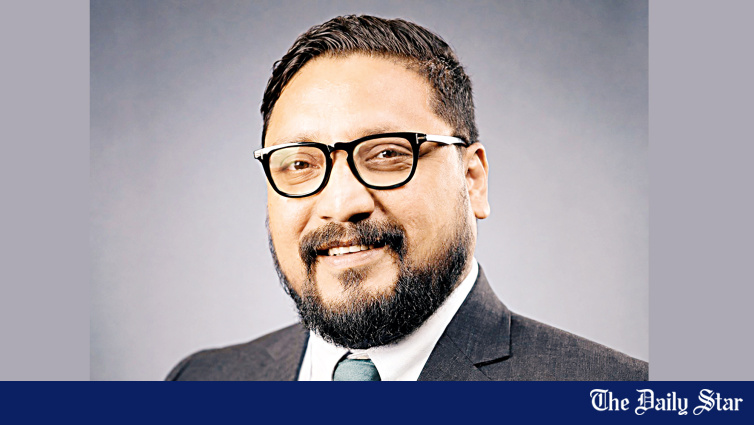
Amir Daud
CEO
IFAD Commercial Automotive Division
Fleet owners now judge a truck by how much it can earn across its working life.
From infrastructure-led demand to local manufacturing and telematics, Bangladesh’s commercial vehicle market is increasingly shaped by lifetime operating economics. Amir Daud, CEO IFAD Commercial Automotive Division, discusses changing fleet priorities, the value of local production and the technologies likely to define the sector’s next phase in an interview with The Daily Star.
The Daily Star (TDS): How have infrastructure development and longer freight journeys changed what fleet owners expect?
Amir Daud (AD): Better roads, bridges and expressways have made transport faster and increased the number of trips vehicles can complete. Fleet owners now look beyond purchase price to payload, fuel efficiency, durability and uptime. They judge a truck by how much it can earn across its working life. Ashok Leyland trucks and tippers have supported major bridge approaches, expressways and developments around Padma and Payra, so our products and service network must deliver that operating value.
TDS: What advantages does IFAD’s Dhamrai manufacturing facility offer customers?
AD: Since beginning operations in 2017, the facility has developed assembly, cabin and body-manufacturing capabilities, supported by greater automation in quality control. Local production lets us adapt suspension, body strength and cabin configurations to Bangladesh’s road conditions, load patterns and operating requirements. It creates more value locally and gives us better control over supply. That improves stability when international logistics are disrupted.
TDS: How does IFAD help fleets reduce downtime and total ownership costs?
AD: Fuel, maintenance, downtime and resale value can matter more than the initial price. Our focus is therefore on fuel efficiency, useful payload, reliability and service support. IFAD Auto Services operates about 20 company-owned centres alongside authorised stations, several hundred parts outlets and more than 1,000 trained mechanics. Our Madanpur facility can handle over 20 vehicles at once and provides accident repair and training. Around 200+ roadside mechanics also support light commercial vehicles. The wider group supplies Apollo tyres and Gulf lubricants, giving customers fewer parties to manage and clearer accountability.
TDS: What will define IFAD’s strategy beyond 2026?
AD: Technology will play a larger role in fleet management. We want to expand GPS-based services into real-time diagnostics, predictive maintenance and driver-behaviour monitoring so operators can identify problems. We will also expand manufacturing at Dhamrai. IFAD is following cleaner powertrain development and Bangladesh’s fuel infrastructure and regulations.