
Close Menu
Aspire Market Guides
  • Home
  • Alternative Investments
  • Cryptocurrency
  • Economics
  • Equity Investments
  • Mutual Funds
  • Real Estate
  • Trading
What's Hot

India’s AI boom cannot ignore its water crunch

September 5, 2026

Investcorp to boost investments in India with up to three deals a year

September 5, 2026

Ontario fines SeatGeek $25,000 under ticket resale law that aims to prevent scalping

September 5, 2026
Facebook X (Twitter) Instagram
Trending:
  • India’s AI boom cannot ignore its water crunch
  • Investcorp to boost investments in India with up to three deals a year
  • Ontario fines SeatGeek $25,000 under ticket resale law that aims to prevent scalping
  • Cornell’s Dyson School earns No. 3 place in Poets and Quants ranking- Cornell SC Johnson College of Business
  • ‘Growth is improving, uncertainties are going down’: Bajaj MF CIO Nimesh Chandan
  • Private equity faces existential crisis in US as unsold companies pile up | Business
  • News flash: We live in a mixed economy | Froma Harrop – Kenosha News
  • How the rise of institutional investors is changing the IPO playbook
  • Brazil Enacts “Taylor Swift Law” For Concert Safety & Scalping
  • Direct Equity Source Acquires Three Self-Storage Properties in Granbury
Saturday, September 5
Facebook X (Twitter) Instagram
Aspire Market Guides
  • Home
  • Alternative Investments
  • Cryptocurrency
  • Economics
  • Equity Investments
  • Mutual Funds
  • Real Estate
  • Trading
Aspire Market Guides
Home»Economics»India’s AI boom cannot ignore its water crunch
Economics

India’s AI boom cannot ignore its water crunch

By CharlotteSeptember 5, 20264 Mins Read
Share
Facebook Twitter Pinterest Email Copy Link


Boston/Bengaluru: India’s growth story has often relied on alignment between society, state and market. Public infrastructure, private innovation and social needs have advanced together in this mixed-economy model. In AI, that has meant shared compute, open datasets and a deliberate effort to keep access affordable. At its core is a democratic instinct: the belief that AI should work for everyone.

But AI infrastructure is not abstract. It’s physical, resource-intensive and tied to local ecosystems. This raises the question: what happens when this rapid expansion collides with a country facing severe water stress?

Global tech companies are committing investments to expand cloud capacity in India. Domestic players are doing the same. The goal is to make AI cheaper, faster and more accessible.

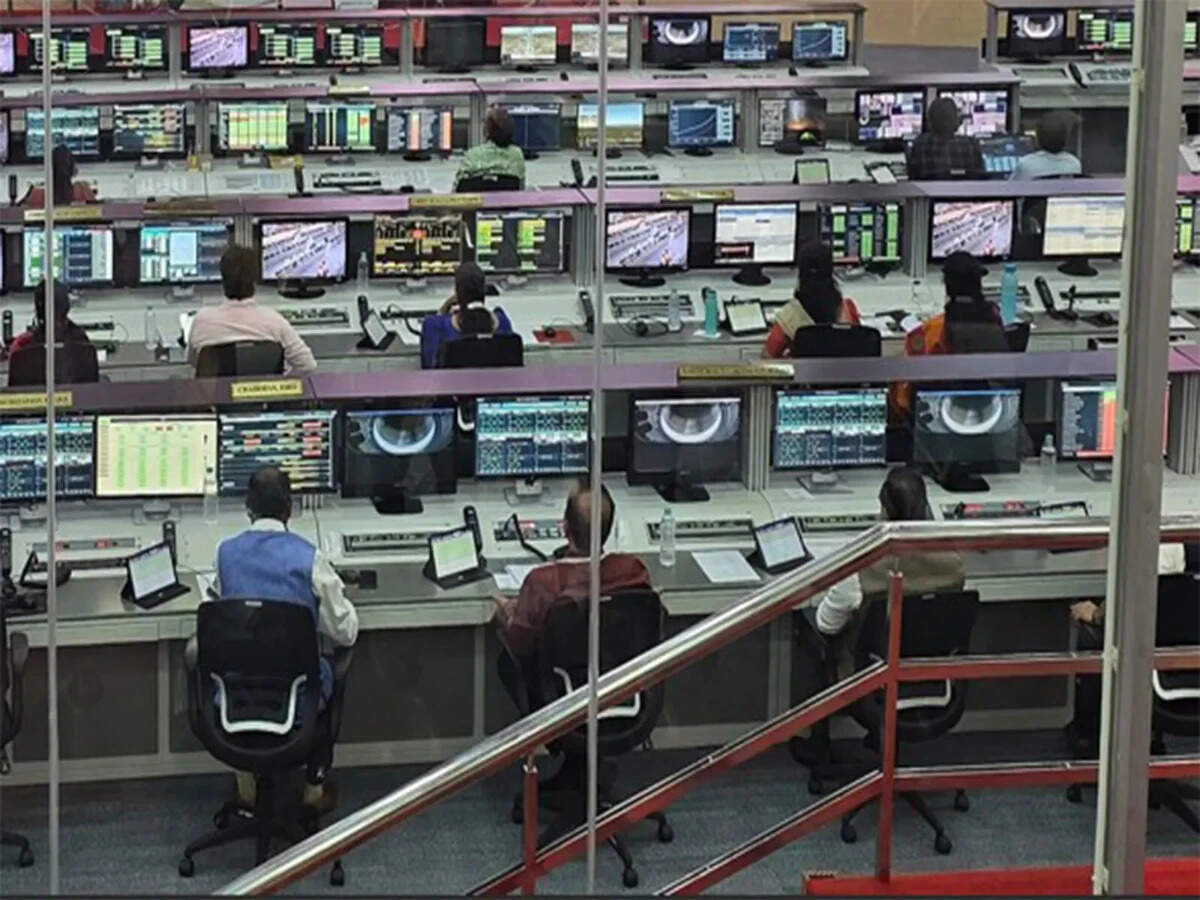
Data centres, which power everything from search engines to genAI models, require cooling to operate. A single large facility can consume as much water in a day as a small village. Even in the US, the strain is becoming evident, from groundwater pressures in Texas to rising withdrawals in Virginia’s ‘Data Centre Alley’.

In India, this trend intersects with a fragile reality. The country is home to nearly 18% of the world’s population, but has access to only about 4% of its freshwater resources. Most cities are already dealing with falling groundwater levels, infra pressures, and growing competition between domestic, agricultural and industrial use.

These same cities are now becoming hubs of data centre expansion. Hyderabad, Bengaluru and parts of Maharashtra are attracting significant investment in AI infra even as they face recurring water shortages. In Pune, concerns over water access have already sparked public pushback.

Unlike electricity, which can be transmitted, water is local. When data centres draw from urban supplies, they compete with households, farmers and small businesses, often relying on potable, drinking-grade water. At the same time, AI’s water footprint extends well beyond data centres. Power generation itself, including some RE sources, can be water-intensive, and production of advanced semiconductor chips requires vast quantities of ultra-pure water. The true resource demand of AI infra is far greater than what is immediately visible.

India’s AI ambitions are designed to address pressing domestic challenges. From improving agricultural productivity, expanding access to healthcare and widening educational opportunities, AI is being positioned as a tool for inclusive growth. But the infra that enables these solutions may also be placing additional strain on the systems that sustain everyday life.

More computing requires more energy. More energy often requires more water. In a country where water is already scarce, this creates a feedback loop that cannot be ignored. And, yet, policy frameworks have not fully caught up with this reality.

While several states have introduced incentives to attract data centre investments, only a handful meaningfully incorporate sustainability criteria. As a result, facilities can be built in water-stressed regions without standardised reporting or clear accountability to local communities. A clear unified national framework governing water use or disclosure is needed.

Things can get worse as demand scales. More than 60% of India’s existing data centre capacity is expected to operate in high water-stress regions this decade. Corporate sustainability commitments offer some reassurance. But their impact remains uneven. Major tech companies have pledged to become ‘water positive’, investing in watershed restoration and replenishment efforts. Yet, these interventions often operate at a broader regional level and don’t necessarily offset localised strain, particularly in cities already facing shortages.

Globally, Google alone reported using over 5.6 bn gallons of water for its data centres in 2023, a figure that continues to rise alongside AI demand. Infrastructure is also proving vulnerable to environmental stress. During a 2022 heatwave in Britain, cooling failures forced temporary shutdowns of major data centres during demand peaks.

Despite this, incentives driving expansion remain largely economic. Tax benefits, subsidised land and fast-track approvals continue to prioritise rapid growth, often without integrating long-term water and energy constraints into planning decisions.

None of this suggests that India should slow down its AI ambitions. The real challenge is not whether India should invest in AI infra, but how.

Location-specific planning must become central to decision-making.

In water-scarce regions, less water-intensive cooling systems may need to be prioritised, even at the cost of higher energy use.

Standardised reporting on water and energy use would enable better oversight and more informed public debate.

India has demonstrated global leadership in building DPI. The next phase will require applying that same rigour to physical systems that support it. Success of a digital future will depend not only on data and compute, but on whether natural resources that sustain it are managed with equal ambition and care.

The writers are co-founders, Leherum


Source link

Related Posts

Economics

Cornell’s Dyson School earns No. 3 place in Poets and Quants ranking- Cornell SC Johnson College of Business

September 5, 2026
Economics

News flash: We live in a mixed economy | Froma Harrop – Kenosha News

September 5, 2026
Economics

How Arizona economy remains resilient amid mixed signals

September 5, 2026
Economics

New Economics Courses in Collaboration with MIT

September 5, 2026
Economics

NHAI, NCAER Join Hands To Set Up India’s First Dedicated Research Centre For Transport Economics

September 5, 2026
Economics

NHAI, NCAER partner to launch transport economics research centre

September 5, 2026
Add A Comment
Leave A Reply Cancel Reply

Editors Picks

India’s AI boom cannot ignore its water crunch

September 5, 2026

Investcorp to boost investments in India with up to three deals a year

September 5, 2026

Ontario fines SeatGeek $25,000 under ticket resale law that aims to prevent scalping

September 5, 2026

Cornell’s Dyson School earns No. 3 place in Poets and Quants ranking- Cornell SC Johnson College of Business

September 5, 2026
SUBSCRIBE TO OUR NEWSLETTER

Get our latest downloads and information first. Complete the form below to subscribe to our weekly newsletter.


I consent to being contacted via telephone and/or email and I consent to my data being stored in accordance with European GDPR regulations and agree to the terms of use and privacy policy.

Featured

Oriole Resources Nears a Potential West African Gold Mine as Mbe Moves Beyond 1.2Moz (video) – DirectorsTalk Interviews

April 14, 2026

Celtics’ Brad Stevens Open to ‘Big Swing’ Trade After Jaylen Brown Deal

July 8, 2026

Vermont rings in new fiscal year with laws on cannabis, privacy, scalpers, and more

July 2, 2026
Monthly Featured

Swing Trading Lab Review (2026): Telegram Forex Signals Exposed

July 15, 2026

Qsif Active Asset Allocator Long-Short Fund is open for subscription. 8 key things to know

April 7, 2026

Veteran investor appointed as BBB’s managing director of direct equity

June 1, 2026
Latest Posts

India’s AI boom cannot ignore its water crunch

September 5, 2026

Investcorp to boost investments in India with up to three deals a year

September 5, 2026

Ontario fines SeatGeek $25,000 under ticket resale law that aims to prevent scalping

September 5, 2026
SUBSCRIBE TO OUR NEWSLETTER

Get our latest downloads and information first. Complete the form below to subscribe to our weekly newsletter.


I consent to being contacted via telephone and/or email and I consent to my data being stored in accordance with European GDPR regulations and agree to the terms of use and privacy policy.

© 2026 Aspire Market Guides.
  • Contact us
  • Privacy Policy
  • Terms and Conditions

Type above and press Enter to search. Press Esc to cancel.

SUBSCRIBE TO OUR NEWSLETTER

Get our latest downloads and information first.

Complete the form below to subscribe to our weekly newsletter.


I consent to being contacted via telephone and/or email and I consent to my data being stored in accordance with European GDPR regulations and agree to the terms of use and privacy policy.