
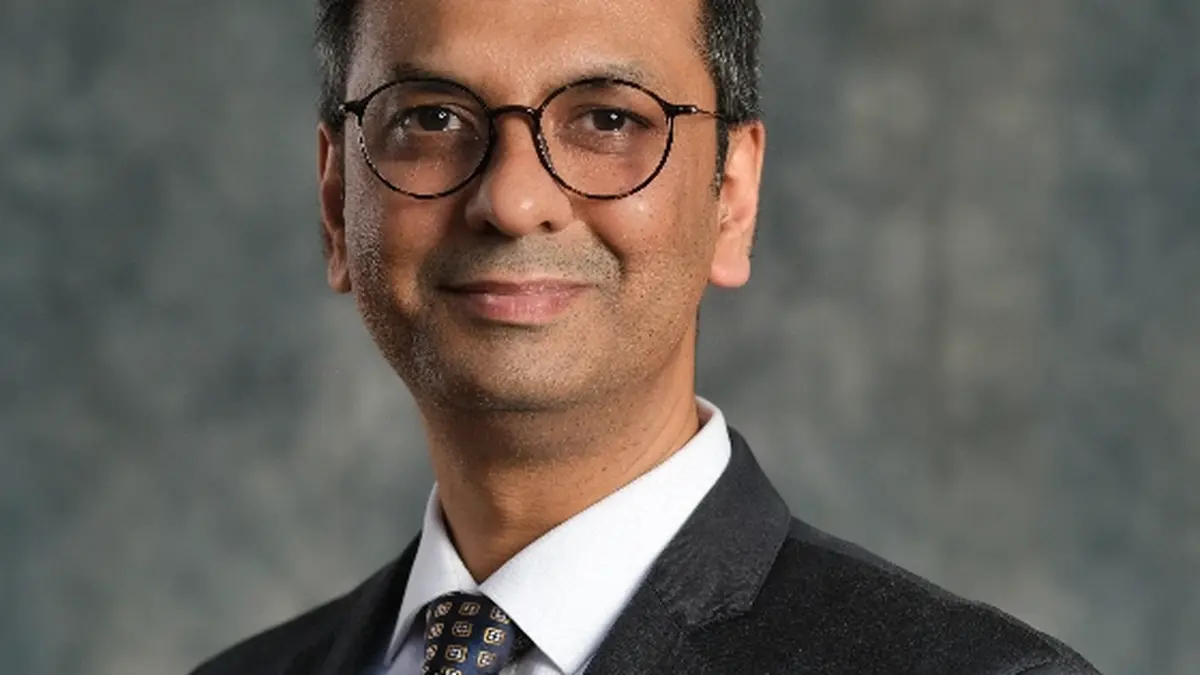
Bajaj Mutual Fund, one of the newer entrants in India’s crowded MF industry, has shown early promise with key offerings doing well and its assets under management nearing the ₹40,000-crore mark. At its September market symposium in Mumbai, bl.portfolio spoke to Nimesh Chandan, Chief Investment Officer, about valuations, foreign flows, earnings, market-cap opportunities and popular themes. He also explains what the market may be mispricing and what could change the AMC’s stance on key sectors.
Are valuations beginning to matter more as global liquidity tightens? Could they fall towards pre-Covid levels?
Valuations are always important to monitor. Recently, because of volatility, there has been a huge divergence in valuations across sectors.
For example, if you look at financials, valuations are probably at decade-low levels. If you look at some capital goods companies in areas such as data centres, AI or the power sector, valuations have moved up very substantially. In this kind of market, rather than generalising about a category or the overall benchmark, one must look on a bottom-up basis for opportunities or pockets where growth is good but valuations are lower.
So, it is an active stock-picker’s market right now. Interest rates could possibly move up from here. But if interest rates move up because growth is surprising positively, valuations will adjust upwards. If interest rates go up purely because of cost-push inflation, it is likely that valuations will come under pressure.
With global yields surging, what would bring FPIs back to India?
Most of the time, global investors as well as domestic investors look for stronger growth and lower valuations. Over the last two years, in many pockets, we saw earnings downgrades, growth coming under pressure and geopolitical issues creating uncertainty. For example, at one point, we were put under the 50 per cent (US) tariff bracket.
Now, we are affected by oil prices because of the uncertainty in West Asia. These issues create uncertainty.
What we have seen slowly this year is that uncertainty is receding. That is why we have seen some foreign investors coming back — growth is improving, valuations in some pockets are becoming attractive, and that is bringing money back. Yet, no matter how much you analyse, you cannot say that a particular flow of liquidity will continue or reverse again.
However, conditions generally are right for attracting foreign flows back into the country.
Are investors underplaying geopolitical risks?
This time, people are actually well aware of the geopolitical issues and, frankly, a bit fearful too. That is now reflecting in volatility and some profit-booking every time markets start moving up. Fear is a difficult emotion to control and does drive decision-making.
Wars typically get people worried and scared, and that is playing out. So, I wouldn’t say people are underestimating the impact. Possibly, in some areas, people are overestimating the impact or assuming that this will go on for much longer.
You say the market is modestly undervalued but also advise investors to stagger investments over months. Why?
We typically tell investors to look at equities from at least a three-five year perspective. The longer, the better; perhaps even a decade or two when you are investing in mutual funds and diversified mutual funds. However, it is possible that many investors get disturbed by volatility and the news flow coming in.
The last two-three months have been more volatile since the conflict began in March. There has been greater volatility in global as well as domestic markets, which may unnerve certain investors. That’s when we recommend that SIPs are better — not only because of the rupee-cost averaging they offer, but also because they are psychologically more comfortable for investors and may prevent them from redeeming at the wrong time out of fear.
Coming to sectors, what is the market currently mispricing?
It looks like India will see a manufacturing resurgence, especially led by exports. A lot of MNCs as well as large domestic manufacturing companies are increasing their capex. I think the market is underestimating the kind of growth we will get in manufactured exports and in manufacturing sectors overall in India.
It could be capital goods, textiles, automobiles, auto ancillaries, or newer areas such as physical AI or robotics, and supplying certain equipment to data centres. People seem to be underestimating many of these, though not all. Many of these opportunities may be underestimated because we now have a currency advantage, we have trade agreements in place and the capex cycle is doing well in India.
Some experts talk about an earnings recovery. Where is it actually visible?
In the latest quarterly results, we looked at certain metrics that we track internally, including how many companies are meeting or beating estimates. We track about 400 companies and found that 75 per cent of them have either met or exceeded expectations, while only about 25 per cent have missed expectations. This ratio used to be much lower. The proportion of companies meeting or beating expectations was much lower, say, six quarters ago. That gives us confidence that the earnings trajectory is now looking up. Analyst forecasts for Nifty earnings are also pointing to higher earnings growth in FY27 and FY28. That gives us confidence that we are on an uptick in terms of the earnings growth rate.
Which sectors have moved from green shoots to a strong upcycle?
The biggest change has come from all the efforts the government took in terms of income-tax cuts and GST cuts, while interest rates have also come down since the beginning of 2025. The wealth effect from the rise in gold prices is also showing up in higher discretionary spending and consumption. Most companies in the consumption space have given a positive outlook or spoken about a recovery in growth for the rest of FY27 and, in some cases, FY28 as well.
This is the biggest change we have seen. Despite high inflation, uncertainty and domestic petrol and diesel prices being revised upwards, demand in many of these sectors has remained strong and companies have a positive outlook for the year.
Where are prices running ahead of fundamentals?
Every time people get attracted towards a theme, they start giving it a higher valuation. That reflects their higher expectations or the longevity of growth they are expecting. While I can’t say that an entire sector or theme is getting overpriced or underpriced, there are pockets within defence, some power equipment companies or some AI-related plays where we have seen valuations move up substantially. That does not mean they will come down tomorrow, but they become vulnerable to any negative news flow that may emerge.
You said you like both large-caps and small-caps. Why?
We like both the large-cap and small-cap spaces, but for different reasons. We like large-caps because of valuations and small-caps because of growth. These are the two areas where we are able to hunt for ideas and are likely to find better opportunities.
In large-caps, however, because there are only 100 companies to choose from, we typically run concentrated positions, whether in our diversified fund or even within our large-cap fund. You will find that we typically invest in about 30 companies out of those 100, so we are very concentrated. In small-caps, we run a larger portfolio because the universe itself is much larger.
At last count, we were choosing from about 900 companies in the small-cap space and have created a portfolio of about 95 companies in our small-cap portfolio. So, in a way, we are choosing one out of every 10 companies. But because the universe is so large, we are able to find 95 companies that qualify on the quality, growth and value mix.
So, are you more cautious on mid-caps?
Yes. Of the three categories, the one that has done extremely well and was the first to hit an all-time high was the mid-cap category. We are not negative on mid-cap businesses, but when a category becomes very highly valued, we become a little cautious and very selective. Even in our flexi-cap and multi-cap funds, we have mid-cap allocations, but we are extremely selective.
It is a 150-company space that we have to select from. If the whole category has been a leader in terms of returns, we have to be a little careful about where valuations have become very high or certain businesses within that category have become highly priced. Ideally, what a fund manager tries to do is give you the best growth and the best value so that you get higher compounding.
Even if you pick a good company at a high valuation, you may not get good compounding. That is the only reason why we have not launched a dedicated mid-cap fund yet.
You have been underweight on the IT sector. What would make you reverse your stance?
If there is a pickup in earnings growth, we will change our stance. Within IT, large-cap, mid-cap and small-cap companies have very different ranges of growth and valuations, depending on their growth rates. Generally, IT is a more top-down sector. If there is buoyancy in the sector, you will see upgrades in earnings growth across large-caps, mid-caps as well as small-caps. At that time, we will choose whichever companies we like from that space. But currently, we don’t see scope for earnings growth, at least for this year.
Private-sector banks have been a consensus buy call. How do you see them?
Our position has been that we were underweight on the large private banks and overweight on the mid-cap and small-cap private banks. Many of them had good capital, displayed good loan growth and maintained very good asset quality, which attracted us. Their valuations were also attractive.
So, we had invested more in those. But after the kind of correction we have seen in many of the large banks now, they have become attractive. There are some management changes, so some uncertainty still remains.
However, there is less risk and high uncertainty, which means there is very little downside from these valuations because they are good businesses. Investors are just waiting for clarity on the top management at some of these banks. Once that comes in, the stocks are likely to move.
So, we are now turning more positive towards these private banks. Also, many private banks may actually benefit from rising interest rates because they can pass them on through their asset pricing, while liabilities get repriced more slowly.