
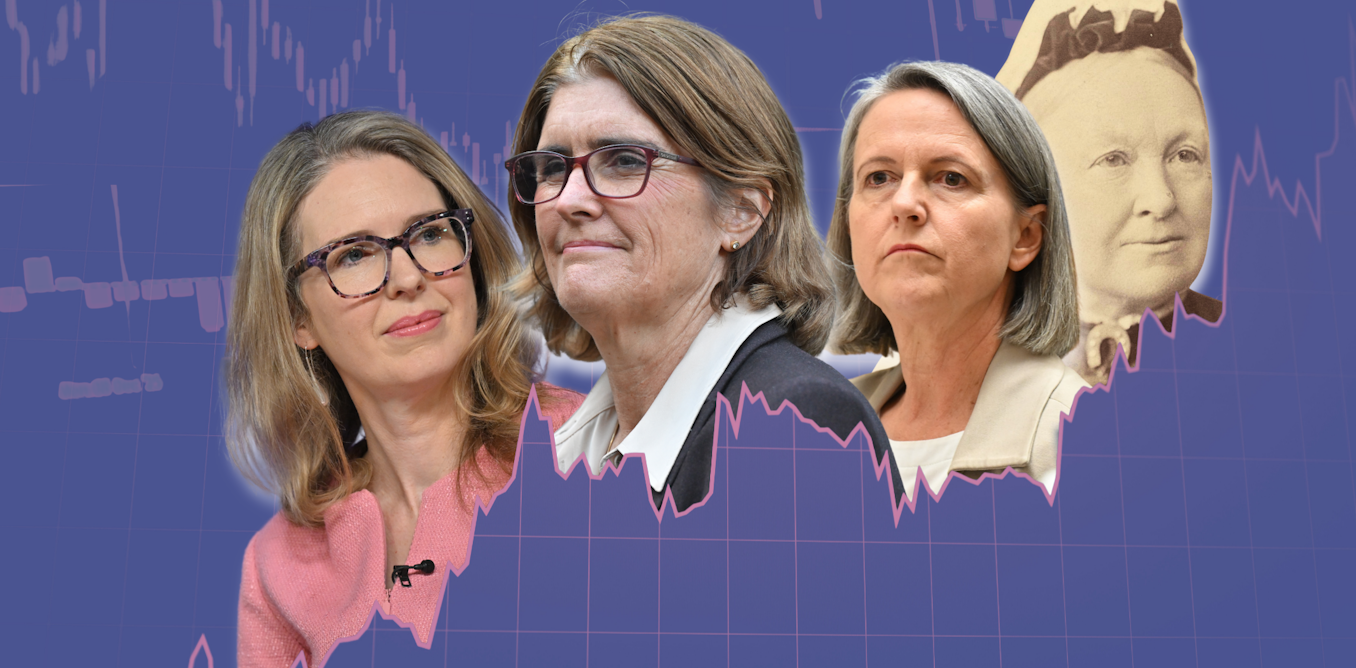
Some of Australia’s most powerful policy institutions are now being led by female economists.
Between 2023 and 2026 came a remarkable run of firsts. Danielle Wood became the first woman to chair the Productivity Commission, Michele Bullock the first female governor of the Reserve Bank of Australia (RBA), and Jenny Wilkinson the first woman to lead the Australian Treasury.
It might seem as though women economists have suddenly arrived at the top.
Yet these remarkable firsts began much earlier.
Public domain, via Wikimedia Commons
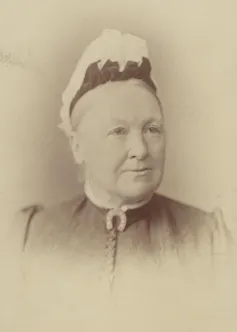
Did you know the first economics textbook used in Australian schools was written by a woman? In 1880, the writer, reformer and suffragette Catherine Helen Spence published The Laws We Live Under and it stayed on the curriculum for 20 years.
Or that Australian economist Marion Phillips became the first Australian woman elected to a national parliament – entering Britain’s House of Commons in 1929?
If these stories are unfamiliar, you are probably not alone.
A new book, Power in Numbers: Australian Women in Economics, by economists Melissa Bray and Catie Bradbear, tells the stories of 16 women who helped shape Australian economics.
Review: Power in Numbers: Australian Women in Economics by Melissa Bray and Catie Bradbear (Melbourne University Press)
Where are the women in economics?
Even today, economics remains stubbornly male-dominated. Women make up only around one-third of economists in Australia, and just 17% of economics professors.
Why does this matter? Because who becomes an economist can shape which questions are studied and which policies are recommended.
As Professor Betsey Stevenson writes in the book’s foreword:
Diversity matters because it gives us better perception, a better understanding of problems, of wants and needs, and of potential solutions.
And the pipeline is not encouraging. In the early 1990s, roughly equal numbers of girls and boys studied Year 12 economics. Today, boys outnumber girls by around two to one.

Dean Lewins/AAP
Part of the challenge is economics’ image problem. Reserve Bank research from 2021 found female students were less interested in economics, less certain they would be good at it and less clear about its career paths.
Role models matter and several women in the book supported women coming after them, including through the Women in Economics Network. By making these women and their achievements visible, the book can help younger women imagine a place for themselves in economics.
Their brilliant careers
The range is striking. Trailblazing policy reformer Meredith Edwards was the only woman in her economics honours class. She went on to become a key architect of child support, Austudy and HECS, reforms that affect millions of Australians.
In 2008, Besa Deda became the first female chief economist of an Australian bank at St George Bank. Former RBA assistant governor Luci Ellis later became the first at a big four bank (Westpac) in 2023.
The influence of female economists was not confined to Australia. Persia Campbell pioneered consumer economics in the US, arguing that economic progress should be judged by whether people’s basic needs were met and living standards improved – not just by economic statistics. She later advised US President John F. Kennedy and even had her own television show in the US in 1960s.

Lukas Coch/AAP
These are all exceptionally accomplished women. But that raises an uncomfortable question: how brilliant did a woman have to be just to enter spaces where men already belonged?
Did men have to be quite this brilliant?
Just a glimpse of the challenges
Power in Numbers deliberately does not dwell on the obstacles these women faced. There are glimpses – universities that did not admit women, jobs that were closed to them, and careers built in overwhelmingly male institutions – but the focus stays firmly on achievement.
The result is a celebratory account, rather than an even-handed one. That choice carries a risk: readers still confronting those barriers may fail to see their own struggles reflected in the stories.
The book’s admiring tone also comes through in its use of the women’s first names. At times it feels overly familiar for an account of their professional achievements.
The book would have benefited from photographs, particularly of the historical figures, putting faces to women whose stories have too often remained invisible. And for a book on Australian women in economics, an Australian economist might have been a more natural fit for the foreword.
Many ways to be an economist
Many of the women came from families that valued girls’ education and later found support from mentors and colleagues. But did they all come from similar backgrounds?
Far from it.
Some grew up in a farming community; others found economics by unexpected routes.

Alan Porritt/AAP
Leading businesswoman Jillian Broadbent, a former board member at Qantas, Woolworths and the ASX among others, never had a grand career plan. Yet her career took her from the Reserve Bank to chairing Australia’s Clean Energy Finance Corporation.
Again and again, these women were willing to take a leap when an interesting opportunity appeared, tackle difficult problems and move into unfamiliar territory.
Danielle Wood advises: “Be curious […] Read broadly” and “be brave” enough to defend your views, even when they differ from those above you.
What many also share is a desire to make a positive difference.
Policy reformer Meredith Edwards describes her career philosophy as pursuing positions in academia and the public service
where I believed I could effect improvements in public policy and where my mind and heart were at one.
I particularly enjoyed the questions about each woman’s “superpower”, advice and how she would like to be remembered.
Broadbent stresses looking after your health and not carrying emotional baggage. A similar message recurs: learn from setbacks, move on and keep going.
Taken together, these stories leave a powerful message: there is no single path into economics, and no single way to belong in it.