
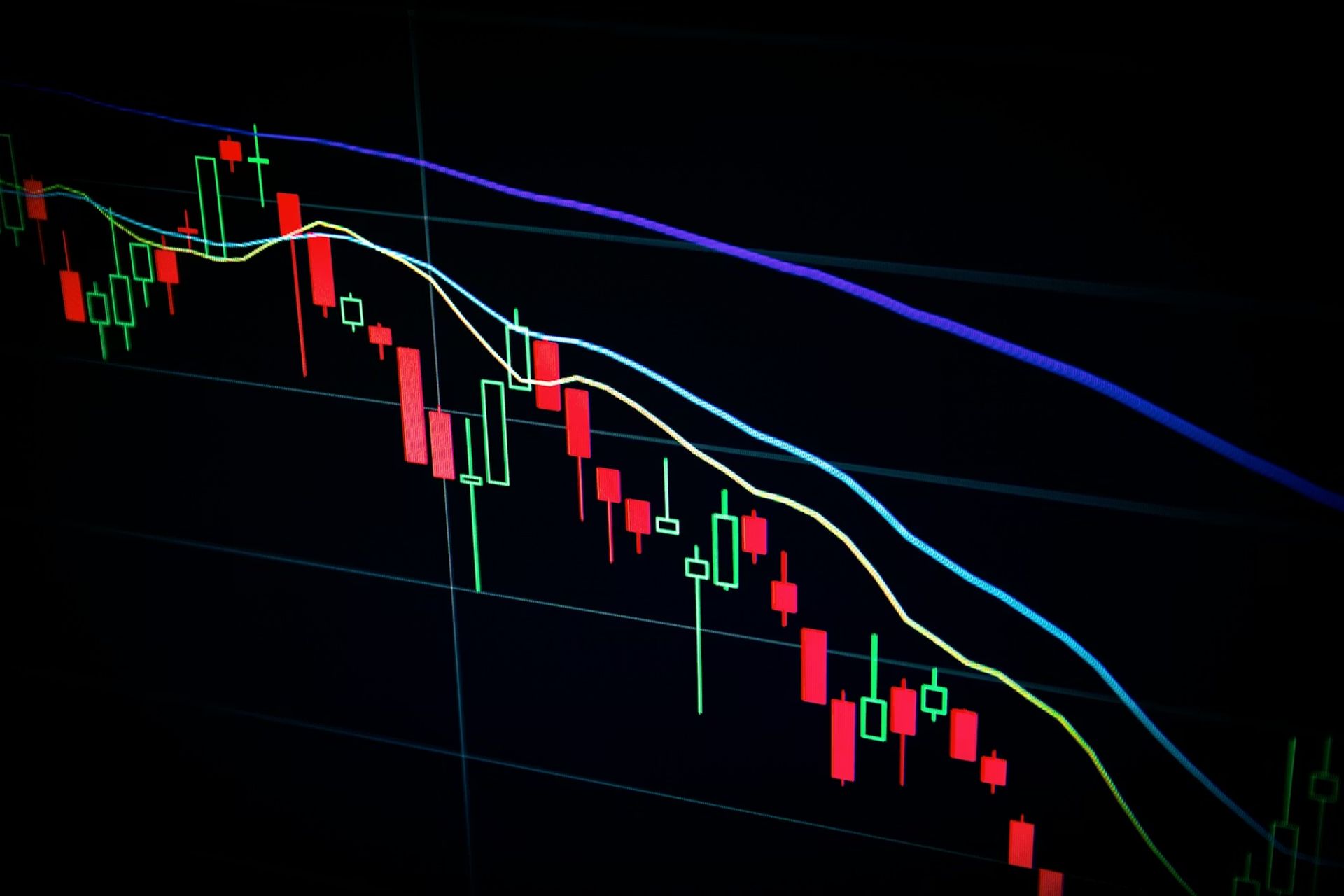

The foreign exchange market processes $9.6 trillion in daily turnover, according to the Bank for International Settlements’ 2025 Triennial Survey; that’s a 28% jump from three years prior. What’s striking isn’t the number itself but who (or rather, what) is responsible for most of it. Finance Magnates estimates that roughly 85% of forex volume is now algorithmic. Machines are doing the heavy lifting, and they’ve been getting considerably better at it.
For independent traders, this used to feel like watching from the sidelines. Institutional firms had the compute power, the data feeds and the engineering teams. That gap has narrowed significantly. Cheaper cloud infrastructure, open-source machine learning libraries and real-time market data APIs mean that anyone with a decent strategy and some technical curiosity can now deploy an ai trading bot for forex that would’ve been unthinkable for retail accounts a decade ago. To understand how we got here, it helps to trace three distinct waves of forex automation.
Where forex automation began
When MetaQuotes released MetaTrader 4 in 2005, it gave retail traders something they’d never had before: the ability to automate. MT4’s Expert Advisors (EAs) ran on MQL4, a scripting language that let you code straightforward rules. If the 50-period moving average crossed above the 200, buy. If RSI dipped below 30, close the position. Simple, mechanical, effective within narrow conditions.
The genius of those early EAs had little to do with sophistication and everything to do with accessibility. For the first time, a trader with modest coding skills could automate a strategy that previously required a desk at a bank. MT4 offered nine timeframes, 30 indicators and a single-threaded backtester. By today’s standards, that’s barebones. At the time, it was enough to create an entirely new category of trader.
The catch was rigidity. These scripts couldn’t adapt. A strategy optimised for trending markets would bleed capital during consolidation, and the EA wouldn’t know the difference. That limitation, more than anything, drove demand for the next generation.
MT5 and institutional-grade execution
MetaTrader 5, released in 2010, went well beyond a simple upgrade. Multi-asset capability meant traders could run strategies across forex, stocks, futures and commodities from one platform. The strategy tester went multi-threaded with real tick data, so backtests actually reflected what live markets looked like. MQL5 opened up more complex logic, and the platform shipped with 21 timeframes (compared to MT4’s nine) along with 80-plus built-in indicators.
A broker like TioMarkets shows what this looks like in practice. Their MT5 offering gives traders access to 263 symbols across forex, indices, stocks, commodities and cryptocurrencies. Execution runs in milliseconds, spreads start from 0.0 pips on the Raw account, and the platform supports:
- Expert Advisors with MQL5 scripting for custom automated strategies
- Multi-threaded, multi-currency backtesting with real tick data
- A built-in economic calendar and market depth (Level 2) for real-time context
- Six order types with hedging capability across desktop, web and mobile
That matters because it blurs a line that used to be rigid. A solo trader running an EA on TioMarkets’ MT5 has backtesting and execution tools that hedge fund quant desks were paying millions for a decade earlier. The infrastructure gap has compressed dramatically.
The numbers bear this out. The global algorithmic trading market was valued at $21.06 billion in 2024 and is projected to reach $25.04 billion by 2026, according to Research and Markets. A BIS Markets Committee report on FX execution algorithms confirmed that these systems improve overall market functioning by increasing the efficiency of how liquidity providers and consumers are matched. The algorithms help individual traders, and they improve market efficiency as a whole.
MT5’s built-in economic calendar and market depth tools also mean traders now execute with more context than any previous generation of retail platform provided.
When your trading bot reads the news
The current generation of forex automation layers artificial intelligence on top of the algorithmic execution infrastructure that MT5 provides. Machine learning models now identify patterns that traditional indicators miss. Neural networks process price data alongside volume, volatility and order flow to generate signals with a depth of analysis that rule-based EAs simply can’t match.
The most significant addition is natural language processing. NLP-equipped systems can parse central bank statements, earnings reports and social media sentiment, then feed that analysis directly into trading decisions. According to Precedence Research, the AI trading platform market was valued at $11.26 billion in 2024 and is expected to grow to $69.95 billion by 2034, at a compound annual growth rate of 20.04%. That growth reflects genuine adoption, not hype.
In November 2025, BabyPips said that 88% of traders utilised algorithms before AI became generally available. 65% of traders now think that AI can help them do even better. And there’s proof to back up that idea: Finance Magnates said in December 2025 that AI-driven insights linked to live events increased trading volumes by about 15% in a deployment that served 3.5 million users, both in terms of the number of trades and the amount of the trades.
What does ‘trading skill’ really mean if an AI system can read a central bank rate decision, compare it to past results, and change the size of your position before you’ve even finished reading the headline?
Trading at the speed of thought
These three waves (scripted EAs, algorithmic execution, AI-adaptive systems) aren’t a replacement story. Each layer built on what came before. The MT4 EA framework introduced automation to retail traders. MT5 brought the infrastructure closer to institutional standards. AI is now adding a layer of adaptive intelligence on top of both.
Platforms like TioMarkets’ MT5 sit at the centre of that progression, providing the execution backbone that all three generations depend on. As open-source AI tools and real-time data APIs keep maturing, the distance between institutional and independent trading technology continues to shrink.
The tools are no longer the bottleneck. With institutional-grade automation now running on a retail platform, the remaining question is straightforward: is the edge in the algorithm, or in the person deciding what to build?