
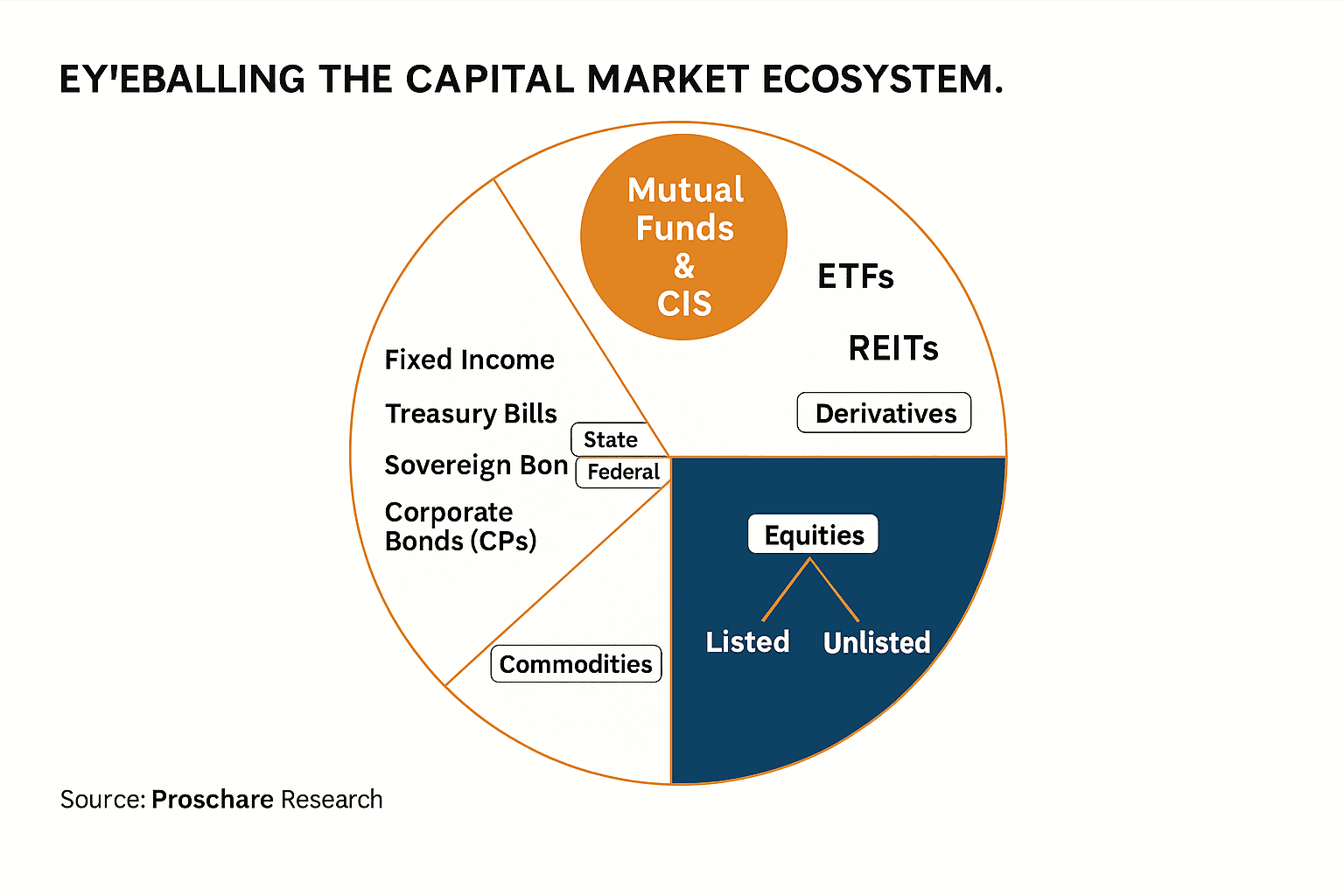
As Kabiru Sadiq, I have spent more than 30 years advising across Nigeria’s finance and capital market landscape, and in this article I explain how to learn about stock trading in Nigeria with discipline, clarity, and proper risk management. From my perspective, today’s stock market offers meaningful opportunity for any investor willing to approach the Nigerian Exchange Group with research, patience, and a sound investment strategy.
The Nigerian stock market has delivered notable momentum in 2025, with the NGX All-Share Index advancing strongly year to date and overall market capitalization reaching substantial levels. I have seen periods like this improve investor confidence, but I also caution that a rising market trend should be treated as an invitation to learn, not a reason to speculate blindly.
If you are just entering the financial market, this is an appropriate time to understand how the stock exchange works and how a beginner can participate prudently. Below, I set out five practical principles I often advise new entrants to follow before committing money to any stock, bond, fund, or other financial asset.
1. Begin Modestly and Use Regulated Digital Investment Platforms
In my experience, one of the biggest misconceptions in Nigeria is that stock trading requires a large amount of capital. That is no longer the case. Several digital platforms now allow a retail investor to start with relatively small amounts, making investment participation more accessible across income levels.
Many modern platforms provide straightforward onboarding, usually requiring basic contact information, identity verification, and your National Identification Number. Once completed, the account opening process is often finalized within a short period, allowing a first-time stock trader to begin building practical learning through actual market exposure.
Quick Comparison of Investment Platforms
| Platform | Minimum Investment | Key Feature |
|---|---|---|
| Bamboo | ₦1,000 | Access to a broad range of listed stocks |
| Trove | ₦2,000 to ₦5,000 | Access to both Nigerian and international markets, including the United States |
| Meristem | ₦1,000 | Additional trading features for active users |
| Chaka | ₦1,000 | Curated portfolio options for guided exposure |
I often advise beginners to start small, observe price movements, understand execution, and then gradually increase exposure as their skill and confidence improve. Reinvesting dividend income can also support wealth accumulation over time.
If you are asking what you can invest in Nigeria with ₦10,000, this entry point is realistic. In practice, ₦10,000 can be divided across a few low-minimum platforms, selected NGX-listed shares where pricing allows, a money market fund, or an exchange-traded fund if available through your broker. For many beginners, the right objective is not to chase large short-term gains, but to use that modest amount to learn account funding, order placement, diversification, and portfolio tracking.
2. Understand Why CSCS Registration Matters
To trade listed shares in Nigeria, you need a CSCS number issued through the Central Securities Clearing System. This is a core part of the market infrastructure, and I regard it as essential for anyone serious about learning how a security is held, transferred, and recorded within the formal capital market.
Your stockbroker or broker typically assists with this registration when you open your first trading account. It is generally a one-time process, and it serves as the digital custody framework for your share holdings, helping with transparency, record integrity, and portfolio management.
For a beginner, this step is important because it introduces the difference between informal speculation and properly documented participation in the stock market. In a market where fraud remains a real risk, secure registration is a basic protection for the investor.
Stockbrokers play a central role in this process. In Nigeria, a licensed stockbroker helps you open a trading account, process CSCS registration, route your buy and sell orders to the market, provide transaction records, and in many cases offer research or market guidance. I strongly advise choosing a broker based on regulatory standing, execution reliability, transparency of fees, ease of funding and withdrawals, and the quality of client support.
3. Diversify Your Portfolio from the Start
I have analyzed market cycles in Nigeria and across West Africa for decades, and one principle remains constant: concentration increases risk. Even in a bullish environment, no investor should place all available funds into a single company, sector, or market theme.
A balanced portfolio in the Nigerian stock market can include exposure to several sectors so that weakness in one area does not undermine the entire investment plan. This is especially important in an economy where inflation, exchange-rate pressure, regulation, and political developments can affect sectors differently.
Sample Sector Diversification Ideas
| Sector | Company |
|---|---|
| Banking | Access Bank |
| Banking | GTCO |
| Banking | Zenith Bank |
| Consumer Goods | Nestle Nigeria |
| Consumer Goods | Dangote Sugar |
| Telecommunications | MTN Nigeria |
| Telecommunications | Airtel Africa |
| Industrial Goods | BUA Cement |
| Industrial Goods | Dangote Cement |
From my perspective, diversification should also extend beyond individual stock selection. A prudent investor may combine equities with a money market fund, a bond allocation, or another lower-volatility asset class. Exchange-traded funds can also provide broad exposure for those who do not yet have the research depth to select each company independently.
When readers ask me what the top stocks to buy in Nigeria right now may look like in 2025, I usually frame the answer around criteria rather than hype. In my view, the most compelling names are often companies with strong earnings quality, resilient cash flow, sound management, durable market position, and reasonable valuation within sectors such as banking, telecoms, industrial goods, and selected consumer staples. That is why stocks such as GTCO, Zenith Bank, Access Bank, MTN Nigeria, Airtel Africa, Dangote Cement, and BUA Cement often attract attention, although any purchase should still be tested against your risk tolerance, time horizon, and entry price.
4. Learn to Read Market Indicators and Company Earnings
Anyone who wants to learn about stock trading in Nigeria must move beyond headlines and develop analytical discipline. In my experience, successful participation in the stock exchange depends on understanding both market mechanics and the underlying strength of the business you are buying into.
This includes knowing how orders work, how earnings affect valuation, and how wider economic variables shape sentiment. Inflation, interest rates, public policy, foreign exchange conditions, and sector-level performance all influence stock price behaviour in the Nigerian financial market.
Key indicators deserve close attention when reviewing any stock or security.
| Indicator | Description |
|---|---|
| Price-to-earnings ratio | This helps measure how the market values a company relative to its earnings. |
| Dividend yield | This shows the annual cash return relative to the prevailing share price. |
| Market capitalization | This reflects the total market value of the company’s outstanding shares. |
| Trading volume | This indicates how actively the stock is being bought and sold. |
I often advise investors to read company reports carefully and not rely solely on commentary from online forums or social media. Proper research is a core investment skill. It is also useful to understand the role of regulators and market standards globally. While Nigeria has its own framework, many disclosure and investor-protection concepts are better appreciated when compared with institutions such as the United States Securities and Exchange Commission.
A disciplined investor studies management quality, earnings resilience, debt profile, competitive position, and sector outlook before taking a position. That is how finance should be approached: through evidence, not hype.
5. Use Regular Contributions and Remain Patient
One of the most reliable techniques for a beginner is to invest gradually instead of deploying a large lump sum at once. This approach, often described as dollar-cost averaging, helps reduce the damage that can come from poor market timing and encourages steadier wealth creation.
For example, a new investor can commit a fixed amount monthly and continue through varying market conditions. In practice, this improves discipline and reduces emotional trading decisions. I have seen this method work well for individuals building long-term financial security in volatile environments.
Why this approach is effective:
- It lowers the risk of committing all funds at an unfavourable price.
- It allows you to buy during temporary market weakness.
- It supports consistent learning and portfolio growth.
- It helps compound returns over time.
Avoid These Common Beginner Mistakes
Across my years in investment advisory, I have observed the same errors recur among first-time participants in the stock market. Avoiding them can preserve capital and improve long-term confidence.
- Failing to diversify across sectors and asset classes: This exposes your portfolio to unnecessary concentration risk if one company or sector performs poorly.
- Trying to predict every short-term market trend: This often leads to emotional decisions, overtrading, and inconsistent results.
- Following speculation or get-rich-quick narratives: This shifts attention away from research and increases the chance of buying weak or overhyped assets.
- Ignoring due diligence on a broker, stockbroker, or platform: This can expose you to poor execution, hidden charges, or unreliable operators.
- Committing funds to unregistered or fraudulent schemes: This is one of the fastest ways to lose capital in any market, especially where investor awareness is limited.
I strongly recommend verifying that any intermediary is properly authorized within Nigeria’s regulatory framework and operates within the recognized market structure of the Nigerian Exchange Group. Risk management begins with choosing the right channel through which you trade.
Getting Started the Right Way
In the Nigerian market, licensed brokers facilitate the purchase and sale of listed securities during official weekday trading hours. For any beginner, understanding these operational details is part of the learning process and helps with realistic order placement and execution expectations.
The Nigerian stock market operates through the Nigerian Exchange Group, with listed companies traded through licensed dealing members and brokers during market hours. In simple terms, you open an account, fund it, place a buy or sell order through your broker or digital platform, and the trade is matched and settled through the market’s formal infrastructure, including CSCS custody. For beginners, that means the market is not just a place of price movement; it is a regulated system of order execution, settlement, and record-keeping.

If you want a practical beginner process, I usually advise the following sequence:
- Choose a licensed broker or regulated investment platform.
- Complete account opening and identity verification.
- Obtain your CSCS registration through the broker.
- Fund your account with an amount you can afford to invest patiently.
- Select a stock, fund, or other asset based on research and your financial goal.
- Place your first order and confirm the execution details.
- Monitor performance, dividends, and company updates without reacting impulsively to every market move.
Before you begin, I often advise putting these foundations in place:
- Emergency reserve: Hold enough cash to cover three to six months of living expenses.
- Financial objective: Define whether your goal is income, growth, capital preservation, or a blend of all three.
- Risk tolerance: Be clear about how much volatility you can absorb without making poor decisions.
- Basic market knowledge: Understand how a stock, share, bond, and fund differ before you invest.
A thoughtful entry into the market may also involve comparing stocks with other investment options such as money market funds, fixed income instruments, dollar-denominated products, or bank deposit alternatives. Sound portfolio construction is not about excitement; it is about matching each asset to your objective, time horizon, and risk profile.
As for the best times to buy and sell stocks in Nigeria, I generally discourage beginners from trying to outsmart every short-term swing. A better approach is to buy when your research supports the value, your cash flow allows steady contributions, and the position fits your long-term allocation. Selling is usually more sensible when your investment thesis has changed, valuation has become excessive, your portfolio needs rebalancing, or you require liquidity for a defined purpose. Discipline matters more than guessing the perfect day.
For those teaching themselves, I recommend combining practical experience with structured learning. Read annual reports and NGX company filings, study introductory books on investing and valuation, follow credible market commentary from regulated professionals, and attend investor webinars, seminars, or financial literacy sessions available in Nigeria. In my experience, consistent study alongside small, careful market participation builds stronger judgment than relying on social media tips.
The benefits of investing in the Nigerian stock market include the potential for capital appreciation, dividend income, liquidity in actively traded names, and diversification across sectors and asset classes. The risks are equally real: price volatility, weak company performance, inflation pressure, fraud, poor timing, and shifts in regulation or macroeconomic conditions. Sound investing requires respecting both sides of that balance.
In my experience, long-term success in the Nigerian stock market does not come from chasing excitement. It comes from disciplined contributions, sound research, diversification, and the patience to let quality investments mature over time.