
Close Menu
Aspire Market Guides
  • Home
  • Alternative Investments
  • Cryptocurrency
  • Economics
  • Equity Investments
  • Mutual Funds
  • Real Estate
  • Trading
What's Hot

Entrepreneur visits cap microeconomics unit at Lewes Elementary

April 16, 2026

Here’s why Bitcoin’s next rally may fade

April 16, 2026

Great Southern Copper Extends Copper-Silver Footprint at Monolith Target in Chile

April 16, 2026
Facebook X (Twitter) Instagram
Trending:
  • Entrepreneur visits cap microeconomics unit at Lewes Elementary
  • Here’s why Bitcoin’s next rally may fade
  • Great Southern Copper Extends Copper-Silver Footprint at Monolith Target in Chile
  • SBI Mutual Fund launches two short-term debt index funds with low risk profiles. Details here
  • 42N.SI Stock Falls 2.78% on April 16, 2026 – IPS Securex Holdings Intraday Decline
  • [INTERVIEW] Coinbase highlights Korea’s potential as Kakao Pay enters its agentic payment alliance
  • Major housebuilder cuts land buying plans amid global uncertainty
  • Applied Microeconomics Seminar with Carolyn PELNIK (World Bank)
  • Energy infrastructure repair costs from Middle East war could reach $58 billion, Rystad says
  • Gold price in India: Rates on April 16
Thursday, April 16
Facebook X (Twitter) Instagram
Aspire Market Guides
  • Home
  • Alternative Investments
  • Cryptocurrency
  • Economics
  • Equity Investments
  • Mutual Funds
  • Real Estate
  • Trading
Aspire Market Guides
Home»Cryptocurrency»Bitcoin devs float ‘quantum tripwire’ that triggers coin freeze only if attack is proven
Cryptocurrency

Bitcoin devs float ‘quantum tripwire’ that triggers coin freeze only if attack is proven

By CharlotteApril 16, 20263 Mins Read
Share
Facebook Twitter Pinterest Email Copy Link


Bitcoin developers are debating a radical change to how the network would respond to a future quantum computing threat: don’t freeze vulnerable coins unless someone proves the threat is real. But there’s a catch: The proposal assumes the attacker will reveal capability for a bounty instead of maximizing profit through theft.

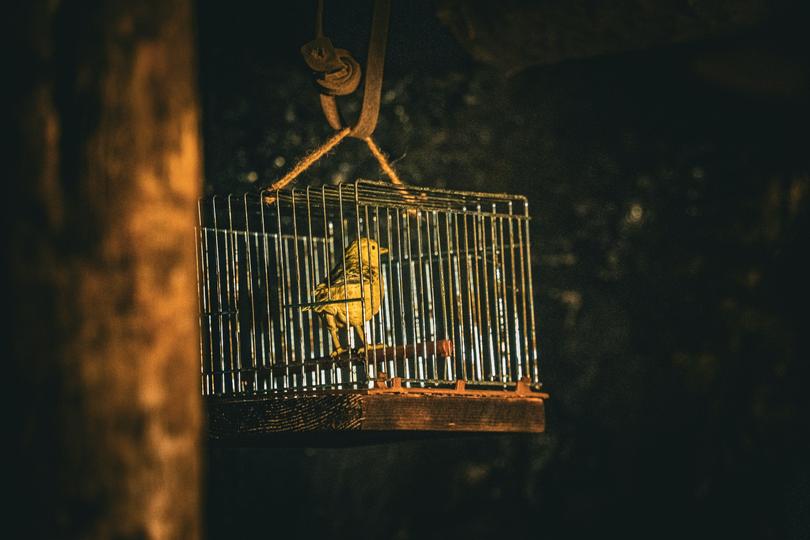
A proposal published this week by BitMEX Research outlines a “canary” system that would trigger a network-wide restriction on older bitcoin wallets only if a quantum-capable attacker demonstrates it on-chain, replacing earlier plans to impose a pre-scheduled freeze years in advance. At its core, the proposal is a “wait and react” strategy.

It works by placing small number of bitcoin into a special address that only a quantum-capable attacker could unlock, with any spend from that address serving as public proof that the threat has arrived and automatically triggering a network-wide freeze of older wallets.

Bitcoin wallets rely on digital signature schemes that are secure against classical computers but could be broken by advances in quantum computing, and a recent Google research paper lowered estimates for the resources required, with some observers now pointing to the end of the decade as a potential risk window.

The approach is designed as an alternative to BIP-361, a controversial proposal that would impose the same restrictions on a fixed five-year timeline regardless of whether quantum computers are actually capable of attacking Bitcoin’s blockchain. BIP-361 would phase out vulnerable addresses over several years before invalidating the old signature schemes entirely, leaving any unmigrated coins permanently frozen.

Critics have called that outcome “authoritarian and confiscatory,” arguing it undermines Bitcoin’s core principle that control rests solely with private key holders.

Layered atop the of BitMEX’s detection mechanism is a financial incentive. Users could contribute bitcoin to the address, creating a bounty that rewards the first entity to demonstrate a quantum attack publicly rather than quietly drain vulnerable wallets. Contributors would not need to give up their funds permanently, as the structure allows withdrawals at any time.

The proposal also introduces a “safety window” designed to make stealth attacks harder. Vulnerable coins could still move, but the recipient would be unable to spend them for an extended period, potentially around a year. If the canary is triggered during that window, those coins would be frozen retroactively, increasing the risk to any attacker attempting to quietly extract funds.

There’s a catch

The canary reduces the risk of disrupting users prematurely, but it rests on an uncomfortable bet that the first entity capable of breaking Bitcoin would claim a bounty rather than execute what could be the largest theft in the network’s history and walkaway with millions of bitcoin.

That bet cuts against the kind of worst-case scenario Bitcoin’s design has always tried to prevent, and the network has historically shown little appetite for undoing such events after the fact. Ethereum’s response to the 2016 DAO hack, a hard fork that reversed the theft and split the network into Ethereum and Ethereum Classic, is the kind of protocol-level intervention Bitcoin’s culture has long resisted.

If the bet fails, Bitcoin risks the worst of both worlds — the catastrophe it was trying to prevent, and the realization that a fixed-timeline defense would have stopped it.


Source link

Related Posts

Cryptocurrency

Here’s why Bitcoin’s next rally may fade

April 16, 2026
Cryptocurrency

[INTERVIEW] Coinbase highlights Korea’s potential as Kakao Pay enters its agentic payment alliance

April 16, 2026
Cryptocurrency

Where to Buy LEO Token: Exchange Availability & Trading Guide 2026

April 16, 2026
Cryptocurrency

XRP Has Unique Advantages Over Bitcoin, Ethereum, Trader Argues

April 16, 2026
Cryptocurrency

Altcoin Spotlight: DeXe Price Surges 20%, Nearly Yearly High

April 15, 2026
Cryptocurrency

Bitcoin breaks $75k on Gate as bulls eye key resistance

April 15, 2026
Add A Comment
Leave A Reply Cancel Reply

Editors Picks

Entrepreneur visits cap microeconomics unit at Lewes Elementary

April 16, 2026

Here’s why Bitcoin’s next rally may fade

April 16, 2026

Great Southern Copper Extends Copper-Silver Footprint at Monolith Target in Chile

April 16, 2026

SBI Mutual Fund launches two short-term debt index funds with low risk profiles. Details here

April 16, 2026
SUBSCRIBE TO OUR NEWSLETTER

Get our latest downloads and information first. Complete the form below to subscribe to our weekly newsletter.


I consent to being contacted via telephone and/or email and I consent to my data being stored in accordance with European GDPR regulations and agree to the terms of use and privacy policy.

Featured

S&P 500 hits new intraday record high on hopes of end to Iran war

April 15, 2026

Gold prices witnessed decline in Pakistan markets

April 13, 2026

AWS launches Agent Registry for managing AI agents

April 10, 2026
Monthly Featured

Gold and Silver Near a Decision Point

April 7, 2026

Sanne de Laat’s eight gives Denmark gold in compound mixed team at Puebla 2026

April 11, 2026

Token Utility in Crypto Airdrops: Why Utility Drives Success (2026)

April 9, 2026
Latest Posts

Entrepreneur visits cap microeconomics unit at Lewes Elementary

April 16, 2026

Here’s why Bitcoin’s next rally may fade

April 16, 2026

Great Southern Copper Extends Copper-Silver Footprint at Monolith Target in Chile

April 16, 2026
SUBSCRIBE TO OUR NEWSLETTER

Get our latest downloads and information first. Complete the form below to subscribe to our weekly newsletter.


I consent to being contacted via telephone and/or email and I consent to my data being stored in accordance with European GDPR regulations and agree to the terms of use and privacy policy.

© 2026 Aspire Market Guides.
  • Contact us
  • Privacy Policy
  • Terms and Conditions

Type above and press Enter to search. Press Esc to cancel.

SUBSCRIBE TO OUR NEWSLETTER

Get our latest downloads and information first.

Complete the form below to subscribe to our weekly newsletter.


I consent to being contacted via telephone and/or email and I consent to my data being stored in accordance with European GDPR regulations and agree to the terms of use and privacy policy.