
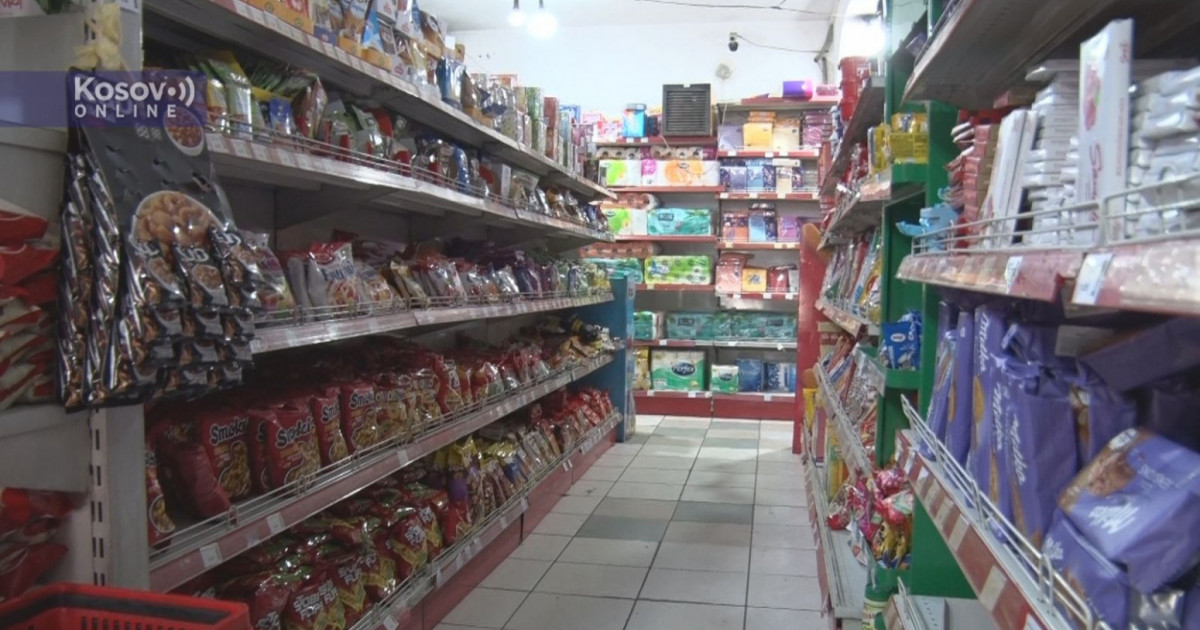
Through a chain reaction, the conflict in the Middle East and disruptions in global oil prices have led to a surge in fuel prices and, consequently, in the prices of other goods across the region. Governments have largely resorted to measures to cap fuel prices, while in the Assembly of Kosovo a law introducing price limits for essential goods is also awaiting adoption. Analysts point out that government intervention in the market and the capping of certain prices are justified in times of crisis in order to protect citizens’ living standards, but that such measures should by no means be long-term, as they constitute interference in a market economy governed by supply and demand. As more appropriate measures, they highlight reducing fuel excise duties and value-added tax (VAT).
On April 10, the Assembly of Kosovo adopted in principle the Draft Law on temporary measures for essential products in special cases of market destabilization. The proposal to cap prices was adopted with 63 votes in favor and 19 against.
Kosovo’s Minister of Finance, Hekuran Murati, stated that the focus is on protecting citizens and that the law will serve as an “emergency instrument in an emergency situation.” However, opposition MPs did not support the law, and the leader of the Democratic Party of Kosovo, Bedri Hamza, said there is no way to reduce prices when production costs are rising.
Outside the parliamentary chamber and political debates, citizens feel every market disruption most directly in their wallets.
And they say that everything has become more expensive.
These price increases are visible at the Pristina market. Both consumers and traders are complaining—consumers about high prices, and traders about fewer customers and declining sales.
A fruit and vegetable vendor, Patriot Makesten, says that interest among citizens has dropped, as they are unwilling to buy due to high prices. Clothing sellers feel the same.
“Prices are rising, but there are no customers,” noted clothing seller Rahim Govori.
Citizens of Pristina are almost unanimous in saying that their monthly incomes are insufficient.
“Prices are very high, they have changed a lot, we try to cope as best we can. It’s a problem because you can’t survive on your salary,” said Veton Kika.
However, economics professor Shkumbin Misini points out that capping product prices runs counter to a free market economy and can only be applied in cases such as natural disasters.
He believes that a law introducing price caps would lead to the bankruptcy of many small and medium-sized enterprises due to higher operating costs, while large companies would be better able to absorb such constraints.
According to him, instead of imposing caps, the government could control prices through excise duties and VAT on fuel, which should be abolished if oil prices continue to rise.
“Price caps are not the right solution, except for abolishing excise duties. If oil prices continue to rise, VAT should also be abolished, as inflation keeps increasing. Under these conditions, abolishing excise duties is necessary. If oil prices continue to rise again, VAT will also have to be abolished,” Misini told Kosovo Online.
On the other hand, Veljko M. Mijuskovic, Assistant Professor at the Faculty of Economics in Belgrade, says that capping fuel and essential food prices is justified in crisis conditions, but not advisable in the long term.
“In times of crisis, when disruptions occur in global supply chains—currently primarily caused by the crisis in oil and petroleum product supply and issues in the Strait of Hormuz—governments resort to certain restrictive measures to protect national economies, including the Government of Kosovo. These are not extraordinary measures compared to what has been implemented in the region,” Mijuskovic told Kosovo Online.
He emphasized that such state intervention measures should be short-term.
“They are not recommended in the long run, as they significantly distort supply and demand relations in the market. However, in crisis conditions, when the primary goal is to protect citizens’ interests, such measures are justified,” Mijuskovic said.
According to him, if price caps persist in the long term, they may also lead to the emergence of a so-called black market, although he does not expect these measures to last long.
“All these measures are intended to mitigate the impact on citizens’ budgets and, in that sense, should not have negative consequences. For now, they will certainly entail certain budget losses, but on the other hand they will protect citizens’ living standards and quality of life,” Mijuskovic added.
Citizens in Albania are also complaining about rising prices, but even more about the lack of response from their government.
Granit Sokolaj, Executive Director of the Albanian Consumer Protection Center “Alert,” says that since the beginning of the Middle East conflict, due to rising oil prices on global markets, Albania has seen a widespread increase in prices, while the government has taken no measures to keep prices under control and protect citizens.
“There are no government measures, apart from statements by the Minister of Economy and other officials. There are no concrete measures to monitor the market and keep it under control. Transport costs and production costs in some countries have increased, but in my opinion, and according to data from Albanian Customs regarding import prices, there is widespread abuse in our country, especially when it comes to fruits and vegetables, but also other products. We are seeing a frightening increase in prices that is in no way justified,” Sokolaj stated.
He notes that in such situations the greatest burden is borne by consumers, primarily due to the lack of institutional intervention by bodies that should control prices and have the authority to compel companies to set prices without abuse.
Sinisa Naumoski, a member of the Board of the University of Heidelberg in Skopje, also believes that prices cannot be controlled by administrative decisions and emphasizes the need to address the real causes of inflationary pressure.
“We will pay the real price later. If I put myself in Kosovo’s position—you may temporarily calm panic, and citizens may feel that the state is in control, but in the end the effect will be long-term: shortages of certain products will appear, businesses will resist engaging in certain types of goods… We must carefully identify what is actually causing inflationary pressure and address the problem there. You cannot defeat prices by decree—they are formed on the market,” Naumoski told Kosovo Online.
Therefore, he says, the long-term solution lies in investing in agricultural production.
He assessed that the Macedonian government’s measures to reduce excise duties and VAT on fuel are logical steps to mitigate the price shock.
He added that a shift toward non-linear measures is necessary, as fiscal space is limited, and the use of linear measures could lead to its even faster depletion.
Meanwhile, the European Union is also considering controlling fuel prices due to the consequences of the conflict in the Middle East.
“EU member states must coordinate on energy prices, given the €22 billion increase in fossil fuel bills since the start of the war in Iran,” said Ursula von der Leyen, announcing that the European Commission plans to present proposed measures on April 22.