
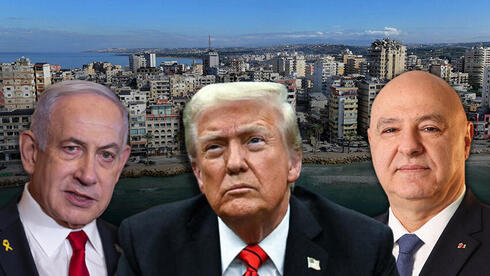
Still, for Lebanon, the mere reemergence of a diplomatic horizon — even if limited and fragile — already represents a significant economic development. A country that has been mired in a deep crisis for years and, since early March 2026, has again been engulfed in active fighting does not initially need grand promises. It needs, first and foremost, a reduction in risk.
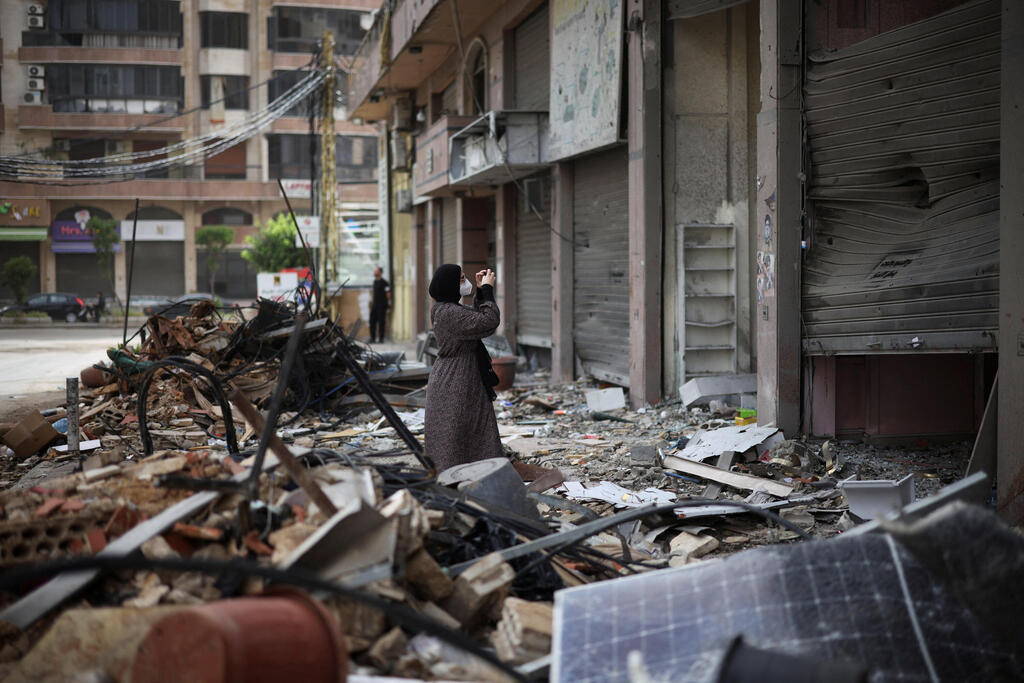
In that sense, the ceasefire is not only a diplomatic or security development but also a test of whether Lebanon can begin to move, even gradually, from a survival economy to one in which it is possible to think again about investment, credit, reconstruction and growth.
Lebanon arrives at this moment from an especially difficult starting point. Even before the current war, the Lebanese economy had not truly recovered from the collapse that began in 2019. At the start of this year, more cautious forecasts suggested that if reforms continued, reconstruction funding flowed and relative stability was maintained, the economy might see some recovery.
Those assessments, however, relied on a basic assumption — that the system would not slide back into a broad conflict. Once the front with Hezbollah reignited in March, that assumption collapsed. The war did not strike a healthy economy that stumbled, but one already weakened, with banks still not functioning normally, fragile public services, faltering infrastructure and a state struggling to finance even its routine operations without external aid.
This reality is evident across nearly every sector. Lebanon relies heavily on services, tourism, remittances and incoming capital. It is not a large industrial economy capable of absorbing prolonged fighting while relying on a stable production base. On the contrary, it is an economy that depends on confidence — on the movement of people, external funding, normal commercial activity, tourism, students, professionals and a functioning service sector.
When security deteriorates, the damage is more immediate than in other economies. Tourism declines, insurance costs rise, financing becomes more expensive, local capital leaves and the country itself becomes costlier for anyone considering lending, investing or operating there. The damage from the current round is therefore measured not only in physical destruction, but also in how it once again delays the moment when Lebanon was expected to begin rebuilding.
Last year, reconstruction needs from the 2024 war were already estimated in the billions of dollars. Current estimates for damage from the latest round are being added even before previous funding has been secured.
The financial dimension is central. In recent weeks, Lebanon’s government has been operating on multiple fronts: attempting to stabilize the security situation and secure some diplomatic framework, while urgently seeking rapid funding sources, including through the World Bank and the International Monetary Fund, to prevent further deterioration of basic services and the budget system.
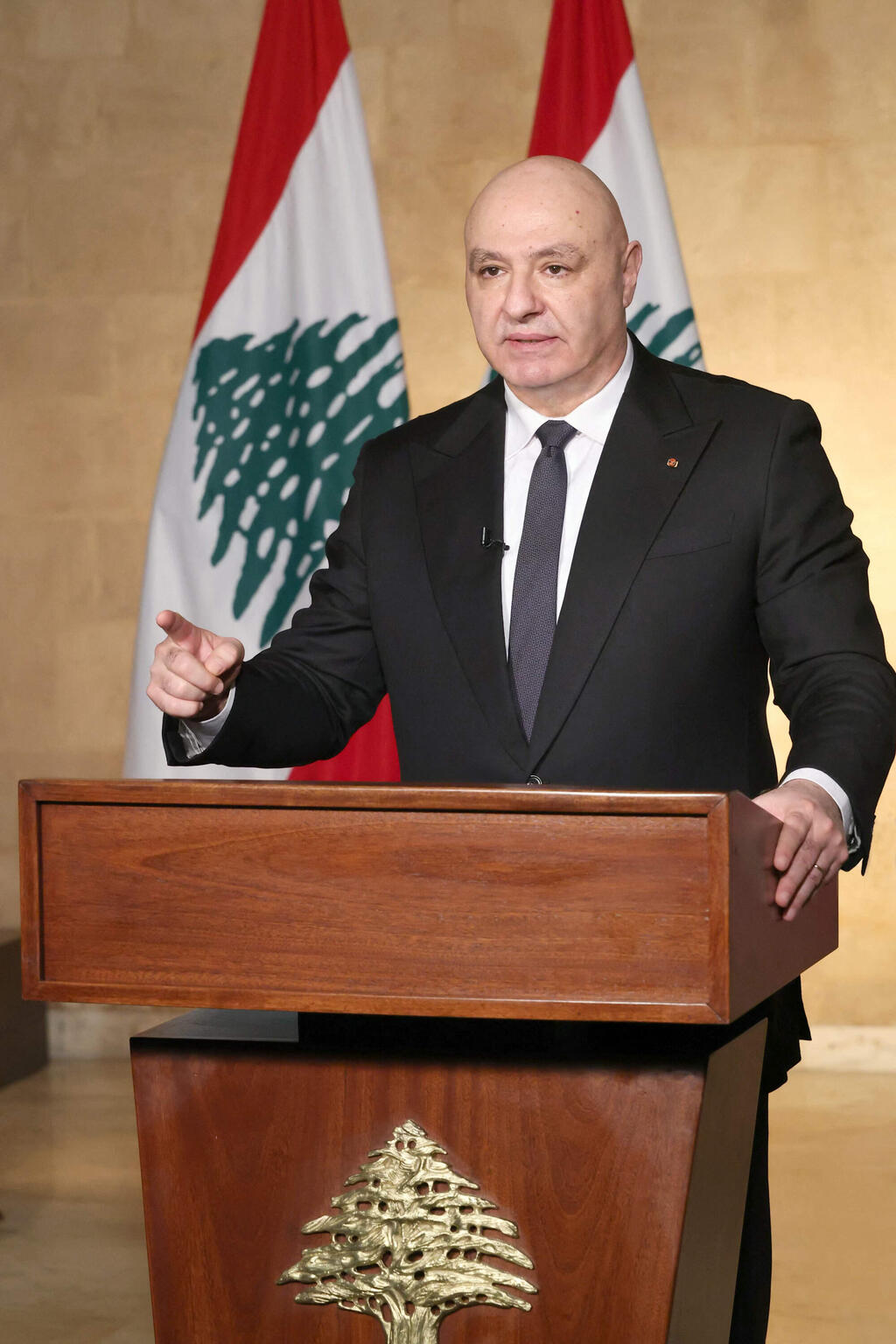
This reflects a shift in priorities. Beirut is not currently speaking about growth in the conventional sense, but about halting decline. A ceasefire, and certainly a more stable diplomatic process, will not immediately inject billions into Lebanon’s treasury. However, it could change the context in which aid requests are considered.
For international institutions, donors, development banks and private investors, there is a significant difference between financing a country almost certain to face another round of conflict and one that appears to be entering a window of relative stability.
In this sense, Lebanon’s first gain from a potential peace with Israel would be a reduction in the price of risk. While technical, this is the core issue. Risk pricing affects interest rates, insurance costs, willingness to finance projects, the ability to revive tourism, the tendency of Lebanese capital to remain in the country and the feasibility of launching long-term reconstruction projects.
As long as Lebanon is priced as a frontline state, it is difficult to turn sporadic aid into sustained recovery. If it begins to be seen as entering a reconstruction phase, the picture changes — not because the problems are resolved, but because there is a viable framework to address them.
A second implication concerns reconstruction itself. Lebanon requires massive investment in infrastructure, housing, electricity, water, transportation, health and education. Today, even when international actors are willing to assist, there is an inherent doubt about financing systems that could be damaged again within months.
A more stable arrangement would not close the funding gaps, but would increase the likelihood that such funding is provided in the first place. It would also allow planning, not just repair.
This is especially true in the electricity sector, perhaps Lebanon’s most prominent structural failure. Households and businesses continue to rely on a mix of limited public supply, private generators and improvised solutions. This reduces productivity, increases costs and hinders normal economic activity. Security stability would not resolve the shortage overnight, but it could bring back to the table projects for generation, transmission, storage and grid rehabilitation that are currently seen as too risky.
The maritime energy sector also holds implications. Lebanon remains far from guaranteed revenues from natural gas, and it would be unrealistic to view this as a quick solution to the crisis. Still, the involvement of international energy companies offshore indicates that potential exists. As geopolitical risk declines, the ability to finance, insure and develop offshore projects becomes more realistic.
For Lebanon, where stable sources of foreign currency are critical, this represents a long-term economic opportunity, even if realization would take years.
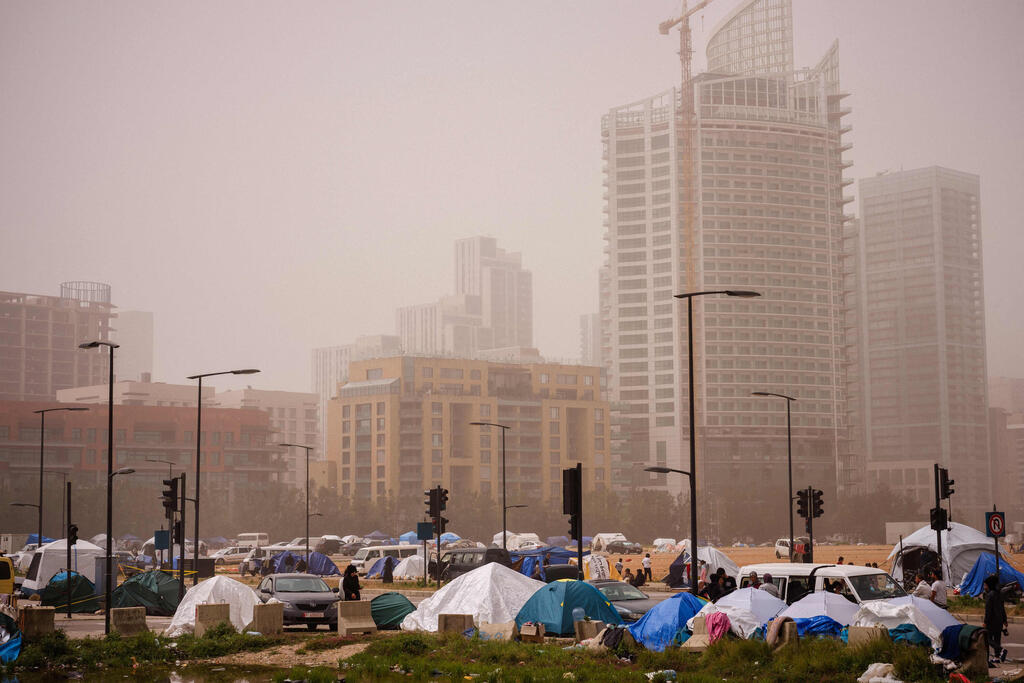
None of this suggests that peace with Israel would resolve Lebanon’s structural problems. It would not rebuild the banking system, impose public sector reforms, eliminate corruption, restore confidence overnight or resolve Hezbollah’s role and Lebanon’s delicate internal balance.
Lebanon would still require painful reforms, tighter fiscal management, banking sector restructuring, improved tax collection, regulation of public services and a sustained effort to restore basic state functionality. Without these, even security stability could be squandered.
From Israel’s perspective, the economic benefit of such a scenario would be different. Lebanon is not a large market, and its economy is too weak to become a major trade destination in the near term. The primary benefit for Israel lies not in immediate export growth, but in reducing the economic cost of instability along the northern border.
Prolonged conflict with Lebanon directly harms northern communities, tourism, agriculture, real estate, investment and overall stability. Each round of fighting imposes not only security costs but also sustained civilian economic damage. In that sense, a stable arrangement would improve both security and the economic environment across an entire region.
Over the longer term, limited areas of civilian cooperation could emerge. This would not necessarily take the form of rapid normalization, but rather a gradual, functional and cautious process. Infrastructure, water, health care, logistics, professional services and possibly limited regional tourism are areas where both sides could find mutual benefit.
Israel brings technological capabilities, experience in water and energy systems and a dynamic entrepreneurial sector. Lebanon, despite its crisis, retains strong human capital and traditions in services, medicine, education, culture and international business through its diaspora.
If a more stable foundation develops over time, a narrow but tangible layer of shared economic interests could emerge between the two economies — not a regional transformation, but gradual normalization where both sides see practical benefit.