
“The scarcest resource is not oil, metals, clean air, capital, labor or technology. It is our willingness to listen to each other and learn from each other and to seek the truth rather than seek to be right. Because we have not done that, another resource has become critically scarce: Time.” —Donella Meadows (1993)
What is the vision of Ecological Economics For All?
Ecological Economics for All (EE4ALL) was launched on the 50th anniversary of Earth Day in 2020, amid the despair of the COVID-19 pandemic. The idea was to uplift and fulfill the vision expressed in Meadows’ quote. This date was chosen with the genuine desire to signify the urgent need for alternative educational initiatives akin to the ones that fueled the historic success of the first Earth Day in 1970 and the eventual improvements in environmental awareness.
EE4ALL was envisioned as an experimental, collaborative knowledge commons designed to transform economics education. It aims to make ecological economics (EE) resources open access to anyone interested in co-learning about the ways economic growth is merely a means to an end of human well-being. EE4ALL’s core aim is to ensure that this reality is reflected in how economics is taught, understood, and applied through post-growth and well-being centered education, policy, and activism.
While the improvements in environmental awareness and policy changes made post-Earth Day 1970 were important, they were fundamentally insufficient because they failed to reconnect societies with the rest of nature. That has culminated in today’s socio-ecological polycrisis, or when multiple crises interact and amplify one another.
EE4ALL also draws inspiration from the Leadership for the Ecozoic’s (L4E) vision to transform higher education by promoting a future based on mutually enhancing relationships between humankind and the rest of nature. By fostering this reconnection, EE4ALL seeks to contribute to the systematic understanding of the root causes preventing the transformation of our ecologically embedded financial, economic, and social systems.
To address these root causes, EE4ALL recognizes that institutions and policies must be grounded in the understanding that humankind is only a part of the rest of nature, and will continue to co-evolve according to our social and biophysical realities. Therefore, EE4ALLL advocates that the ways we organize and manage our economies need to reflect that in order to enable long-term resilience and regeneration.
Ultimately, the central goal of EE4ALL is to educate and empower global citizens on 21st century economics to center post-growth and regenerative wellbeing within planetary boundaries as the principal goal of economic activity.
What has and continues to inspire the emergence of EE4ALL?
EE4ALL was inspired by Rigo’s own roller-coaster journey in discovering and learning about EE. When he stumbled upon EE in college, he realized that the transdisciplinary nature of the field made it difficult and often frustrating to access because, like most academic knowledge, it is mostly behind paywalls and is often written in inaccessible language. He realized that this created a major access barrier for people, and the situation was compounded by the reality that EE is not yet widely taught in higher education.
Recent surveys by Rethinking Economics International and Rethinking Economics USA have found that most students of economics are only learning about one economic school of thought, neoclassical economics. More troubling, these surveys have shown that more than 75% of universities are not educating students on EE and, thus, the biophysical foundation of economies is missing from the curriculum, i.e., how energy and ecosystems play an essential role in the economic process and human well-being.
As he learned more about EE, he recognized that it had an enormous potential to help reconnect people with the rest of nature and to help transform our economic paradigm. So he decided that if he ever became an ecological economist, he would make it his mission to share this important information with the world.
Lizah, who would later join Rigo in several initiatives to expand awareness of EE4ALL, had a similar path into EE, but with even greater challenges. Coming from Africa, she experienced more pronounced barriers to accessing information and academic resources. She stumbled upon EE while exploring solutions for communities struck by drought and other climate challenges in South Africa.
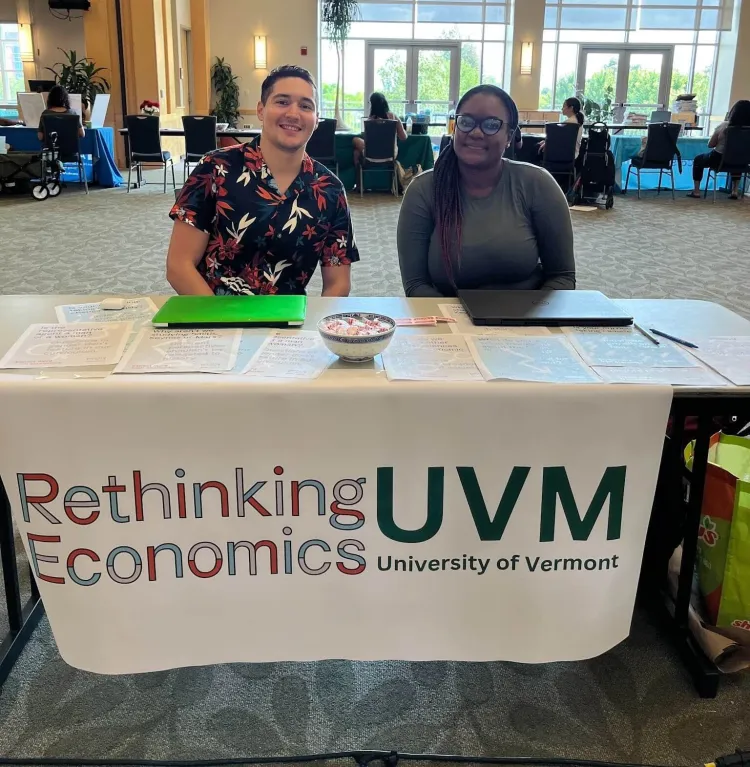
Bringing together our journeys, experiences, and those of many other colleagues, have strengthened our conviction to pursue the vision of EE4ALL. This work is ultimately about genuine empowerment that transcends socially constructed barriers by ensuring that access to transformative knowledge is not limited, but extended to those around the world that have long been marginalized and excluded from dominant knowledge systems. It is also about amplifying other diverse knowledge systems from the Global South, which enrich EE as a transdisciplinary field.
For decades, pioneers of the field have developed the knowledge of EE, but unfortunately, it has been largely relegated to academic circles due to the way certain kinds of knowledge creation is privileged in academia. This has created communication barriers with people outside of the ivory tower. However, some people are trying to change that.
One of the pioneers in recognizing this was Donella Meadows, the mother of systems thinking. In the early 1980s, Donella realized this was a huge problem. She gave up tenure at Dartmouth College in order to have the freedom to communicate to the world the need to think in systems to achieve the changes that she thought humanity desperately needed, based on the dire findings of her Limits to Growth (LtG) report of 1972. However, she made an agreement with Dartmouth to continue to teach in their environmental studies program, while she embarked on a decades-long project to write her popular “The Global Citizen” syndicated columns for newspapers across the U.S.
In the late 1990s, toward the last few years of Donella’s life, the internet was becoming increasingly popular and she was working on developing websites to share information, which she ranked as an important leverage point, to educate and promote sustainable systems. Today, her legacy continues through the Donella Meadows Project of the Academy for Systems Change. EE4ALL builds on Donella’s legacy by recognizing that although academic knowledge is essential, it is insufficient on its own, and we need to pioneer collaborative efforts to share this important knowledge beyond the confines of academia.
How is the vision of EE4ALL being implemented?
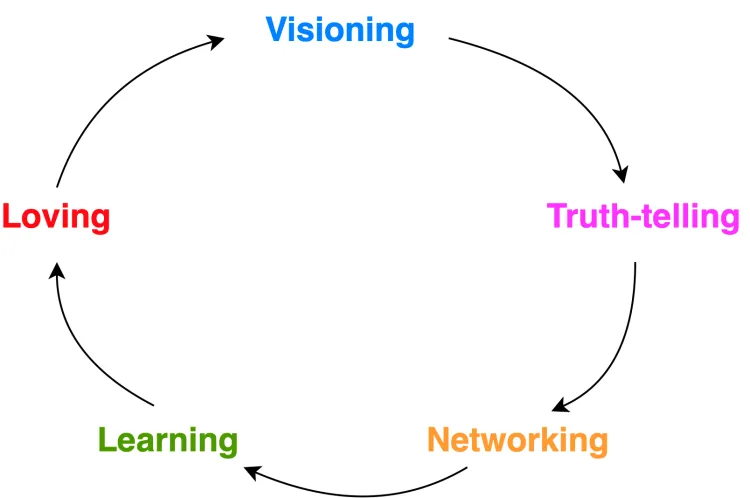
To implement its vision, EE4ALL applies Donella Meadows’ tools for the transition to sustainability. These tools include visioning, truth-telling, networking, learning, and loving. EE4ALL has applied these tools with a recognition that we need to be open to diverse perspectives. This has led to building collaborative networks with diverse organizations to reach wider audiences. In these efforts, EE4ALL takes seriously the application of the loving tool, which requires us to transcend paradigms, to be open to listen and co-learn from people with diverse backgrounds and experiences, and to avoid being boxed into one way of thinking. This enables us to successfully plant seeds far and wide just like Donella envisioned.
EE4ALL has come a long way since its humble initial envisioning to transcend boundaries and to educate and spread the knowledge of EE. EE4ALL has created Massive Open Online Courses (MOOC) in EE, and open access resources such as our evolving virtual textbook. The support of ecological economists Jon Erickson and Joshua Farley have been indispensable in these efforts.
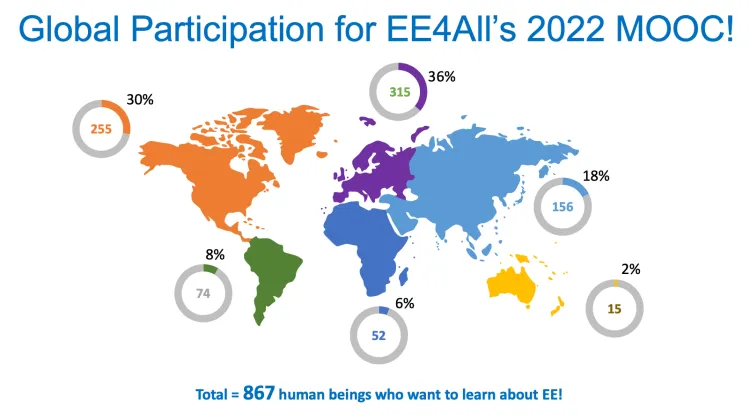
We have a track record of success in developing MOOCs starting with our highly acclaimed EE4ALL Summer Crash Course of 2022 titled “The shift needed in economics to enable a just transition to a right-sized economy.” More than 850 people with diverse backgrounds and nationalities from around the world registered. We were grateful to have recognized and inspiring voices in EE, and beyond, teaching with us such as Kate Raworth, Inge Røpke, Lisi Krall, Bengi Akbulut, Ashish Kothari, Leslie Harroun, Jon Erickson and Joshua Farley. The course was co-sponsored by the International Society of Ecological Economics, Rethinking Economics, the Democracy Collaborative, the Gund Institute, L4E and the Blittersdorf Professorship. Joshua Farley later said, “in terms of impact, [this MOOC] it’s worth a dozen journal articles.”
The following year, EE4ALL partnered with Rethinking Economics, the U.S. Society for Ecological Economics, and the Institute for New Economic Thinking to create the Rethinking Econ 101 Course. This program also reached hundreds of participants and featured diverse and inspiring economic thinkers including Ha-Joon Chang, Jayati Ghosh, Ellie Perkins, Kate Raworth, Lisi Krall, Amanda Janoo, Jon Erickson and Mark Setterfield. Across the board, the feedback we got was to continue organizing these mass virtual courses.
EE4ALL has also organized highly attended virtual Earth Day events including one to commemorate the 50th anniversary of LtG in memory of Donella Meadows in 2022, and a follow up event in 2023 on Earth4All, the 50 year update to LtG, with the President of the Club of Rome.
Fundamentally, the efforts of EE4ALL have been successful because our goal has been to make people from all backgrounds and ideological persuasions feel welcome. Moreover, this success has demonstrated that there is an overwhelming demand for EE from around the world, which has been moving and inspiring. This momentum has helped inspire the development of a new online program in EE at the University of Vermont, which is one of the first of its kind in the world.
In the summer of 2026, EE4ALL plans to offer another MOOC to develop better understandings of the implications of AI for post-growth economies, among other salient issues. Collaboration is also key. Moving forward we aim to partner with organizations such as the Wellbeing Economy Alliance, Beyond Bretton Woods, Global Citizen, among others working on post-growth regenerative futures, to continue to build networks and plant seeds of hope and change.
Ultimately, our hope is that our efforts can inspire others to challenge and think outside of the limitations of the self-reinforcing systems we operate in, and to go beyond Earth Day to energetically and enthusiastically enact the change that we hope to see in the world.