
Close Menu
Aspire Market Guides
  • Home
  • Alternative Investments
  • Cryptocurrency
  • Economics
  • Equity Investments
  • Mutual Funds
  • Real Estate
  • Trading
What's Hot

World Bank confirms reliable financing for Kazakhstan’s energy infrastructure

April 29, 2026

Commentary: America chugs along in a ‘K-shaped’ economy

April 29, 2026

10 Day Trading Tips for Beginners Getting Started

April 29, 2026
Facebook X (Twitter) Instagram
Trending:
  • World Bank confirms reliable financing for Kazakhstan’s energy infrastructure
  • Commentary: America chugs along in a ‘K-shaped’ economy
  • 10 Day Trading Tips for Beginners Getting Started
  • Share of equity assets in insurers’ portfolios to rise
  • An Altcoin Got Hacked; Most of the Supply Fell into the Hackers’ Hands
  • Planning income from mutual funds? These 5 hybrid funds delivered best returns over 3 years – The Economic Times
  • Banks Tighten Private Credit as UBS Reports Cooling Demand
  • Crony Capitalism and Socialism – The Heartland Institute
  • Korean military fund’s SK IE Technology pre-IPO bet leads PE returns
  • Crypto Regulation Has Gone Full TradFi, CertiK Reports
Wednesday, April 29
Facebook X (Twitter) Instagram
Aspire Market Guides
  • Home
  • Alternative Investments
  • Cryptocurrency
  • Economics
  • Equity Investments
  • Mutual Funds
  • Real Estate
  • Trading
Aspire Market Guides
Home»Economics»Crony Capitalism and Socialism – The Heartland Institute
Economics

Crony Capitalism and Socialism – The Heartland Institute

By CharlotteApril 29, 20264 Mins Read
Share
Facebook Twitter Pinterest Email Copy Link


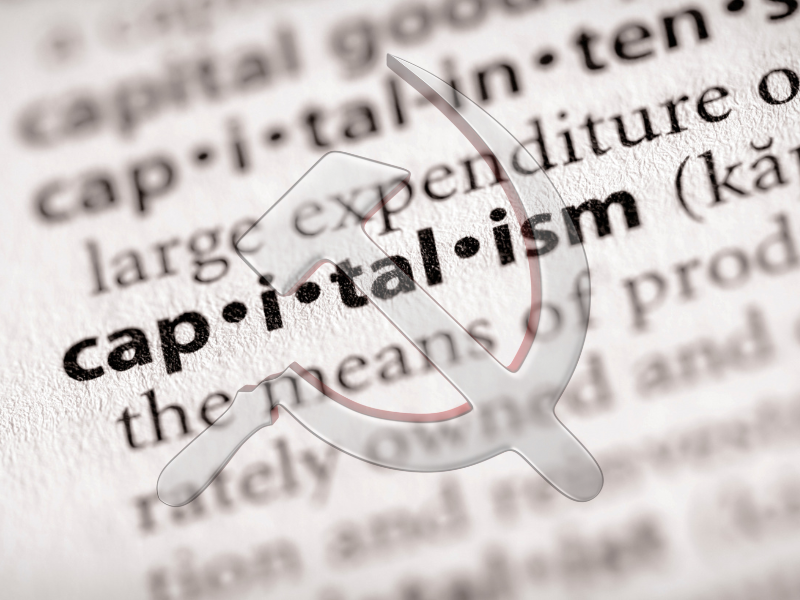
Voluntary transactions between consumers, firms, employees, and investors and direction using coercive commands, or capitalism and socialism, provide alternative ways to organize an economy. America’s mixed economy is neither capitalist nor socialist. But government favors for business, or “crony capitalism,” may be increasing support for socialism.

Government can benefit businesses in numerous ways. Nobel prize winning economist George Stigler distinguished four broad categories: direct monetary subsidies, control over entry by new rivals, control over substitute and complement goods, and price fixing.

Strictly prohibiting government’s ability to take these actions yield a market economy. Monetary subsidies, for example, were long limited by requiring that government spending benefit the public good, not private individuals.

With these barriers long gone, the distribution of benefits and costs of government assistance ensures disproportionate influence for businesses. A relatively small number of people, often the businesses and their employees, capture the benefits. Thousands or millions of consumers bear the cost of tariffs, subsidies, and mandates, which although large in total are small per person. Few Americans call their senators over crop subsidies or the U.S. Export-Import Bank.

Businesses work to preserve these advantages. Political influence arises through campaign contributions, campaign volunteers, and revolving door jobs for politicians and bureaucrats. Elected officials favor the side offering the most support.

Liberals seek to limit business lobbying and campaign contributions to rebalance political outcomes. But a democracy must let all citizens speak to their representatives.

I believe that frustration over government favors for business drives many Americans’ support for socialism. I see evidence for this in greater approval rates in polls for small businesses than big businesses. Small businesses embody genuine capitalism whereas people believe that big businesses are tainted by favors.

Our mixed system delegitimates profit earned through voluntary exchange.  Profit can only be earned in the market through value creating activities, meaning products, services, and innovations making buyers and sellers better off. By contrast, crony capitalism profits from government intervention and coercion.

The defenders of markets also affect attitudes. Our mixed economy with substantial government intervention is unmistakably not the market ideal. Yet claiming that real capitalism has not been tried rings as hollow as claiming that real socialism has never been tried.

Furthermore, free market economists cannot continually fight in the trenches over every modest policy change while distancing ourselves from the current system.

Fighting over each small policy change when we are so far from the market ideal may be bad economics. Correcting one problem is not guaranteed to improve our economy when it deviates from the market ideal in many ways.  The economic models identifying harm from price controls, government subsidies, or monopolies examine each as the only deviation from an otherwise fully market economy.  This argument — the fallacy of the second best — is highly relevant.

We see this fallacy in debates over government blocking mergers on antitrust grounds. Free market economists typically defend mergers because in a market economy large firms possess no true market power and remain large only by serving their customers better than potential competitors.

But firms eventually become large enough to secure government favors in our mixed economy, as exemplified by “too big to fail” banks bailed out in 2008.  Free market economists who defend such mergers cannot disavow the predictable subsequent political favors. University of Chicago economist Luigi Zingales has argued for stricter antitrust on precisely these grounds.

Proposing more government control over businesses as an antidote for government favors to business may seem schizophrenic. But big business influence arises with a mostly disengaged public. Crony capitalism may be the equilibrium when government has enough power to offer carrots but not enough to wield a big stick.

We seem unlikely to eliminate government’s ability to grant favors anytime soon. Hoping that businesses stop asking for favors is unrealistic. It is perhaps then unsurprising that many Americans favor a stronger government, perhaps even socialist, capable of bringing large corporations to heel.


Source link

Related Posts

Economics

Commentary: America chugs along in a ‘K-shaped’ economy

April 29, 2026
Economics

CDAE Welcomes New Instructor Anne Nelson Stoner

April 29, 2026
Economics

The Economics Department Needs To Raise Its Standards | Opinion

April 29, 2026
Economics

Understanding Socialist Economies: China, Cuba, and North Korea Explained

April 29, 2026
Economics

Heartland Express: Macroeconomic Risks, Overvaluation, Overbuying May Block Further Upside

April 29, 2026
Economics

Economic Calendar: Fed Decision, Earnings Reports from Microsoft, Amazon, Meta, and Alphabet

April 29, 2026
Add A Comment
Leave A Reply Cancel Reply

Editors Picks

World Bank confirms reliable financing for Kazakhstan’s energy infrastructure

April 29, 2026

Commentary: America chugs along in a ‘K-shaped’ economy

April 29, 2026

10 Day Trading Tips for Beginners Getting Started

April 29, 2026

Share of equity assets in insurers’ portfolios to rise

April 29, 2026
SUBSCRIBE TO OUR NEWSLETTER

Get our latest downloads and information first. Complete the form below to subscribe to our weekly newsletter.


I consent to being contacted via telephone and/or email and I consent to my data being stored in accordance with European GDPR regulations and agree to the terms of use and privacy policy.

Featured

French Minister Pushes Expansion of Euro Stablecoins

April 17, 2026

Ireland – Agriculture, Manufacturing, Services

April 10, 2026

UK must act more swiftly to develop stablecoins – Financial Times

April 10, 2026
Monthly Featured

The best of all worlds – Apr 2026 | Investor

April 19, 2026

Elon to host inaugural Commercial Real Estate Summit in Charlotte | Today at Elon

April 11, 2026

Auraska Ventures launches India’s first integrated platform for alternate investments, advisory, and venture building in the cultural economy

April 16, 2026
Latest Posts

World Bank confirms reliable financing for Kazakhstan’s energy infrastructure

April 29, 2026

Commentary: America chugs along in a ‘K-shaped’ economy

April 29, 2026

10 Day Trading Tips for Beginners Getting Started

April 29, 2026
SUBSCRIBE TO OUR NEWSLETTER

Get our latest downloads and information first. Complete the form below to subscribe to our weekly newsletter.


I consent to being contacted via telephone and/or email and I consent to my data being stored in accordance with European GDPR regulations and agree to the terms of use and privacy policy.

© 2026 Aspire Market Guides.
  • Contact us
  • Privacy Policy
  • Terms and Conditions

Type above and press Enter to search. Press Esc to cancel.

SUBSCRIBE TO OUR NEWSLETTER

Get our latest downloads and information first.

Complete the form below to subscribe to our weekly newsletter.


I consent to being contacted via telephone and/or email and I consent to my data being stored in accordance with European GDPR regulations and agree to the terms of use and privacy policy.