
Early Mycenaean burials were more than places for the dead. A new study argues they were carefully arranged visual scenes, built through chosen objects and their placement.

Rachel Emma Phillips examines burial practices on mainland Greece between about 1700 and 1400 BCE. Her study focuses on the Dendra tholos, a large tomb near the Mycenaean settlement at Midea in the southern Peloponnese.
The tomb held four pits beneath its chamber floor. Two contained undisturbed burials, while the other deposits had mixed remains and objects. The preserved burials offer a chance to study how bodies and grave goods were arranged.
One pit held two extended skeletons, identified in the original excavation as an adult man and woman. The other held an adolescent female. Older labels called them a king, queen and princess. Modern osteological tests have not been carried out on the remains.

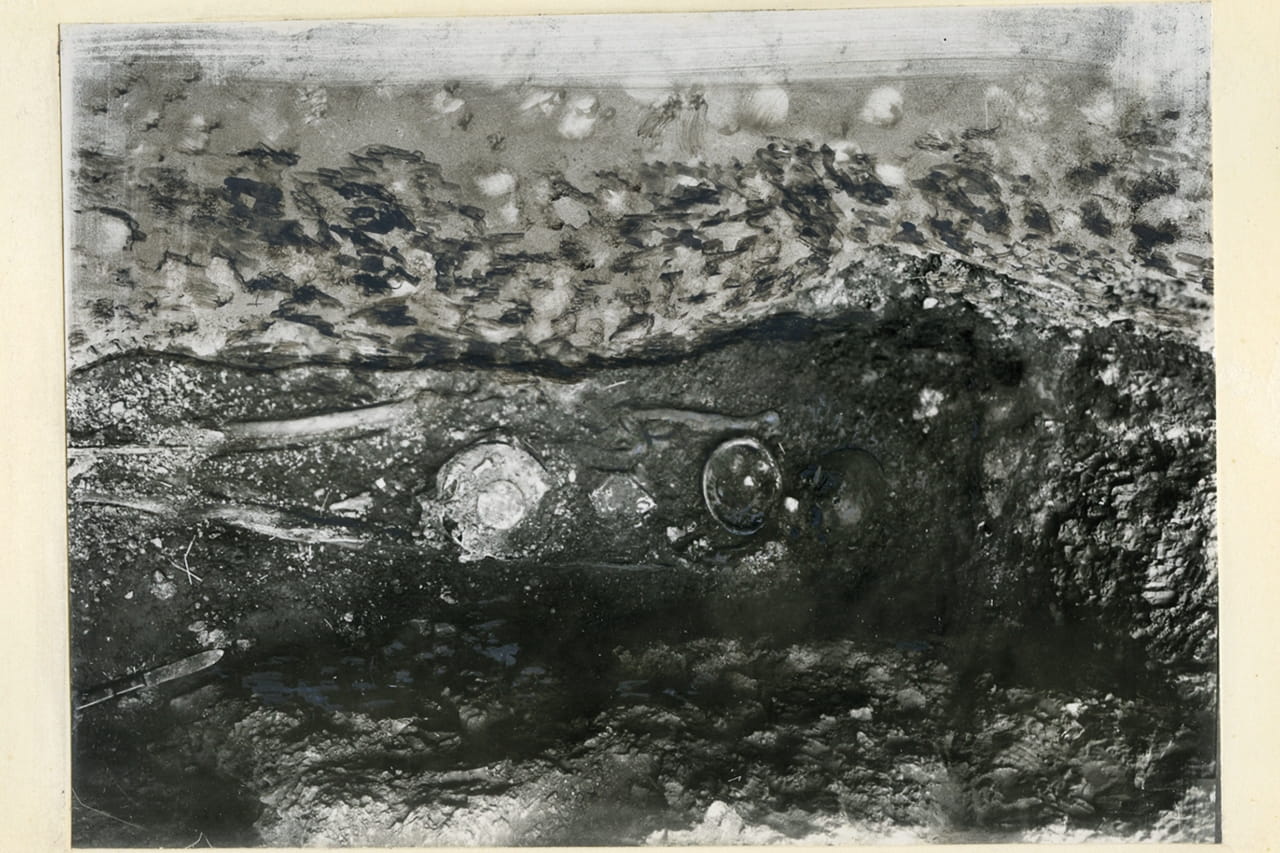
The so-called male burial had the richest group of objects. A gold cup rested on his chest, with seals and rings inside. Silver vessels, decorated cups, boxes, swords, spearheads and other items were placed around the body. Glass ornaments near the head were reconstructed as part of a boar’s tusk helmet.
The female burial had only three objects. A gold and silver cup lay on her chest, while a carnelian seal was placed near her wrist and a small gold box near her neck. The adolescent female had gold rosettes around her neck and gold ornaments around her waist.
Phillips argues that such differences should not be viewed only through wealth or social rank. The objects also formed a visual arrangement. Their colors, shine, shape and position affected how mourners saw the dead.
The Dendra burials contain several unusual material combinations. Some objects joined different metals, while bronze and ivory were added to other materials. Two cups combined silver and gold. Three rings used layers of iron, copper, lead and silver.
The glass ornaments around the male burial offer another clue. They resemble parts of a boar’s tusk helmet, but they don’t reproduce the whole helmet. Their placement seems to have focused on the sections visible from above.

The narrow pits shaped this view. Mourners looking down would see the bodies and objects together. Torchlight would also have made polished and colorful surfaces stand out.
This arrangement also changed the meaning of the body itself. Objects placed on the corpse remained after flesh decayed. In some cases, their positions echoed parts of the human body.
Four swords in the male burial had their hilts near the shoulders and blades along the arms. Their placement created a visual link between the weapons and the body. The objects helped preserve an image of the deceased after physical decay began.
The study describes this process as a form of curation. The mourners selected materials, arranged them around the body and created a particular view of the dead. The burial therefore became a combined composition of human remains and objects.
The approach also offers a way to think about grief. The final image of the decorated body could stay in the memories of mourners after stone slabs closed the pits. The burial gave the dead a lasting material presence while the body itself changed through decay.
Phillips proposes treating such burial settings as a form of artistic action. For the early Mycenaean period, this shifts attention from individual objects to the complete scene created inside the tomb.
The Dendra tholos shows how material choice, body placement and visual appearance worked together. The study argues that similar methods could be used to examine other burials, including contexts far beyond the Mycenaean world.