
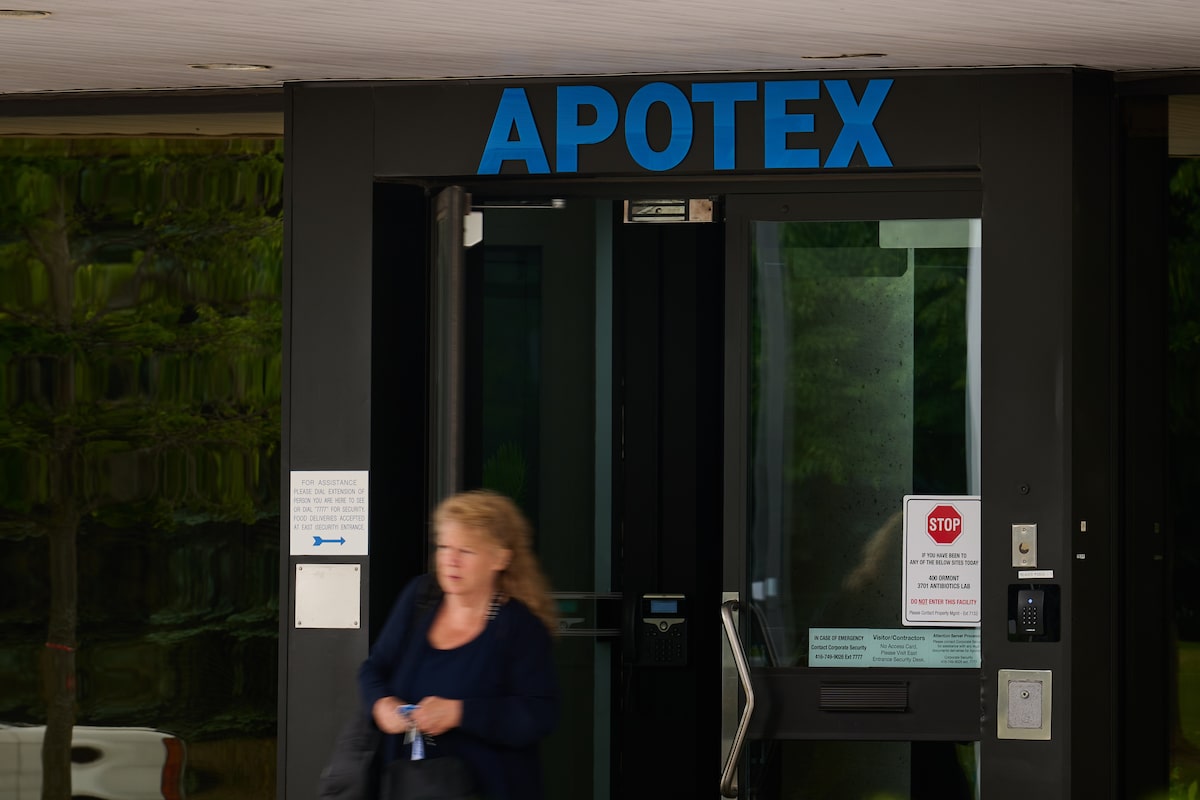
Apotex stock finished its first day of trading on Wednesday at $27, up $3 from the IPO price in an otherwise down market.Sammy Kogan/The Globe and Mail
Apotex Health Corp. founder Dr. Barry Sherman left his four children a tidy fortune, estimated at $4-billion, when he and his wife Honey were murdered nearly nine years ago.
Picking the right private equity firm, New York-based SK Capital Partners, to invest in their father’s generic drug business in the wake of the family tragedy has dramatically boosted the heirs’ already impressive wealth.
Like the founders of iconic domestic companies Lululemon Athletica Inc., Dollarama Inc. and Canada Goose Holdings Inc., the second generation of the Sherman clan can thank PE fund managers for turbocharging growth in their business, along with the family’s fortune.
On Wednesday, Apotex stock soared in its debut on the Toronto Stock Exchange. The country’s largest drug company raised $1.3-billion by selling shares at $24 each, the top end of the range set by investment bankers underwriting the largest Canadian initial public offering in five years.
Apotex shares jump 12% in TSX debut of billion-dollar IPO
Apotex stock finished its first day of trading at $27, up $3 from the IPO price in an otherwise down market. The newly public company sports a $5.8-billion market capitalization.
Paperwork filed as part of the Apotex IPO shows how SK Capital, a fund management firm run by veterans of the pharmaceutical and chemical industries, transformed the business they bought from the Sherman estate in 2023.
The Apotex prospectus is also a case study in how PE funds reap outsized returns if the funds get their debt-heavy investments correct.
The Sherman’s four adult children – Jonathon, Lauren, Alexandra and Kaelen – banked billions of dollars from the initial sale to SK Capital. They had the good sense, or wise counsel, to retain a significant stake in Apotex. After the IPO, the Sherman family still has a 14 per cent holding worth $805-million.
While the Apotex prospectus doesn’t disclose what SK Capital paid for its control stake in the drug company for three years, investment bankers said the leveraged buyout valued Apotex at $4-billion. In a typical PE deal, a buyer such as SK Capital pays most of the purchase price with debt.
Apotex’s filings reveal that SK Capital has likely made back its original equity investment prior to and during the IPO. The prospectus shows existing Apotex backers, including the fund manager, sold $429-milion of stock as part of the IPO.
Over the past three years, ahead of the IPO, SK Capital and the Sherman family also took a total of $2-billion out of Apotex through dividends and share repurchases, a process known in PE circles as a recapitalization.
SK Capital, which has invested a total of US$9-billion in 20 companies since being founded in 2007, still holds a stake in Apotex worth $3.4-billion.
From Apotex to SpaceX, wave of high-profile IPOs attracts everyday investors
Apotex had the cash to fund recapitalizations, and to stage a well-received IPO, because the management team that SK Capital put in place shifted the drug maker’s focus and they pumped up performance.
Dr. Sherman founded Apotex in 1974 and the IPO prospectus shows the famously litigious entrepreneur put a priority on boosting sales and the company’s geographic reach, rather than profits. In the 1990s, Apotex began expanding in Europe. The following decade, the company moved into Australia and India.
In the wake of Dr. Sherman’s still-unsolved murder in 2017, chief executive officer Jeff Watson took an axe to operations, focusing on regions and drugs that made the highest profit. Apotex exited Europe and Australia to focus on selling in North and South America. The company sold two manufacturing plants and closed four facilities.
When SK Capital arrived, newly appointed CEO Allan Oberman continued to cut costs, but he also used acquisitions to build a drug portfolio with higher profit margins and better prospects than the generic medicines that Dr. Sherman favoured.
Over the past three years, Apotex became a leader in what are known as biosimilar drugs – generic medicines made from living cells rather than chemicals. The company also purchased companies that produce branded specialty drugs, sold in outlets such as health food stores along with pharmacies.
Health Canada approves generic Ozempic from Apotex as patients and insurers seek savings
Industry-wide, sales of the generic medicine that used to be Apotex’s stock-in-trade rose at a tepid 2 per cent annual rate over the past three years, the prospectus shows.
However, sales of Apotex’s newly acquired specialty drugs and biosimilars rose 15 per cent annually since 2023, and they now make up 49 per cent of the company’s revenues. The company has 470 of these products, including cancer treatment drugs, compared to 370 types of medicine in its conventional generic portfolio.
IPO investors bought into the potentially explosive growth in Apotex’s portfolio. They were willing to overlook a last-minute leadership shift.
In March, Mr. Oberman had to step down as Apotex CEO for health reasons. Mr. Watson, aged 62, returned to the corner office. He received 75,000 Apotex shares as a signing bonus.
Of course, no financial gain can compensate for the grief of losing parents to violence. Having said that, the family made the best of an unimaginable tragedy.
Aligning with SK Capital has made the Sherman family billions of dollars, with the potential for far more if the country’s leading drug maker hits its stride as a public company.