
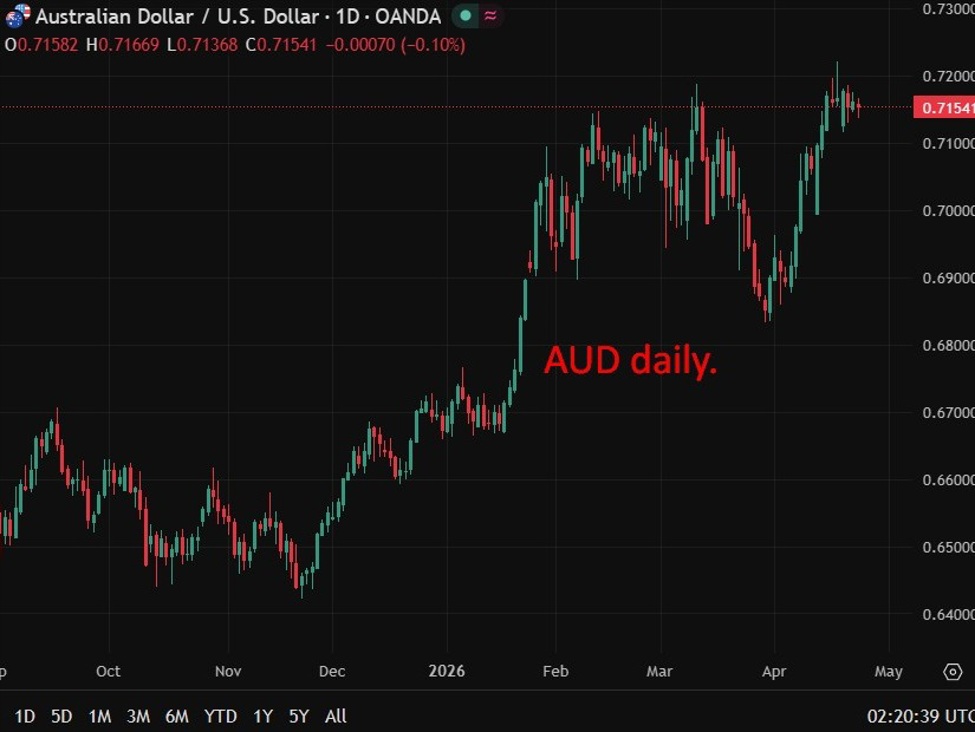
The findings underscore the degree to which currency volatility, amplified by the Iran war, has become a primary risk management concern for Australian businesses and institutional investors. The sharp divergence in hedging behaviour between large and small corporates highlights a structural vulnerability, with smaller businesses carrying materially greater exposure to adverse AUD moves. For super funds, the planned lift in hedge ratios across alternatives such as private equity and private credit signals a broader reassessment of currency risk in portfolios that have historically carried lower coverage in those asset classes.
Summary:
- Importers hedging around 80% of currency exposures; exporters that hedge covering 86%
- Businesses with both import and export activity hedging around two-thirds of exposures, reflecting natural offsets
- More than 80% of importers expect profits to fall, averaging a 6.8% decline on a 10% drop in AUD/USD
- A similar share of exporters expect profits to rise, with an average uplift of 7.9%
- Nearly all large corporates with turnover above A$725m hedge currency exposure, versus 54% of smaller businesses with turnover of A$5m to A$20m
- Super funds hedge three-quarters or more of foreign property and infrastructure assets, but below one-third for private equity and hedge funds
- More than 80% of super funds plan to increase foreign exchange exposure in the next three months, by an average of 13.6%
- Almost 90% of super funds expect to lift hedge ratios across all asset classes in the next three months
- AUD year-end forecasts: super funds at US$0.71, corporates slightly more optimistic at US$0.72
Australian corporates are hedging at elevated rates as geopolitical uncertainty stemming from the Iran conflict drives a significant reassessment of currency risk, according to the inaugural CommBank FX Barometer published by Commonwealth Bank of Australia.
The quarterly survey, which draws on responses from around 1,000 Australian-based corporates and superannuation funds with foreign currency exposure, was conducted between 16 February and 10 April, a period that spans the outbreak of the Iran war and the subsequent ceasefire announcement. The timing lends particular weight to the findings, capturing sentiment and behaviour during one of the more volatile windows for global currency markets in recent years.
The data shows importers are currently hedging around 80% of their currency exposures. Exporters that hedge are covering an even higher share, at 86%, as they look to lock in favourable exchange rates during periods of Australian dollar weakness. Businesses with both import and export operations are hedging around two-thirds of their exposures, a lower figure that reflects the partial natural offsets that flow from operating on both sides of the currency equation.
The stakes are considerable. More than 80% of importers surveyed expect profits to decline if the Australian dollar falls, with the average expected hit standing at 6.8% for every 10% drop in AUD/USD. On the other side, a similar proportion of exporters anticipate a profit uplift averaging 7.9% from the same move, underlining how currency direction cuts sharply in different directions depending on a business’s trading profile.
A clear divide has emerged between large and small businesses in their approach to currency risk management. Almost all corporates with annual turnover above A$725 million currently hedge their foreign exchange exposure. By contrast, only 54% of businesses with turnover between A$5 million and A$20 million do so. Large businesses hedge around 80% of their currency exposures on average, compared with approximately 53% for smaller counterparts. CommBank economist and currency strategist Carol Kong noted that this gap leaves smaller businesses materially more vulnerable to unfavourable currency moves.
Among superannuation funds, the picture is more nuanced. Hedge ratios vary considerably by asset class, with foreign property and infrastructure portfolios covered at three-quarters or above. Core holdings in listed equities and fixed income carry hedge ratios of around one-half and two-thirds respectively. At the other end of the spectrum, private equity and hedge fund investments are hedged at below 30%, leaving those allocations with significant residual currency exposure.
Looking ahead, more than 80% of super funds plan to increase their overall foreign exchange exposure over the next three months, with the average planned increase standing at 13.6%. No funds surveyed expect to reduce exposure. Almost 90% plan to lift hedge ratios across asset classes, with the strongest anticipated increases in private credit, private equity and hedge funds, suggesting a deliberate move to bring alternatives more in line with the coverage levels applied to core assets.
On the Australian dollar outlook, super funds are forecasting the currency to finish the year near US$0.71, while corporates are marginally more optimistic at US$0.72. CommBank’s Joseph Capurso cautioned that businesses may be caught out by a weaker Australian dollar driven by US dollar strength, including the ongoing artificial intelligence investment boom, as well as continued fallout from the Iran conflict. He noted that the hedging gap between large and small businesses means the latter remain most at risk if that scenario plays out.