

12 May 2026
Craig DeLuz: When Wall Street Moves In Next Door
“Homeownership has long been one of the most reliable paths by which ordinary people build wealth,” writes Project 21 Ambassador Craig DeLuz in the commentary below. However, “the large-scale acquisition of single-family homes by institutional investors” is preventing a growing number of Americans from reaching that goal:
When hedge funds and private equity firms deploy billions of dollars to purchase thousands of homes — sometimes entire neighborhoods at a time — they are not simply participating in a market. They are reshaping it.
Read Craig’s commentary in entirety below.
The American housing market is producing outcomes that should trouble anyone who thinks carefully about how markets are supposed to work.
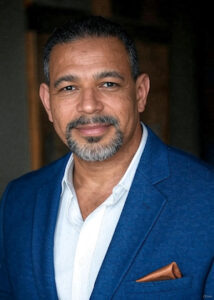
Craig DeLuz
Homeownership has long been one of the most reliable paths by which ordinary people build wealth. Not through speculation or financial sophistication, but through the simple, steady accumulation of equity in a place they call home. That path is narrowing — and not entirely for the reasons most commonly cited.
Inflation, zoning restrictions, and supply constraints are real. But there is another factor worth examining: the large-scale acquisition of single-family homes by institutional investors. When hedge funds and private equity firms deploy billions of dollars to purchase thousands of homes — sometimes entire neighborhoods at a time — they are not simply participating in a market. They are reshaping it.
Words like “free market” get thrown around a great deal, often by people who have not thought through what those words actually mean. A market functions well when buyers and sellers meet on terms that reflect genuine competition. When one class of buyer can make all-cash offers at scale, outbidding families using FHA or VA loans before those families even know the house is available, that is not competition. That is displacement.
The consequences follow as predictably as night follows day. Prices rise. First-time buyers are crowded out. Homes that might have anchored a family’s financial future for generations become permanent rental inventory instead. The gap between those who own property and those who never will grows a little wider.
It would be a mistake to treat all institutional landlords as identical. Scale and conduct vary considerably. But scale itself matters, independent of conduct. When companies controlling tens of thousands of properties set rental prices and eviction policies across entire metro areas, the tenant has fewer alternatives than the textbook assumption of competitive markets would suggest.
The more troubling cases make the abstract concrete. Consider the record of operators like Edward Rainey Renwick and Raineth Housing, whose rental portfolio serving predominantly low-income, largely African American tenants in cities like Ferguson, Missouri drew scrutiny for eviction practices, property conditions, and delinquent property taxes running into the millions. Local governments were left managing the consequences of absentee ownership at scale. The tenants were left managing the consequences too — with fewer resources to do so.
Renwick is not an outlier so much as an illustration of what happens when oversight is weak and the incentives point in one direction. Financial engineering and community stability are not always in conflict, but when they are, the community rarely wins.
Executive Order 14376, signed in January 2026, directs federal agencies to stop facilitating mass acquisition of single-family homes by large investors. California’s Assembly Bill 1240 would prohibit business entities with interests in more than 1,000 single-family properties from acquiring additional homes for rental. Legislation in Congress, including the American Homeownership Act and the Homes for American Families Act, takes aim at the incentives that have fueled corporate consolidation of residential property.
None of this is especially radical. Setting thresholds based on asset size or market share is not a rejection of investment or rental housing. America needs both, and small landlords and local property managers serve a genuine function in the housing ecosystem. The question is whether federal policy should tilt the playing field further toward the largest institutional players — and whether a system that systematically locks out the buyers it was designed to serve is functioning well or merely functioning.
Markets are not sacred simply because they are called markets. What matters is whether they are producing outcomes that reflect genuine competition and serve the people who participate in them. When the evidence suggests they are not, the intellectually honest response is to look at the evidence rather than the label.
Institutional investors hold roughly 19 percent of single-family homes in California. Nationally, investors own approximately 20 percent of all single-family homes, up sharply since 2020 — though it bears noting that the GAO found large institutional investors account for a far smaller slice, with their impact concentrated heavily in specific metro markets. Those numbers are not arguments for or against any particular policy. They are simply facts. And facts, as someone once observed, do not cease to exist because they are ignored.
The Founders understood property ownership as foundational — not as an abstraction, but as the material basis of independence and self-sufficiency. A family that owns a home has something a family that rents from a hedge fund does not: an asset that compounds over time, a degree of stability that cannot be terminated with 30 days’ notice, and something to pass on to the next generation.
That is not a political argument. It is an observation about how wealth is built and how it is not.
Washington has a long record of solving problems it created and creating problems it did not anticipate. Skepticism about any particular legislative remedy is entirely warranted. But skepticism about government action is not the same as indifference to the underlying problem. The question worth asking is not whether to prefer homeowners over hedge funds as a matter of sentiment. It is whether current policy, by design or by accident, has produced a housing market that is serving the country well.
The evidence suggests it has not. That seems like a reasonable place to start.
Craig J. DeLuz, a Project 21 Ambassador, has almost 30 years of experience in public policy and advocacy. He hosts a daily news and commentary show called “The RUNDOWN.” You can follow him on X at @CraigDeLuz.