
Colombia reaches the last quarter of 2026 with few infrastructure projects from which progress is expected, on an agenda conditioned by the fiscal crisis, the negotiation with the International Monetary Fund, and the definition of the 2026-2030 National Development Plan.
At the end of October or beginning of November, the Development Plan will be defined, as it must be approved by Congress. Which projects will be able to commit future budgets will depend on this, said Alexandra Jaramillo, a legal advisor specialized in infrastructure, to BNamericas.
Additionally, President Abelardo de la Espriella took office on August 7, and three days later a magnitude 7.4 earthquake shook the west of the country, which, according to Jaramillo, disrupted the infrastructure agenda.
Two projects that are at the pre-bidding stage are the Line 2 of the Bogotá Metro and the Regiotram del Norte, which should show progress.
In addition, progress is expected in the processes for the Boyacá Train projects, the Canoas WWTP and the initiatives for the navigability of the Magdalena River and the Meta River.
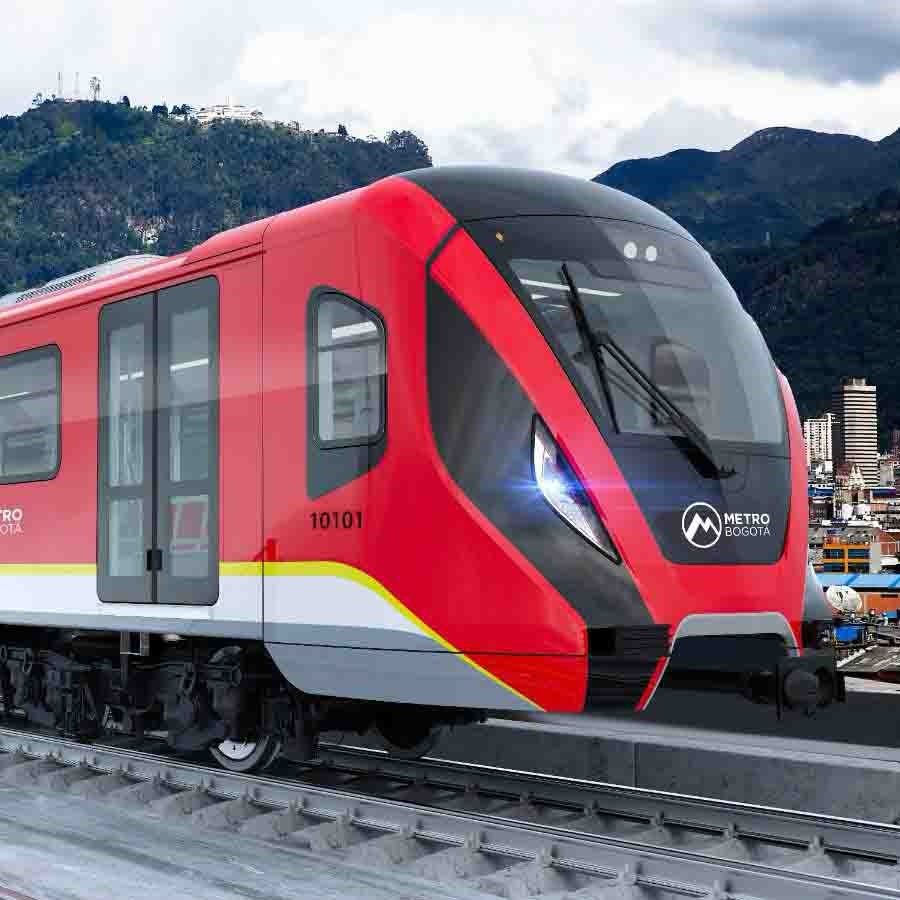
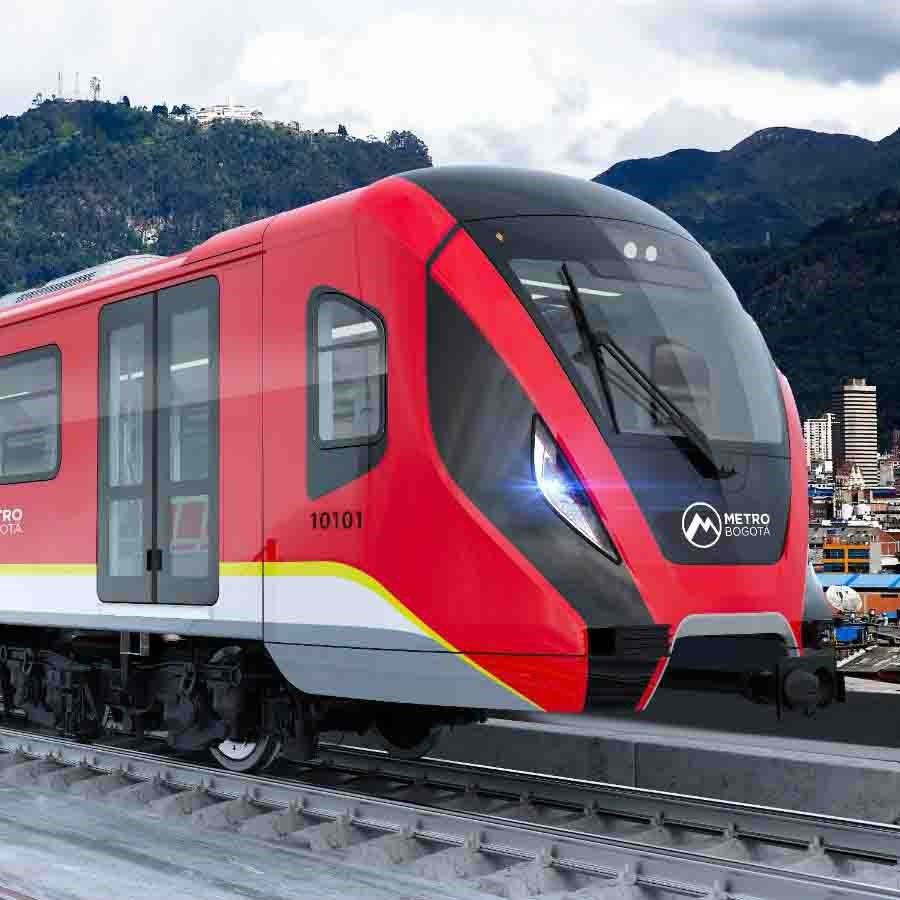
Line 2 of the Bogotá Metro
In the last quarter of the year, the international consortia that are prequalified for the construction of the project, whose investment is estimated at 34.9 trillion (tn) pesos (around US$10.5 billion (bn)), should submit their respective economic and technical proposals.
The consortia interested in the 5.5km line with 11 stations are:
APCA ML2 Bogotá (with Portuguese and French participation), made up of:
- Mota-Engil Colombia S.A.S.
- Mota-Engil Engenharia e Construção África S.A.
- Mota-Engil México, S.A.P.I. de C.V.
- Spie Batignolles Génie Civil
APCA Metro Capital L2 (Chinese consortium), made up of:
- Xi’an Metro Colombia S.A.S.
- Xi’an Rail Transportation Group Company Ltd.
APCA Bogotá Metro Capital (with Spanish participation), made up of:
- Sacyr Concesiones Colombia Participadas II S.A.S.
- CAF Investment Projects
A specialized team from the company Metro de Bogotá is currently evaluating the legal, financial, and experience-related capabilities of the bidding consortia.
Regiotram del Norte
In the last three months of the year, the final bidding documents for the project, valued at around 11tn pesos (about US$3.3bn), should be published.
The commuter train will have a route of 48.9km and is expected to meet the current and potential demand of Sabana Centro: the municipalities of Zipaquirá, Cajicá, and Chía.
It will have 17 stations and 26 100% electric trains, which will be integrated with the district’s public transportation: the two lines of the Bogotá metro, the TransMilenio trunk lines and Regiotram de Occidente.
Boyacá Train
The government of the department of Boyacá expects to complete in November the pre-feasibility studies for the Boyacá rail corridor, a 24tn pesos (US$7.200 million (mn)) project.
The corridor is designed to operate at 120km/h, with a projection to transport 22 million passengers per year in 2050 and up to three million tonnes of cargo, starting with 1.1 million tonnes. Currently, at 20km/h, it transports 41,000 tonnes.
The government of Boyacá contributes 50.5% of the resources for the structuring of the project and also has resources allocated for the feasibility phase.
The Boyacá Train would become the first regional railway system in Colombia to integrate two departments and the country’s capital, 12 municipalities in Boyacá and eight in Cundinamarca.
PTAR Canoas
During the course of the fourth quarter, the World Bank’s no-objection declaration should be issued for the Canoas wastewater treatment plant (PTAR) project, which is part of the project to clean up the polluted Bogotá River, which receives some 160,000t of organic waste each year, in addition to industrial effluents.
The US$1.5bn project already has budget approval and, starting in 2025, four prequalified bidders to submit offers.
The prequalified companies are:
- Unión PTAR de la Sabana (Acciona Agua Colombia and Sacyr Concesiones Colombia)
- Promotora del Desarrollo de América Latina
- APCA PTAR Canoas (Veolia Holding Colombia and Mitsui & Co. Infrastructure Solutions)
- APCA Aguas Canoas (Beijing Enterprises Water Group Limited, Shanghai Chengtou Sewage Treatment and China Harbour Engineering in Colombia)
Once approval is obtained from the World Bank, the bidding process would be opened.
Navigability of the Magdalena River
In this quarter, progress is expected on this US$375mn project, which seeks to consolidate the river as a multimodal corridor that reduces logistics costs and improves the connection between river ports and the rest of the country.
The plan was conceived in 2014 under a public-private partnership scheme and has faced multiple technical, financial, and contractual obstacles over the past 12 years.
President Abelardo de la Espriella offered to speed up the project.
Navigability of the Meta River
The National Infrastructure Agency (ANI) plans to move forward this quarter with the prior consultations required by the project and to open the tender before the end of the year.
The project, worth US$465mn, seeks to establish a public-private partnership to reactivate river transport on the Meta River, including the design, construction, operation, and maintenance of the necessary infrastructure.
The scope of the project includes carrying out improvement dredging during the low-water months, the acquisition, operation, and maintenance of dredgers, as well as the implementation of a satellite navigation system supported by bathymetric information and automatic leveling.
(The original version of this content was written in Spanish)