
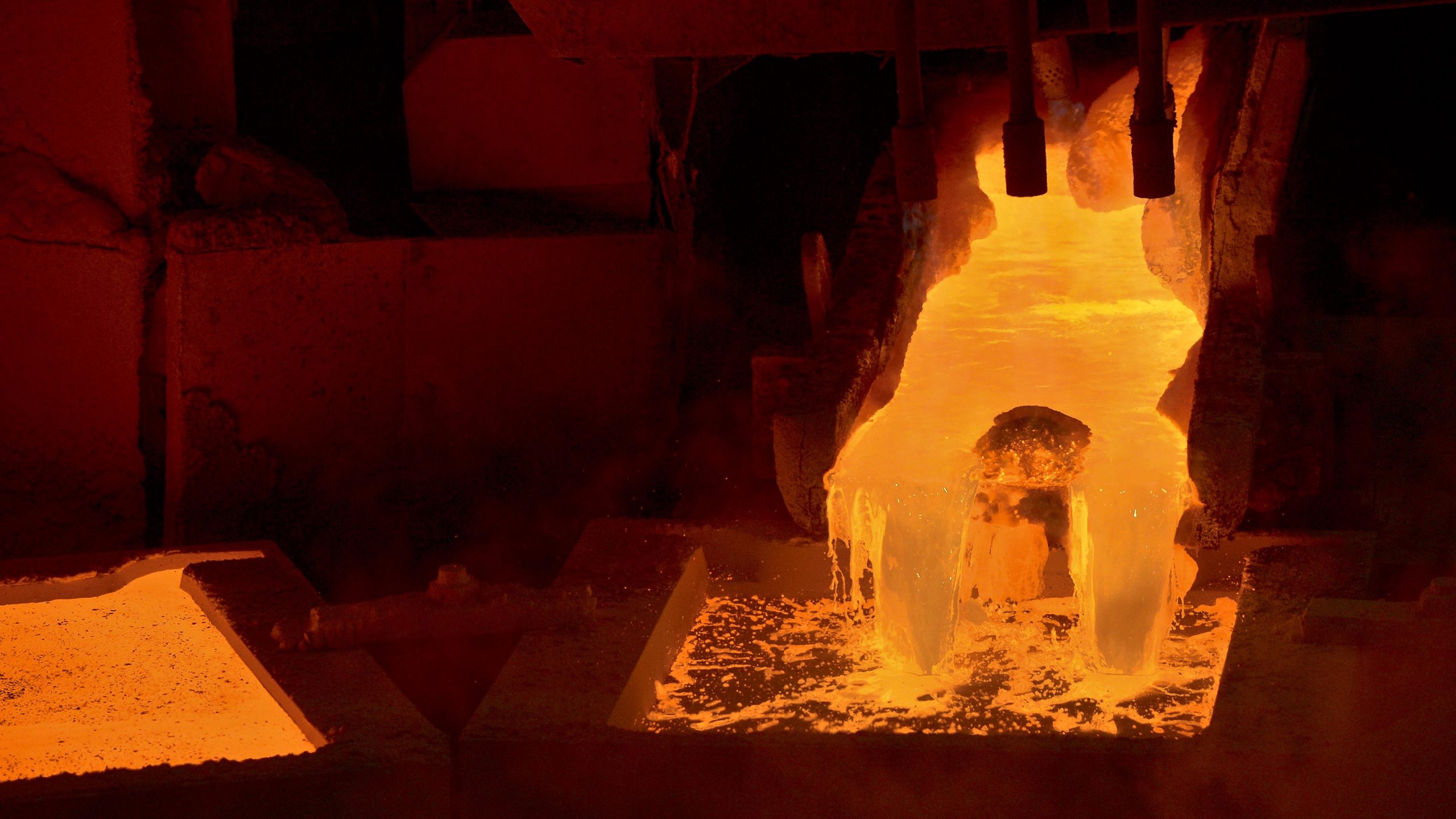
China’s cost competitiveness is driven by several structural advantages. First, the country operates an unparalleled number of smelter facilities, accounting for more than half of global refined copper production, allowing smelters to capture substantial economies of scale and lower unit costs. Second, Chinese smelters benefit from relatively low operating costs, including low labor costs and, in some cases, lower electricity prices supported by industrial policy and integrated industrial clusters. Third, many Chinese facilities are modern, highly utilized, and technologically standardized, minimizing downtime and spreading fixed costs across higher production volumes.
By contrast, European smelters face structurally higher operating costs due to elevated electricity prices and stringent environmental regulations, which increase both energy expenditures and compliance costs. Chile, despite being the world’s largest copper producer, also faces relatively high smelting costs because of expensive electricity and logistical challenges associated with remote mining regions. The United States, Japan, and South Korea generally occupy the middle of the global cost curve: Their smelters are technologically advanced and efficient but face higher labor, energy, and regulatory costs than their Chinese counterparts.
Overall, China’s operating cost advantage is not simply the result of lower input costs. Rather, it reflects the combined benefits of scale, high-capacity utilization, industrial policy, and vertically integrated supply chains, which together place Chinese smelters among the most competitive globally.
Beyond operating costs, one of the most important determinants of smelter profitability is by-product revenue—particularly from sulfuric acid. Depending on the sulfur content of the concentrate and the efficiency of sulfur capture, copper smelters typically produce 2.5–4.0 tonnes of sulfuric acid for every tonne of refined copper. Sales of sulfuric acid provide a valuable secondary revenue stream that can help offset periods of weak TC/RCs.
China enjoys a significant competitive advantage in this area because it has a large domestic market for sulfuric acid, driven by demand from the fertilizer, chemical, and mining industries. This enables Chinese smelters to consistently monetize sulfuric acid production and integrate it into a broader industrial value chain. During periods of depressed TC/RCs, strong sulfuric acid revenues have helped stabilize margins, making Chinese smelters more resilient than many of their international competitors.
The conflict between the United States and Iran and the closure of the Strait of Hormuz have significantly tightened sulfur markets and increased prices, underscoring the strategic value of sulfuric acid production. Sulfuric acid is also a critical input for processing a range of minerals, which means that shortages can sharply increase downstream production costs. For refined nickel, sulfuric acid accounted for approximately 26 percent of production costs before the war in Iran, rising to 42 percent afterward. For rare earth minerals, sulfuric acid’s share of production costs increased from roughly 5 percent to 22 percent. These shifts demonstrate why by-product revenue is particularly valuable. However, once tension in the Middle East eases and price volatility settles, this revenue will also decline.
Profitability is further enhanced by the recovery of valuable by-products contained in copper anode slimes, including gold, silver, selenium, tellurium, and, in some cases, platinum-group metals. During electrorefining, these elements do not dissolve with copper and instead accumulate in anode slimes, which are subsequently processed in dedicated precious-metal recovery circuits. While gold and silver provide globally traded precious-metal credits, selenium and tellurium can generate additional value through downstream industrial applications. Tellurium is used predominantly in cadmium telluride solar cells, which account for approximately 70 percent of global tellurium usage in 2025. China is particularly well positioned to benefit from the recovery of selenium and tellurium because it is the dominant global manufacturing hub for solar photovoltaic products and a leading producer of refined tellurium. China holds more than 80 percent of global solar photovoltaic manufacturing capacity across major stages of the value chain, creating substantial domestic demand for specialty metals used in photovoltaic technologies.
On the other hand, copper refining has a simpler cost structure than smelting because it is primarily an electrochemical process that converts copper anodes into 99.99 percent purity cathodes. Copper refining is a relatively low-cost stage of the value chain, with average global direct cash costs estimated at approximately 5 cents per pound of cathode copper (about $106/per tonne of cathode copper). This cost structure is heavily influenced by electricity consumption because electrorefining relies on the continuous electrolytic deposition of copper. As a result, refining costs vary significantly by region. Industrial electricity prices are generally lowest in North America at approximately $0.08–0.09 per kilowatt-hour (kWh), moderate in China (around $0.10/kWh) and South Korea (around $0.13/kWh), and substantially higher in Japan and Europe (approximately $0.17–0.22/kWh). These differences contribute to the cost advantage of Chinese and North American refining operations relative to facilities in Japan and Europe, where higher electricity prices increase operating costs.
Overall, refining competitiveness is primarily driven by electricity costs, scale, and by-product recovery, whereas smelting competitiveness is more heavily influenced by sulfuric acid economics. China’s advantage in refining comes from low unit costs achieved through scale and integration, while its smelting advantage is reinforced by both operating efficiency and the ability to monetize sulfuric acid through a large domestic fertilizer and chemical market.
Structural Erosion of Allied Smelting Capacity
The collapse in TC/RCs is increasingly translating into operational and strategic challenges across allied smelting industries. Historically, TC/RCs provided a stable revenue stream that compensated smelters for processing concentrate. However, there is growing disequilibrium as global concentrate supply has tightened while smelting capacity—particularly in China—has expanded.
The impact is becoming apparent across major allied economies. In October 2025, the governments of Japan, Spain, and South Korea issued a rare joint warning that current levels of TC/RCs were unsustainable and risked undermining the economics of copper smelting outside of China. The three countries specifically noted that declining processing fees were prompting companies to reassess operations, with some producers already considering scaling back or withdrawing from copper concentrate smelting altogether. Japan’s largest smelters, including JX Advanced Metals and Mitsubishi Materials, indicated plans to reduce copper concentrate processing as margins deteriorated.
The pressure is also evident in Australia. In 2025, Glencore warned that its Mount Isa copper smelter had become economically unviable due to a combination of record-low processing fees, high energy and labor costs, and shortages of copper concentrate. The company sought government support to keep the operation running, and warned that without assistance the smelter and associated refining facilities could be placed into care and maintenance. The financial strain ultimately became severe enough that Australian federal and Queensland state governments agreed to a A$600 million support package to preserve operations and maintain domestic processing capability. Glencore’s difficulties have not been limited to Australia. In February 2025, Glencore shut down and subsequently agreed to sell the PASAR copper smelter and refinery, the Philippines’ only copper processing facility, after market conditions deteriorated and concentrate shortages intensified. Reports directly linked the decision to the broader collapse in processing fees and increasingly difficult economics facing copper smelters worldwide.
More broadly, the current environment is contributing to a growing concentration of smelting capacity in China. Industry observers increasingly describe the sector as facing a structural imbalance in which Chinese smelting capacity expansion has outpaced growth in global mine supply, allowing miners to capture a larger share of value while placing pressure on independent smelters. As a result, higher-cost facilities in Australia, Canada, Japan, South Korea, Europe, and other allied jurisdictions are finding it increasingly difficult to compete without government support, integration with mining assets, or substantial by-product revenues. The consequence is not just lower profitability, but also a gradual erosion of non-Chinese processing capacity. As smelters reduce throughput, delay investments, seek subsidies, or exit the market entirely, a larger share of global copper processing becomes concentrated in a small number of jurisdictions. This trend raises concerns among allied governments because copper smelting is increasingly viewed not only as a commercial activity but also as a strategic industrial capability that supports broader supply chain resilience and economic security.
Policy Recommendations
The United States urgently needs additional copper cathode supply to support its economic, energy, and technological ambitions. While traditional data centers can require between 5,000 and 15,000 metric tonnes of copper, next-generation facilities designed to support artificial intelligence may require as much as 50,000 metric tonnes per site. As demand accelerates, improving the economics of domestic and allied copper smelting will be crucial to strengthening U.S. economic competitiveness. The United States should undertake the following recommendations:
-
Close the capital-cost gap on new smelters rather than subsidizing the entire project. The United States should use targeted capital support to narrow the cost disadvantage facing domestic copper smelters using the Section 45X production tax credits in the Inflation Reduction Act (IRA). Federal support should cover the incremental cost of building in the United States—not the full project cost.
Three recent Chinese projects across two companies give a sourced basis for Chinese smelter capital expenditures. Jinchuan Group invested ¥4.92 billion ($730 million) to expand its Fangchenggang smelter with a 300,000-tonne pyrometallurgical smelting system (an expenditure of about $2,430 per annual tonne of capacity) and separately invested ¥5.022 billion ($740 million) to build a 357,800-tonne copper smelter in Jinchang’s Hexibao district, equivalent to about $2,070/per tonne. A third project, Yangxin Hongsheng Copper, came online with an investment of ¥8.7 billion ($1.225 billion) for 400,000 tonnes of capacity, or about $3,060/per tonne. Together, these three projects put Chinese greenfield/expansion capital expenditures at roughly $2,000–3,100per annual tonne of capacity.
Non-Chinese benchmarks run much higher. Freeport’s Manyar smelter in Indonesia was completed at a final cost of $3.7 billion for 650,000 tonnes of annual cathode capacity, or roughly $5,700/per tonne (up from an earlier pre-completion estimate of $3.17 billion). This is a reminder that cost estimates on these projects tend to grow before final commissioning. For a U.S. project specifically, more direct estimates are now available. For instance, there is Falcon Copper’s roughly $2 billion, 400,000-tonne-per-year greenfield complex planned for Arizona, a U.S.-Japan investment framework priority project with potential Japanese technology and offtake partners. This is in line with Fastmarkets’ estimate of $1.8–2.5 billion for a modern smelter with current sulfur-capture and acid-plant standards, pointing to a central estimate of $2–2.5 billion for a plant in the 400 kilotonne-per-annum (ktpa) range. Both figures should be treated with caution, though. Company announcements like Falcon’s tend to reflect early, pre-permitting cost estimates, which historically run conservative and get revised upward as engineering firms up and construction proceeds (the same pattern seen at Manyar).
For policy planning, Washington should use the more conservative $5 billion benchmark. On that basis, a U.S. greenfield smelter in the 300,000-to-600,000-tonne range could face an incremental capital disadvantage of roughly $1–4 billion relative to a comparable Chinese facility.
Federal policy should target that gap. This could be done by extending and refining the 45X tax credit to cover copper processing. Beyond a new universal framework, there are existing tools that also need repair, and 45X is the measure best matched to the economics of a smelter or refinery. Section 45X of the IRA provides a 10 percent credit for the costs incurred in producing critical minerals to specified purity levels. Under the November 2024 rules, critical minerals were not subject to the phaseout that applies to solar, wind, and battery components, so the credit held its value in perpetuity. In 2025, however, Congress voted to phase out the credit for critical minerals as well, beginning in 2031. For a copper smelter, whose permitting and construction alone can consume most of a decade, a 2031 sunset means the credit could expire before the plant reaches nameplate production, eliminating the incentive precisely when it was meant to matter.
Two changes are needed. First, copper must be added to the list of applicable critical minerals under 45X; without that step, a domestic cathode producer cannot claim the credit at all, regardless of its duration. Second, the phaseout should be repealed or extended well past 2031 so that projects entering construction today can underwrite the credit across a full operating life. Unlike project-based credits, 45X rewards production directly, lowering operating costs per tonne of cathode and helping Western smelters compete against heavily subsidized foreign capacity, particularly in China, which now processes the majority of the world’s copper concentrate. Automotive manufacturers, grid and transmission builders, defense primes, and battery producers all depend on that cathode, and a production credit is the most direct way to keep it onshore.
Additionally, raising the 45X credit for copper and other critical minerals to 20 percent for the first five years a taxpayer claims it, stepping down to 10 percent thereafter, would strengthen early-stage project economics and help new smelters meet internal hurdle rates. Copper smelting is capital-intensive and has a thin profit margin. Treatment and refining charges have collapsed as Chinese smelting capacity has expanded, so the first years of operation are when cash flow is weakest and financing constraints most acute. A higher initial credit would bridge that period, while a predictable step-down would preserve long-term fiscal discipline. Together, these changes would accelerate project timelines and crowd in private capital across the mining, concentrating, smelting, and refining segments of the domestic copper supply chain.
-
Use a temporary price floor to preserve strategically important allied smelting capacity. The United States should consider a temporary, conditional price-support mechanism for strategically important allied copper smelters, backed by long-term offtake commitments rather than direct subsidies to foreign facilities. The objective would be to preserve capacity that is economically stressed but strategically valuable, while avoiding an open-ended commitment to underwrite inefficient production.
The case for intervention rests on a specific market failure. Smelting economics have deteriorated sharply outside of China, while Chinese smelters benefit from lower operating costs, greater scale, integrated downstream demand, and state-supported financing. Recent production cuts and government support measures in Canada, Australia, Japan, South Korea, and Europe suggest that commercially viable allied capacity could be lost before market conditions normalize.
A U.S. response should therefore be targeted, temporary, and linked to actual market conditions. Rather than transferring funds directly to allied governments or smelter operators, Washington could establish a minimum realized price or processing margin guarantee for qualifying allied output purchased under U.S.-backed offtake agreements. The mechanism would compensate producers only when market prices or treatment and refining charges fall below a predetermined threshold.
This structure has three advantages. First, it preserves supply without socializing the full economics of the asset. Public expenditure occurs only when market conditions fall below the agreed threshold, rather than through a fixed annual subsidy. Second, it uses an existing U.S. vulnerability to support allied production that the United States may need in any case. The policy would therefore function as both an industrial policy instrument and a supply security mechanism. And third, the structure can be designed to share, rather than to replace allied burden sharing. Governments in countries such as Australia are already supporting strategically important smelting capacity. U.S. demand guarantees could complement those measures by providing greater revenue certainty and access to a large end market, while leaving host governments responsible for addressing domestic operating, energy, and regulatory constraints.
The MP Materials agreement, announced in July 2025, provides a useful conceptual precedent. The Department of Defense combined a price floor with guaranteed demand to support investment in strategically important domestic rare earth production. The structure would look different for copper. The relevant benchmark should not be a fixed commodity price alone, because smelter profitability depends heavily on treatment and refining charges, by-product credits, energy costs, and concentrate availability. A more economically coherent mechanism would guarantee a minimum TC/RCs for eligible allied smelters.
Eligibility should be limited to facilities that meet clear strategic and commercial criteria, including location in treaty or close partner countries, acceptable environmental and labor standards, demonstrated access to feedstock, and a credible path to long-term competitiveness. Support should also contain an automatic sunset or step-down mechanism—for example, a lapse once treatment and refining charges, margins, or other agreed market indicators recover above a specified level for a sustained period.
The purpose would not be to keep every allied smelter operating indefinitely, but rather to prevent the loss of strategically valuable capacity during a period of market distortion—particularly where closure would leave the United States and its allies more dependent on Chinese processing.
-
Preserve duty-free access to refined copper from trusted allies until U.S. smelting capacity materially expands. The United States should maintain zero tariffs on refined copper cathode from trusted allies until additional domestic smelting capacity is operational and capable of displacing imports. Imposing tariffs before that capacity exists would raise costs for U.S. manufacturers without materially increasing domestic supply.
The core constraint is physical, not trade related. The United States has a substantial copper mining base but insufficient domestic smelting and refining capacity to process all of its concentrate into cathode. As a result, the country will remain dependent on imported refined copper for years, even under an aggressive domestic capacity buildout. A tariff on cathode would therefore tax an input the U.S. economy still structurally needs rather than redirect meaningful volumes toward domestic producers.
The market reaction in 2025 illustrates the risk. When a 50 percent tariff on all copper imports looked likely in mid-2025, the COMEX-LME arbitrage surged past 28 percent, with COMEX trading over $1 per pound above LME and the spread reaching roughly $2,600–2,900 per tonne. This reflected expectations of a scarcity premium in the U.S. market. That premium fell sharply after refined cathode was exempted. The episode demonstrated that tariff policy can raise domestic copper prices well before it induces any new supply response.
The White House’s July 30, 2025, proclamation exempted refined copper cathode from that 50 percent tariff, and the premium collapsed within weeks once the exemption was announced. That same proclamation set a June 30, 2026, deadline for the commerce secretary to report back so the president could decide whether to proceed with a phased tariff on refined copper starting at 15 percent in 2027. That deadline has now passed. The most recent White House trade action, a July 20, 2026, proclamation, addressed aluminum only and made no mention of a new copper determination. As of that action, refined copper cathode remains untariffed, and this paper’s recommendation is to keep it that way rather than let the pending determination proceed.
Ultimately, a near-term tariff would not provide much protection to existing U.S. smelters. Current domestic facilities are capacity constrained; they cannot rapidly increase output in response to higher domestic cathode prices. The immediate incidence of a tariff would therefore fall primarily on downstream consumers—including wire and cable producers, electrical equipment manufacturers, defense suppliers, and other advanced manufacturers—rather than generate a significant increase in U.S. refined production.
Trade protection should instead follow, not precede, supply creation. Washington should first use permitting reform, investment incentives, loan guarantees, and other measures to bring additional U.S. smelting and refining capacity online. Once that capacity is operating at commercial scale, policymakers can reassess whether a tariff, tariff-rate quota, or other border measure is necessary to sustain domestic production.
Any future review should also distinguish between trusted suppliers and strategic competitors. Cathode from countries that strengthen U.S. supply-chain resilience should not be treated identically to material sourced from jurisdictions that create strategic dependence.
The sequencing principle is straightforward: Build domestic capacity first, reconsider import protection second. Until U.S. smelters can actually replace a meaningful share of imported cathode, tariffs would function primarily as a tax on U.S. industry rather than as an effective instrument of industrial policy.
Ryuhei Ono is a visiting fellow with the Critical Minerals Security Program at the Center for Strategic and International Studies (CSIS) in Washington, D.C.
This white paper was made possible through generous support from Vale Base Metals, BHP, Glencore, South32, and Freeport McMoran to the CSIS Critical Minerals Security Program’s Copper Initiative.