
Law enforcement in Minnesota has raised concerns to legislators this session about the high number of scams reported to their agencies that involve virtual currency kiosks.
The scams are often similar to non-cryptocurrency scams where there’s an emotion element to hook the victim into providing money. Once at the cryptocurrency kiosk, usually found at a grocery store or gas station, victims are told by the scammer to input cash using an existing customer number and are prompted to bypass warning prompts to circumvent current state law regulating the kiosks.
To address the issue, lawmakers want to ban the kiosks, a move opposed by companies operating kiosks who say it’ll prevent them from operating when they’re not the ones conducting the scams.
The virtual currency kiosk ban received the green light from the House Thursday when it was included in the omnibus commerce policy bill, HF4188, that, as amended, was passed 122-12. The bill now goes to the Senate.
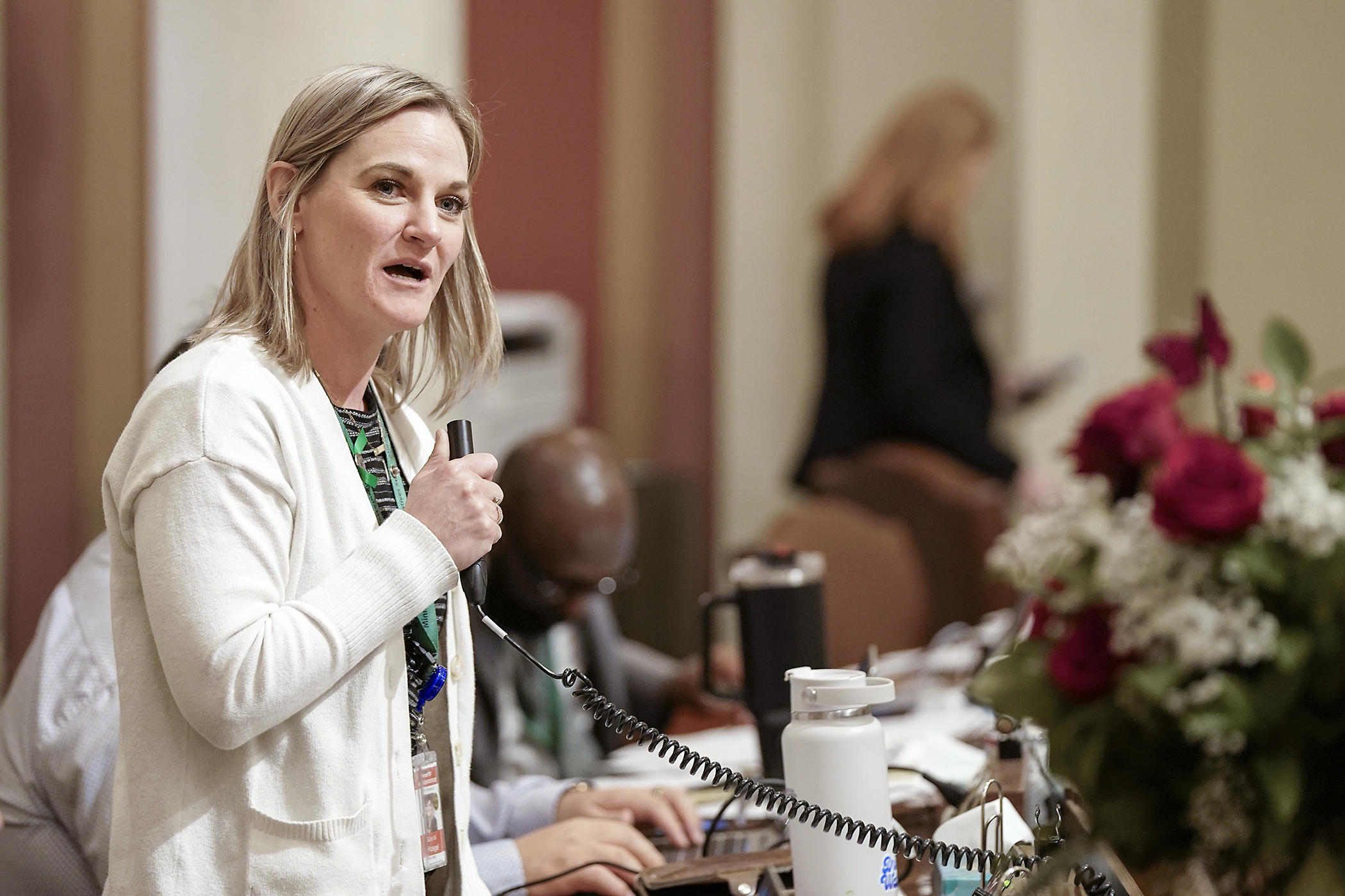
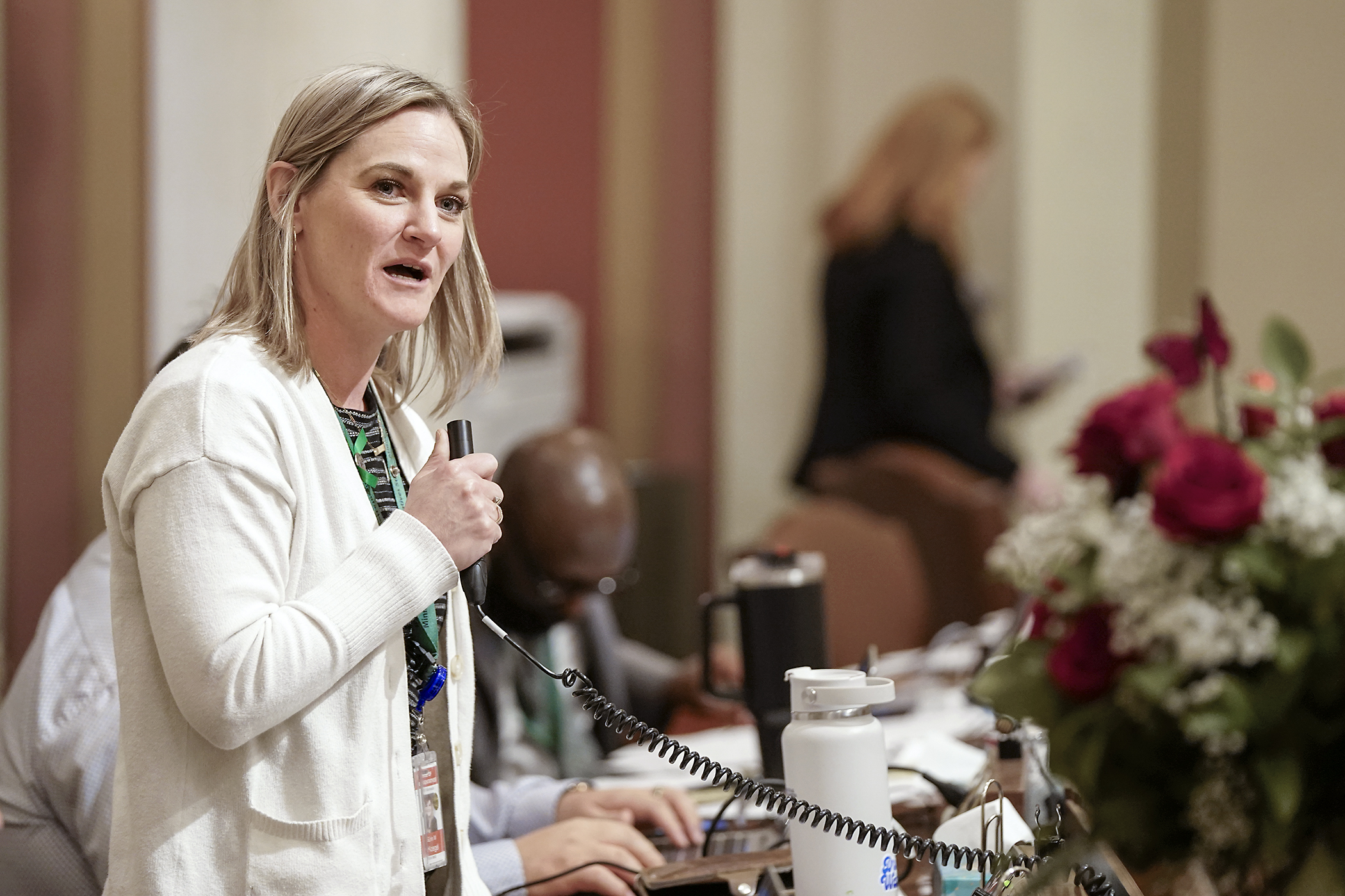 Rep. Erin Koegel presents HF4188 on the House Floor Thursday. The bill, which would ban virtual currency kiosks, was included in the omnibus commerce policy bill, which was passed 122-12. (Photo by Michele Jokinen)
“These machines are widely used to scam people and they charge high fees and lack transparency. So if a product is being used to scam people, we will step in and stop it,” said Rep. Erin Koegel (DFL-Spring Lake Park), the bill sponsor.
Vulnerable and elderly people are being targeted with the kiosks, said Rep. Tim O’Driscoll (R-Sartell).
“This is the newest method of scamming. ‘Grandma, I need you to go down to the blank blank store and go to the crypto machine and I need you to put money in and I need you to put this code in to be able to wire that money to me so that I can get home.’ It is a scam,” O’Driscoll said.
People older than 65 who are most likely to be targeted are also the least likely to report it to law enforcement because they’re embarrassed, feel bad about being scammed and don’t want their children to know about it, he said. The money they’re scammed out of affects their ability to pay for food, medications and housing.
Rep. Drew Roach (R-Farmington) recognizes that scams happen because of the kiosks, but he believes there are ways to regulate it by not allowing input into the kiosk. That would allow small businesses to still operate kiosks and people who own cryptocurrency to sell or cash out their digital wallets.
Earlier this session, state commerce officials told the House Commerce Finance and Policy Committee that a 2024 law passed to crack down on virtual currency kiosks wasn’t working because scammers had found ways around the law. O’Driscoll said the committee debated whether to add more regulations or to institute a ban while the issue is further studied.
The omnibus bill includes consumer protections, broker dealer changes, unclaimed property and technical law changes, Koegel said. “Bottom line, it stops crypto-related scams, protects student borrower loans, cracks down on deceptive insurance marketing and improves the transparency and accountability across industries,” she said.
Additionally, the omnibus commerce policy bill would:
-
amend student loan standards, including the transfer of a student loan between servicers; -
require insurance lead generators to keep records; -
allow entities to be licensed as a scrap metal dealer; -
codify requirements related to Regulation Crowdfunding; and -
amend unclaimed property statutes to define when prepayment of funeral expenses and virtual currency is considered abandoned.