
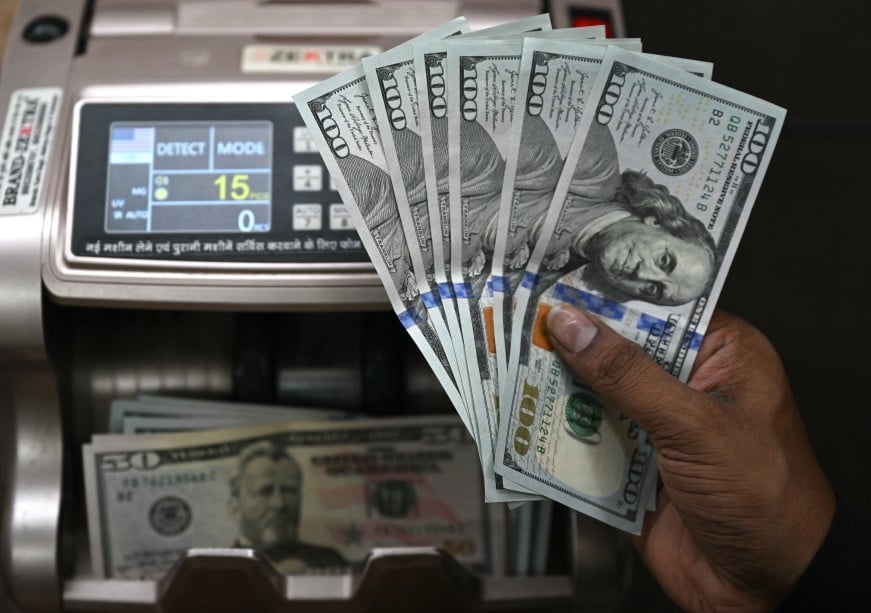

Image Source: Getty Images
Stablecoins are creating a new channel through which individuals and institutions can hold and transfer dollar-denominated value outside the traditional banking system. This development has important implications for monetary sovereignty, capital flows and the capacity of governments to monitor and regulate dollar-based financial activity. For much of the past eight decades, the international monetary system has been structured around the central role of the US dollar. The Bretton Woods arrangements established the dollar as the anchor of the post-war monetary system, with other major currencies pegged to it and the dollar convertible into gold. Although the gold convertibility regime ended in 1971, the dollar’s international role remained largely intact. Global commodities such as oil continued to be priced in dollars, international trade was frequently invoiced in the currency, and central banks accumulated dollar-denominated assets as a core component of their foreign exchange reserves. Today, the dollar continues to account for more than half of global official foreign exchange reserves, features prominently in international trade invoicing, and remains the dominant currency in global foreign exchange markets.
Dollar liquidity refers to the ability of governments, firms and households outside the United States to access and transact in dollars when required. This access has historically been mediated primarily through the banking and central banking system. Individuals and businesses could obtain dollar exposure through foreign currency accounts or other regulated financial institutions, while governments and central banks maintained dollar reserves and accessed international dollar markets through established financial channels. In both cases, regulated intermediaries provided the institutional infrastructure through which dollar liquidity entered and circulated across national borders.
A New Channel for Dollars
A stablecoin is a digital token designed to maintain a value close to one US dollar, typically backed by reserve assets such as cash and short-term US government securities held by the issuer. In functional terms, it provides users with access to dollar-denominated value without requiring them to hold dollars through a conventional bank account. Access can be obtained through a digital wallet and an internet connection, allowing users to hold and transfer dollar-linked assets across borders through blockchain networks.
Stablecoins could therefore create a relatively persistent form of dollar demand that exists outside conventional banking channels.
This distinction has important implications for the international availability of dollar liquidity. The factors that traditionally encourage demand for foreign currency, including weak domestic currencies, high inflation, concerns about banking-sector stability and financial crises, can also encourage demand for dollar-denominated stablecoins. Once households and businesses accumulate dollar assets, they may have limited incentives to convert them back into local currency, particularly where concerns about domestic financial stability persist. Stablecoins could therefore create a relatively persistent form of dollar demand that exists outside conventional banking channels.
The more significant policy difference lies in how governments can respond to this demand. Foreign currency bank accounts can generally be monitored, regulated, restricted or taxed because they operate through identifiable financial institutions subject to domestic supervision. Stablecoins can be transferred directly between digital wallets over public blockchain networks, including wallets that may not be linked to regulated intermediaries. This reduces the effectiveness of policy tools designed primarily around the banking system and creates new challenges for monitoring cross-border dollar holdings and transactions.
Their appeal may therefore increase precisely when confidence in conventional financial institutions declines, creating a feedback mechanism in which periods of financial stress can accelerate demand for alternative forms of dollar liquidity.
The implications become particularly significant in economies where confidence in domestic financial institutions is weak. Stablecoins can provide an alternative means of holding dollar-denominated value that does not depend on the solvency or continued operation of a particular domestic bank. Their appeal may therefore increase precisely when confidence in conventional financial institutions declines, creating a feedback mechanism in which periods of financial stress can accelerate demand for alternative forms of dollar liquidity.
Impact on the Global South
For much of the developing world, the dollar’s dominance is a practical reality rather than an abstract feature of the international monetary system. It affects governments servicing dollar-denominated debt, businesses purchasing machinery and other goods priced in dollars, and households seeking to protect their savings when domestic currencies depreciate. These conditions are also closely associated with the rapid growth of stablecoins. Between July 2024 and June 2025, stablecoins accounted for more than half of all exchange purchases involving the Colombian peso, Argentine peso, and Brazilian real. Their growing use across Latin America reflects persistent inflation, currency volatility, and capital controls, which have encouraged households and businesses to seek dollar-linked instruments for savings, remittances, and commercial transactions. Stablecoins are therefore emerging as an alternative financial channel, providing both a store of value and a payments mechanism in economies where domestic currencies may not consistently offer monetary stability.
An important shift is emerging in the use of dollar-backed stablecoins. More than 80 percent of dollar-backed stablecoin transactions take place outside the United States. Their use is also expanding beyond crypto-native activity into everyday financial flows, particularly remittances. On the US–Mexico corridor, it is reported that more than US$6.5 billion in remittances in 2024, equivalent to over 10 percent of total corridor volume, was processed. This is significant given that Mexico received approximately US$61.8 billion in remittances in 2025.
This trend does not necessarily signal a challenge to the dollar’s international position from a competing currency. Instead, stablecoins may be extending the reach of the dollar into markets where conventional dollar bank accounts have historically been expensive, difficult, or restricted. The important policy distinction is that this form of dollarisation can increasingly occur outside the traditional banking system and, in some cases, beyond the direct visibility of national authorities. Central banks that have historically relied on regulated financial institutions to monitor foreign currency exposure may therefore find it increasingly difficult to determine how much economic activity is effectively taking place in dollars rather than in domestic currencies.
India’s Regulatory Crossroads
India occupies a complex position in this emerging shift. It currently has no dedicated legislation governing cryptocurrencies or stablecoins. Instead, regulation is spread across a set of measures that rely primarily on taxation and anti-money laundering requirements. Since 2022, crypto gains have been subject to a flat 30 percent tax while anti-money laundering registration requirements have been adopted by around 49 exchanges and payment firms. The Reserve Bank of India has consistently taken a more cautious position, recommending that banks avoid exposure to crypto assets. In its Financial Stability Report in mid-2026, the RBI also warned that widespread adoption of privately issued stablecoins could weaken the effectiveness of monetary policy and contribute to fragmentation within the payments system it oversees.
Enforcement, however, has moved ahead of comprehensive regulation. In mid-2026, authorities raided several payment firms in Bengaluru over allegations that more than US$300 million had been routed abroad through stablecoin transfers. In the absence of crypto-specific legislation, authorities relied on a decades-old foreign exchange law to pursue the alleged activity.
For a country that already ranks among the world’s largest markets for stablecoin activity, regulatory visibility is likely to be more valuable than regulatory denial.
The regulatory gap has not eliminated demand. India ranks first globally on Chainalysis’s crypto adoption index. Rather than licensing and supervising this activity, as other major jurisdictions have begun to do through measures such as the US federal stablecoin law, Hong Kong’s licensing regime, and the European Union’s regulatory framework, India has largely sought to keep stablecoin activity outside the formal banking system. This approach risks pushing activity towards offshore exchanges and informal channels, where transactions are considerably more difficult for tax authorities and regulators to monitor. India therefore needs an approach that moves beyond both an outright prohibition and an uncritical embrace of stablecoins. A licensing framework could bring stablecoin issuers and exchanges within the regulatory perimeter rather than encouraging them to operate outside it. This should be accompanied by robust analysis of how India’s government debt and foreign exchange markets would respond to periods of stress before establishing rules governing reserve backing. The digital rupee should also be considered as one component of a broader digital currency framework rather than solely as a competitor to privately issued, dollar-backed tokens. Such a framework would recognise that Indians are already using stablecoins and establish mechanisms through which this activity can be monitored and regulated.
For a country that already ranks among the world’s largest markets for stablecoin activity, regulatory visibility is likely to be more valuable than regulatory denial. Bringing stablecoin activity within an appropriate supervisory framework would allow policymakers to address associated risks while gaining a clearer understanding of how privately issued digital dollars are affecting India’s monetary and financial system.
Sauradeep Bag is an Associate Fellow with the Centre for Security, Strategy and Technology at the Observer Research Foundation.
The views expressed above belong to the author(s). ORF research and analyses now available on Telegram! Click here to access our curated content — blogs, longforms and interviews.