
Stablecoin advocates have argued that blockchain networks can and will solve problems traditional banking never could. Payments would settle in seconds instead of days. Businesses would no longer wait for banks to reopen after weekends or holidays. Cross-border transfers would rely less on correspondent banking relationships that add cost, delay and operational complexity.
European policymakers have sought the same objectives without abandoning the banking system. Instead, they rewrote the rules governing it.
Mastercard’s review of its ownership of Vocalink arrives just as Europe is completing one of the largest payment infrastructure projects since the launch of the Single Euro Payments Area.
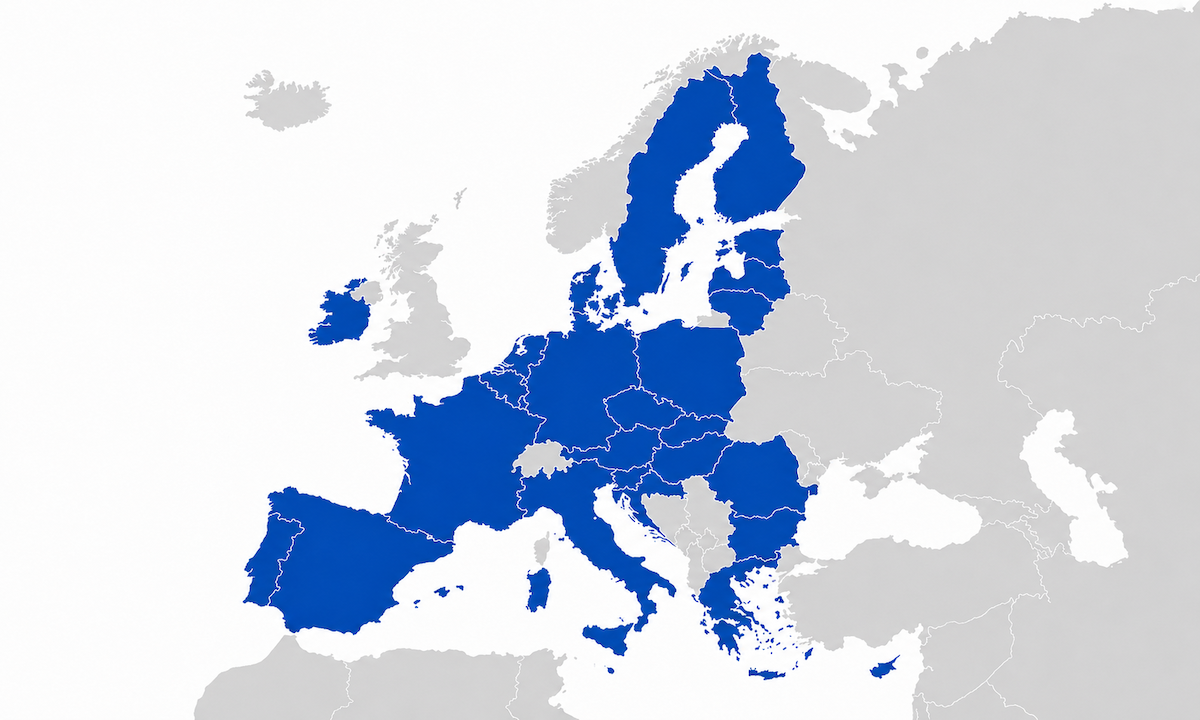
Europe’s instant payments framework entered a new phase this year as banks continue implementing the requirements of Regulation (EU) 2024/886, a 2024 law that requires payments service providers to make instant euro credit transfers broadly available under phased deadlines. The regulation requires payments service providers that already execute euro credit transfers to support instant euro payments according to phased implementation deadlines. It also prohibits higher pricing for instant transfers than for standard credit transfers and requires a Verification of Payee service designed to reduce misdirected and fraudulent payments before money leaves an account.
Those requirements reflect years of work by the European Commission and the European Payments Council to make immediate settlement an ordinary feature of banking. The commission concluded that adoption of instant payments had remained uneven because many institutions either failed to offer the service or charged customers more to use it. Regulation 2024/886 addresses both obstacles directly by making instant payments broadly available under comparable pricing rules.
The regulation rests on the SEPA Instant Credit Transfer (SCT Inst) scheme maintained by the European Payments Council. Under the EPC rulebook, participating payment service providers exchange euro payments 24 hours a day, seven days a week, with execution measured in seconds rather than business days.
A decade ago, treasury executives weighing faster cross-border payments had relatively few choices beyond correspondent banking. Today, a finance team moving euros between participating institutions within the SEPA area can settle funds almost immediately while remaining entirely inside the regulated banking system.
That changes the comparison with stablecoins. The question is no longer whether distributed ledger technology can move value quickly. It can. But the lingering issue may be whether treasury departments gain enough additional benefit from stablecoins to justify introducing another payment rail when bank infrastructure already delivers immediate euro settlement.
PYMNTS Intelligence research suggested finance executives have not answered that question in a uniform manner. “Stablecoins Gain Ground: Why CFOs See More Promise There Than in Crypto” found that 42% of middle-market chief financial officers reported discussing, testing or using stablecoins, compared with 30% for cryptocurrencies. Live deployment remains limited, however, with only 13% reporting stablecoin production use.
The figures suggested that curiosity has outpaced implementation as finance departments evaluate where digital assets fit inside existing treasury operations rather than treating them as a wholesale replacement for conventional banking.
Where Stablecoins Still Have Room to Compete
Among companies already using stablecoins, receiving cross-border payments ranks among the leading use cases, alongside settlement with payment and financial service providers. Yet 88% of companies that receive stablecoins convert them immediately into U.S. dollars rather than retaining them on the balance sheet, the PYMNTS Intelligence report found. That behavior suggests businesses continue to view stablecoins primarily as settlement mechanisms instead of treasury assets.
Certain constraints continue to slow adoption. The report revealed that 67% of CFOs cited regulatory uncertainty as a barrier to stablecoin use, while 43% pointed to integration with existing financial systems. Even among companies experimenting with digital assets, bank-integrated access ranked ahead of treasury FinTechs, exchanges and self-custody wallets.
Europe has attempted to address these concerns through a second regulatory initiative. The Markets in Crypto-Assets Regulation (MiCA) establishes supervisory requirements for issuers of electronic money tokens and asset-referenced tokens, including reserve management, redemption rights, governance and disclosure obligations. The result is a multipronged market structure. Europe now has detailed regulatory frameworks governing both instant bank payments and stablecoins, leaving treasury organizations to evaluate each on operational grounds rather than regulatory grounds.
Vocalink operates payment infrastructure in the United Kingdom rather than the European Union, but the discussion surrounding its future arrives as Europe demonstrates a different approach to payments innovation. Rather than replacing commercial bank money with digital alternatives, policymakers have focused on making bank money move with the speed and availability that many stablecoin projects promised from the outset.
For payments inside the SEPA area, the strategy has narrowed the gap between conventional banking and blockchain settlement. Outside Europe, where correspondent banking, foreign exchange and fragmented payment systems still shape commercial transactions, the calculation may look different.
Stablecoins have more room where SCT Inst cannot complete the entire journey. SEPA covers euro payments within its geographical area. A payment from Germany to Brazil, France to Singapore or Italy to the United States still encounters foreign exchange, non-European banking systems and, in many cases, correspondent banks.
That is likely to remain the proving ground for stablecoins, even as Europe argues that regulated instant bank payments can satisfy many of the same treasury demands.