
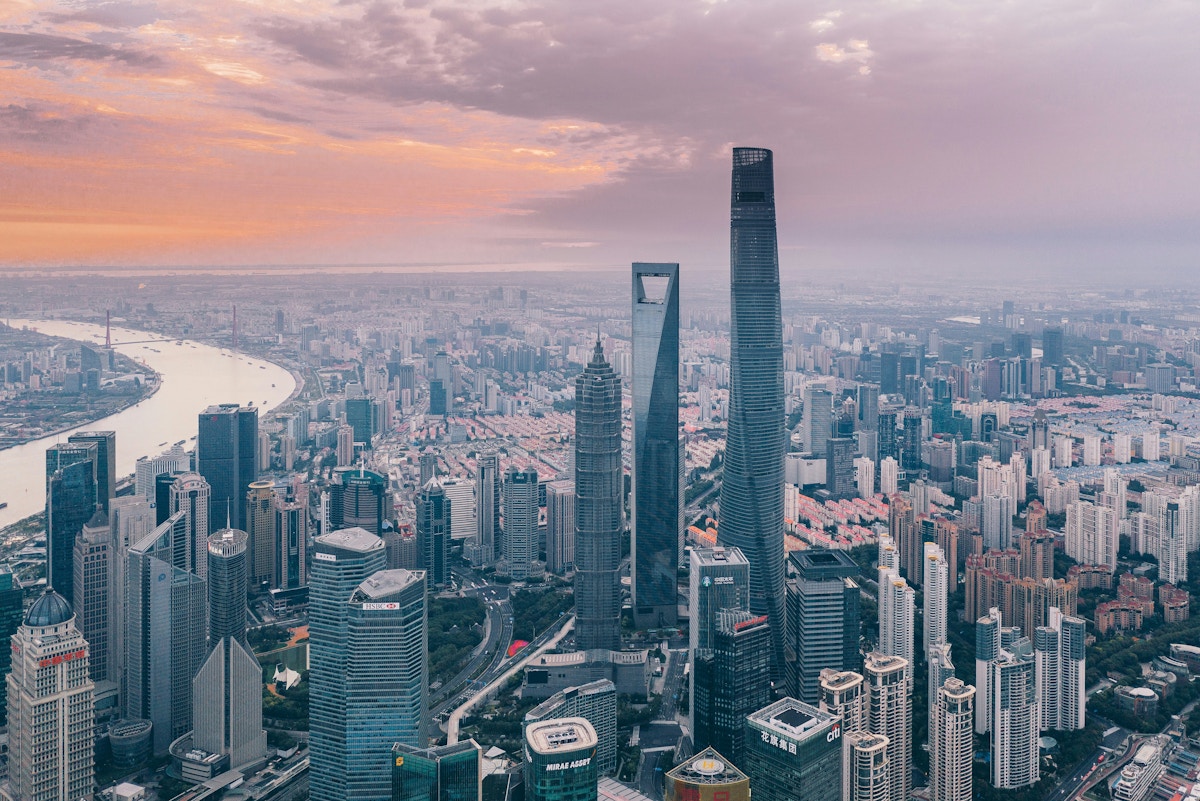
Asia strengthened its dominance of the global green economy in 2025, generating nearly half of worldwide green revenues as clean energy investment and manufacturing continued to expand despite the region’s heavy reliance on coal and imported fossil fuels, according to a new report.
Asian companies accounted for 47 per cent of global green revenues last year, the largest regional share, led by China, Japan, Hong Kong and South Korea, the London Stock Exchange Group (LSEG) said in its latest Investing in the green economy 2026: Resilience and reacceleration report.
The region’s green revenues have grown at a compound annual rate of 12 per cent over the past five years, outpacing the global rate of 10 per cent, the annual study found
Asian firms have generated the largest share of worldwide income generated from environmental solutions since 2016 and now play a critical role in sectors including energy and transport equipment along with waste and pollution control, it added.
China alone generated more than half of global green earnings from electric vehicle batteries and railway infrastructure, according to LSEG.
The findings come as the market capitalisation of the global green economy surpassed US$10 trillion for the first time, buoyed by a recovery in green equities and accelerating demand for electrification, energy efficiency and clean transport.
If treated as a standalone industry based on LSEG’s metrics, the green economy would be the world’s third-largest sector, surpassing healthcare and trailing only technology and industrials, it noted.
Global green revenues rose 5.3 per cent in 2025, the fastest growth since 2022, across LSEG’s coverage of more than 21,000 listed companies. Revenue expanded in three-quarters of the 133 green segments tracked by the financial data provider.
Electric vehicles and advanced batteries were among the strongest areas, adding US$62 billion in revenue during the year.

Green revenues by region 2016-2025. Source: LSEG
Asia’s energy security dilemma
Asia has emerged as the world’s largest destination for clean energy investment, supported by government policies, industrial planning and growing adoption of low-carbon technologies, the LSEG report said.
China invested US$625 billion in renewables, energy storage, nuclear power and energy efficiency, accounting for more than 30 per cent of global clean energy investment.
India followed with about US$100 billion in clean energy investment, equivalent to 83 per cent of its power sector capital allocation.
Japan, meanwhile, is pursuing its Green Transformation, or GX, strategy, which targets US$1 trillion of investment to decarbonise the power sector through renewable and nuclear energy and reduce reliance on fossil fuel imports.
But LSEG said Asia faces a dual challenge of rapidly expanding clean energy while maintaining reliable and affordable energy supplies.
The region remains heavily dependent on imported fossil fuels, particularly from the Middle East, and continues to drive global coal investment and demand.
China consumes 58 per cent of the world’s coal, followed by India and Southeast Asia, the report said. Recent oil price spikes have also prompted countries including Thailand, the Philippines, India and Bangladesh to increase coal-fired power generation.
“Recent energy crises have highlighted energy supply vulnerabilities, particularly in Asia,” LSEG said, noting the region is home to nearly 60 per cent of the global population and consists largely of emerging markets.
The competing pressures illustrate how the global energy transition is increasingly being shaped not only by decarbonisation targets, but also by energy security, supply chain resilience and industrial competitiveness.

Asia’s green revenue by market. Source: LSEG
Green investment regains momentum
Green equities globally have also rebounded strongly despite volatile financial markets and energy supply disruptions, the study noted.
The FTSE Environmental Opportunities All Share Index outperformed the broader market by 12.4 per cent in the 12 months to the end of April 2026, with renewable energy emerging as the strongest-performing green segment.
Since 2008, the green economy has outperformed global equities by 133 per cent, while valuations have grown at a compound annual rate of 18 per cent, compared with 12 per cent for the wider market, LSEG said.
Companies worldwide deriving more than half of their revenues from green products and services also recorded earnings before interest, taxes, depreciation and amortisation margins that were, on average, two to four percentage points higher than non-green sector peers during the period analysed.
Green bond issuance reached a record US$605 billion in 2025, up 5.7 per cent from a year earlier. Companies accounted for two-thirds of issuance.
Europe remained the largest issuer of corporate green bonds, but Asia-Pacific recorded the fastest growth, with issuance jumping 42 per cent year on year.
LSEG also identified US$4.1 trillion in green mergers and acquisitions over the past decade, representing 13.4 per cent of global deal value during the period.
The analysis, which combined LSEG’s Green Revenues data with information covering more than 1.5 million transactions, found that green companies were primarily using acquisitions to scale more rapidly, while participation from established non-green businesses remained limited.
The report defines the green economy as companies providing products and services with environmental benefits, ranging from renewable energy and clean water to energy efficiency and recycling.
While Asia leads by green revenue, the United States remains the largest green economy by market capitalisation, accounting for 57 per cent of the global total at US$6 trillion. US companies generated 27 per cent of global green revenues.
Europe’s green economy, meanwhile, reached US$1.2 trillion in both market capitalisation and revenue, with Germany, France and Britain among its leading markets.
LSEG warned that growing efforts to strengthen domestic supply chains through tariffs, export restrictions and the onshoring of green technologies could increase fragmentation across the global green economy, even as clean energy supply chains become more interconnected.