
Close Menu
Aspire Market Guides
  • Home
  • Alternative Investments
  • Cryptocurrency
  • Economics
  • Equity Investments
  • Mutual Funds
  • Real Estate
  • Trading
What's Hot

Brewers’ potential approach to 2026 Trade Deadline

September 17, 2026

Crypto 101: What you need to know – CNN

September 17, 2026

US transit bus manufacturing contributes $5.1 billion to GDP. BEVs reach 20% of recent deliveries

September 17, 2026
Facebook X (Twitter) Instagram
Trending:
  • Brewers’ potential approach to 2026 Trade Deadline
  • Crypto 101: What you need to know – CNN
  • US transit bus manufacturing contributes $5.1 billion to GDP. BEVs reach 20% of recent deliveries
  • U.S. Treasury Yields Surpass 5%… Korean Companies Face ‘Refinancing Bomb’
  • Offshore Law Firms Appleby, Walkers Open a Wider Door to Private Equity
  • Master, Policy Stream: Economics and Public Policy
  • The Pension Reserve Management Management Independent Administrative Corporation (GPIF), which manag..
  • Could Ripple, Cardano, and Dogecoin be poised for further weakness?
  • Pilbara Gold CEO on Terra’s 'tremendous' high-grade gold results – Proactive financial news
  • Hong Kong targets stablecoin trading and tokenized real world assets
Thursday, September 17
Facebook X (Twitter) Instagram
Aspire Market Guides
  • Home
  • Alternative Investments
  • Cryptocurrency
  • Economics
  • Equity Investments
  • Mutual Funds
  • Real Estate
  • Trading
Aspire Market Guides
Home»Equity Investments»U.S. Treasury Yields Surpass 5%… Korean Companies Face ‘Refinancing Bomb’
Equity Investments

U.S. Treasury Yields Surpass 5%… Korean Companies Face ‘Refinancing Bomb’

By CharlotteSeptember 17, 20264 Mins Read
Share
Facebook Twitter Pinterest Email Copy Link


Companies Face Increased Burden from Low-Rate Borrowing
Rising Interest Expenses Also Impact Investments
Managing and Reducing Debt in Preparation for Prolonged High Rates

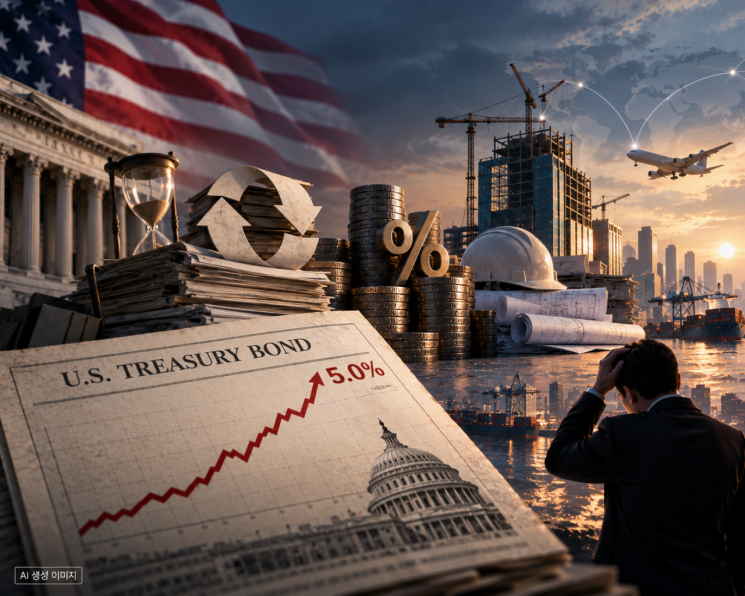
As the yield on the U.S. 10-year Treasury note surpassed 5%, the funding burden on domestic companies is mounting. As corporate bonds issued during periods of low interest rates reach maturity, companies with high levels of debt must refinance at higher rates. The resulting increase in interest costs can harm profitability and cash flow, and even reduce investment capacity.

According to the business community on September 17, domestic companies have begun reducing debt and securing liquidity in response to rising funding costs caused by the increase in U.S. Treasury yields. The rise in U.S. Treasury yields has pushed up the rates for domestic government and corporate bonds, thereby increasing the burden for companies requiring refinancing or new funding.

As of the end of the first half of the year, Hanwha Solutions had total borrowings of 15.4147 trillion won, far exceeding its cash and cash equivalents of 2.6930 trillion won. Lotte Chemical also had borrowings and bonds totaling 10.2655 trillion won, more than its cash and cash equivalents of 1.4278 trillion won.

LG Energy Solution, which is expanding its investments in North America, had total borrowings of 29.1234 trillion won—more than four times its cash and cash equivalents of 7.1703 trillion won. Net borrowings rose by about 3.2 trillion won since the end of last year, reaching 21.9531 trillion won.


U.S. Treasury Yields Surpass 5%... Korean Companies Face 'Refinancing Bomb'


View original image

Companies are reducing their debt in preparation for a prolonged period of high interest rates. An official at Hanwha Solutions stated, “Currently, we are focused on reducing our borrowings,” and added, “If the trend of rising interest rates continues globally, we will have to reduce our borrowings even further.”

A Lotte Chemical official explained, “When refinancing existing debt or raising new funds, we may be affected by rising interest rates,” and noted, “We need to closely monitor whether this interest rate trend will persist over the medium to long term.” LG Energy Solution also stated that, for now, it is able to manage the impact of higher interest rates.


U.S. Treasury Yields Surpass 5%... Korean Companies Face 'Refinancing Bomb'


View original image

If high interest rates persist for an extended period, interest expenses will begin to erode operating profits and cash flow. As a result, companies may reduce new borrowing and bond issuances, and adjust the timing and priority of major expenditures such as capital investments and mergers and acquisitions (M&A). In this way, rising interest rates can restrict not only financial costs, but also growth investments and business restructuring.

Companies with strong cash generation are relatively less burdened. Samsung Electronics, for instance, had net cash of about 167.5 trillion won in the first half, far exceeding its 22.4 trillion won in borrowings. SK hynix, benefiting from strong memory market conditions, also has robust cash generation and is not currently highly concerned about its debt burden. As of the first half, the company held 87.96 trillion won in cash and cash equivalents against 18.59 trillion won in borrowings.

LG Electronics has cash and cash equivalents exceeding 10 trillion won and completed its bond issuance in the first half of this year, meaning there is no immediate burden to raise funds at high interest rates.

For Hyundai Motor Group, the rise in funding costs for its planned U.S. investments is a bigger factor than short-term refinancing. The company has about 150 billion won in corporate bonds maturing within the next two years, but plans to invest $26 billion in the United States between 2025 and 2028.

A Hyundai Motor Group official stated, “The recent rise in long-term U.S. interest rates may affect funding costs across the industry,” and added, “However, companies are securing funds based on ample liquidity, taking a comprehensive approach that considers the market environment and investment plans. By diversifying the timing, maturity structure, and terms of financing, we are responding to financial market volatility.”

Hot Picks Today


"Inside, It's a Shock... A Daughter Born in the 1990s Ages Faster Than Her Mother Born in 1965"
“Inside, It’s a Shock… A Daughter Born in the 1990s Ages Faster Than Her Mother Born in 1965”

Lee Seung-seok, Senior Research Fellow at the Korea Economic Research Institute, emphasized, “U.S. interest rate hikes could eventually impact domestic interest rates with a time lag,” and cautioned, “We must closely monitor the possibility that interest rate shocks could spread beyond certain industries to the broader economy.”

This content was produced with the assistance of AI translation services.

© The Asia Business Daily. All rights reserved. Unauthorized AI training and use prohibited.


Source link

Related Posts

Equity Investments

Indian Derivatives Market Sees 23% Drop in Trading Volumes Due to Regulatory Changes

September 17, 2026
Equity Investments

EQT to invest $30 billion in India data centers by 2030, ETDatacenters

September 17, 2026
Equity Investments

New UPI MDR Explained: Impact on mutual funds, brokers & investors

September 17, 2026
Equity Investments

Monroe Capital Chairman and CEO Ted Koenig Delivers Closing Remarks on Private Credit and Private Equity at “What’s the Deal with Deals?” in Chicago

September 16, 2026
Equity Investments

Mackenzie Investments announces investment team change

September 16, 2026
Equity Investments

Closed-End vs. Open-End Investments: What’s the Difference?

September 16, 2026
Add A Comment
Leave A Reply Cancel Reply

Editors Picks

Brewers’ potential approach to 2026 Trade Deadline

September 17, 2026

Crypto 101: What you need to know – CNN

September 17, 2026

US transit bus manufacturing contributes $5.1 billion to GDP. BEVs reach 20% of recent deliveries

September 17, 2026

U.S. Treasury Yields Surpass 5%… Korean Companies Face ‘Refinancing Bomb’

September 17, 2026
SUBSCRIBE TO OUR NEWSLETTER

Get our latest downloads and information first. Complete the form below to subscribe to our weekly newsletter.


I consent to being contacted via telephone and/or email and I consent to my data being stored in accordance with European GDPR regulations and agree to the terms of use and privacy policy.

Featured

Stephen Amoah advocates mixed market economy to tackle rising cost of living in Ghana

June 9, 2026

European tech investment in Q2 2026: How capital is organising around strategic sectors

July 26, 2026

We Need a Socialism After Capitalism

April 24, 2026
Monthly Featured

Ripple-linked token jumps 5% on bitcoin strength

April 8, 2026

Achievement NFT Platforms: Global Champion Rewards Simple Challenges With Collectible NFTs

July 6, 2026

FRB Chair Waller Testifies No Bailout for Cryptocurrency

July 16, 2026
Latest Posts

Brewers’ potential approach to 2026 Trade Deadline

September 17, 2026

Crypto 101: What you need to know – CNN

September 17, 2026

US transit bus manufacturing contributes $5.1 billion to GDP. BEVs reach 20% of recent deliveries

September 17, 2026
SUBSCRIBE TO OUR NEWSLETTER

Get our latest downloads and information first. Complete the form below to subscribe to our weekly newsletter.


I consent to being contacted via telephone and/or email and I consent to my data being stored in accordance with European GDPR regulations and agree to the terms of use and privacy policy.

© 2026 Aspire Market Guides.
  • Contact us
  • Privacy Policy
  • Terms and Conditions

Type above and press Enter to search. Press Esc to cancel.

SUBSCRIBE TO OUR NEWSLETTER

Get our latest downloads and information first.

Complete the form below to subscribe to our weekly newsletter.


I consent to being contacted via telephone and/or email and I consent to my data being stored in accordance with European GDPR regulations and agree to the terms of use and privacy policy.