
The United Kingdom (UK) has lost sight of whether its energy is “cheap, secure and capable of powering a modern economy”. That is according to the Tony Blair Institute, the policy organisation founded by former British prime minister Tony Blair.
The institute argues that Britain’s energy strategy has drifted away from the fundamentals that underpin industrial growth and national strength, and must now be reset around cost, reliability, and supply.
Tony Blair served as Labour Prime Minister of the UK from 1997 to 2007. Under his leadership, the UK signed the Kyoto Protocol in 1997, committing the country to reducing greenhouse gas emissions and embedding climate policy into its long-term economic framework. That decision was followed by a succession of increasingly ambitious policies under both Labour and Conservative governments, culminating in the Climate Change Act of 2008 and the Net Zero by 2050 target adopted in 2019.
Nearly three decades after that first commitment, Blair’s own institute is now arguing that the system built over that period has drifted away from economic reality, and that Britain must return to ensuring its energy is cheap, secure, and capable of sustaining industry.
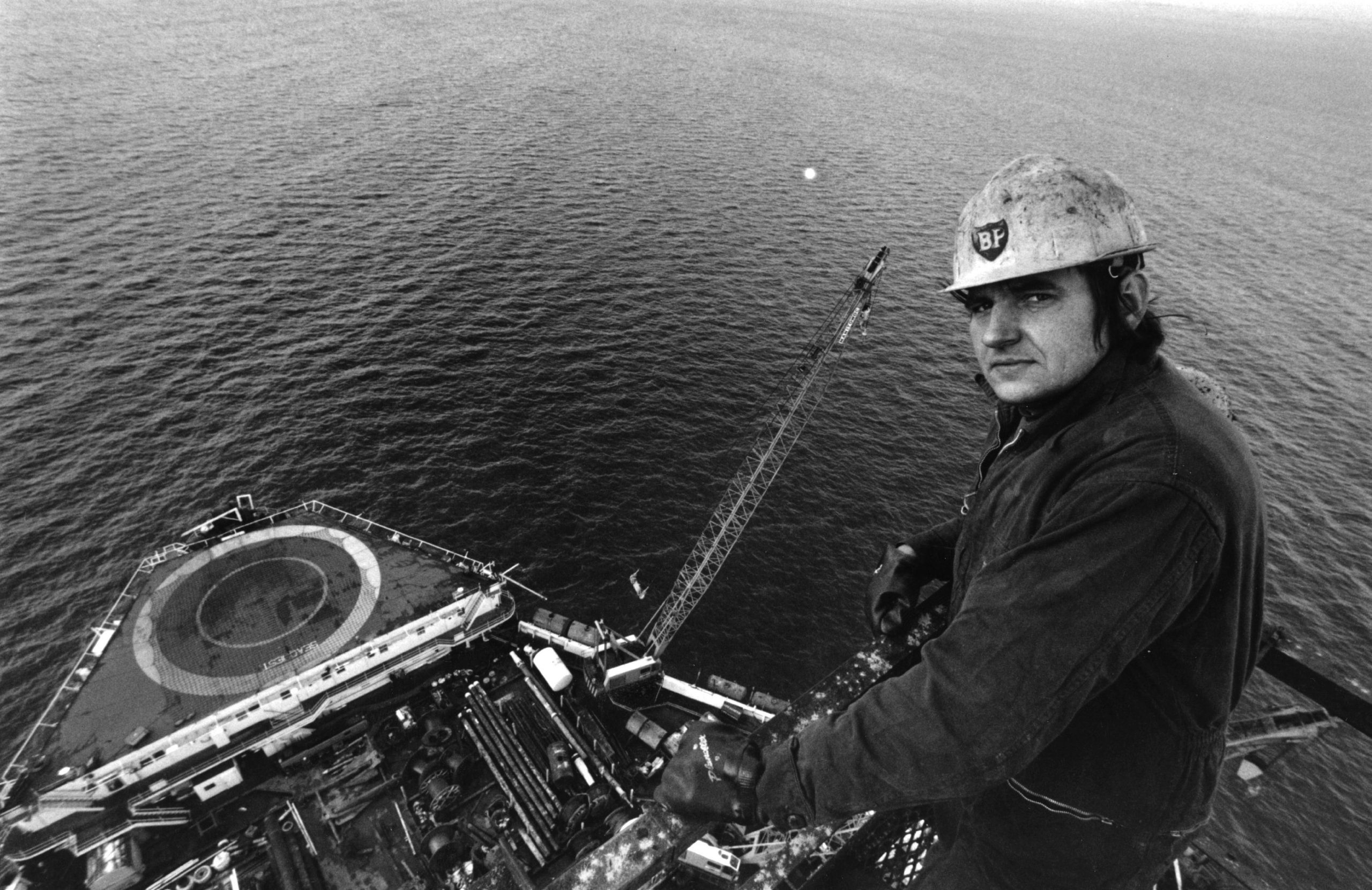
This drift shows up clearly in Britain’s energy position today. At its peak in the late 1990s, the UK was a major North Sea producer and broadly energy self sufficient. That is no longer the case. Output has fallen sharply, with production now sitting at roughly 780 000 barrels per day, while the country relies on imports for about 43.8% of its total energy needs. Exploration has slowed to a standstill, with 2025 marking the first year since 1960 without a single exploration well drilled in UK waters.
Britain has not run out of energy. It simply made it unnecessarily harder and more expensive to produce it.
The consequences for industry have been severe. Energy costs have surged, widening the gap between Britain and its competitors. Since 2019 alone, business electricity prices have risen by around 68%. Once policy and network costs are added, British industry is paying roughly 62% more for electricity than competitors in countries like France. The result is a steady erosion of competitiveness. A country that cannot power its factories cheaply cannot produce at scale, and without that capacity, it cannot sustain the industries that underpin both growth and national security.
Britain cannot recreate the easy gains of the early North Sea years, but it does not need to. Today, production has fallen to roughly a third of that level. The remaining reserves are harder to extract, due to a combination of more mature fields, but also bad government policy and misaligned incentives that have discouraged investment and exploration. That constraint can be overcome by rolling back destructive and self-defeating net-zero policies, while aggressively investing in energy infrastructure and the development of existing fields.
Britain still sits on substantial offshore reserves in the North Sea, with estimates pointing to more than six billion barrels of oil equivalent in discovered but undeveloped resources. Across the same basin, Norway continues to drill, invest, and apply advanced recovery techniques, with studies indicating that a further 350 to 700 million standard cubic metres of oil equivalent could be unlocked through improved extraction methods. Norway has used that approach to remain a major energy exporter while generating significant national wealth.
Britain sits on the same resource base but has chosen a different path. If it were to restore exploration, develop its offshore reserves, and apply the same advanced extraction technologies, energy would become more secure, prices would fall, industry would regain competitiveness, and growth would follow. A country that can power its own factories can build, innovate, and defend itself.