
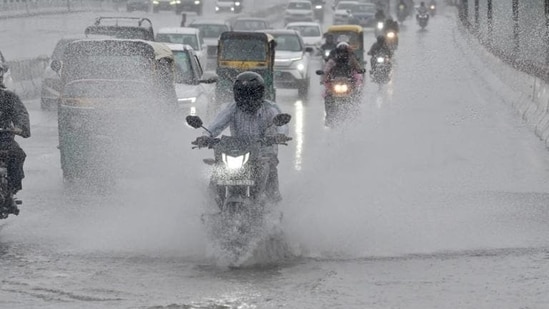
The arrival of the monsoon has finally brought much-needed relief from one of northern India’s hottest summers in recent years. But even as cooler winds sweep across much of the country, they cannot erase what the heat has already left behind. Before the rains arrived, schools had shortened hours, construction activity had slowed, and India’s peak electricity demand had climbed to a record 270.73 GW as millions struggled to stay cool. Elsewhere, even before the monsoon had fully set in, torrential rains washed away roads, damaged crops and disrupted supply chains. None of these appeared to be an economic crisis in isolation. Taken together, however, they tell a different story. Increasingly, India’s next macro-economic shock may arrive not through financial markets, but through the weather forecast.
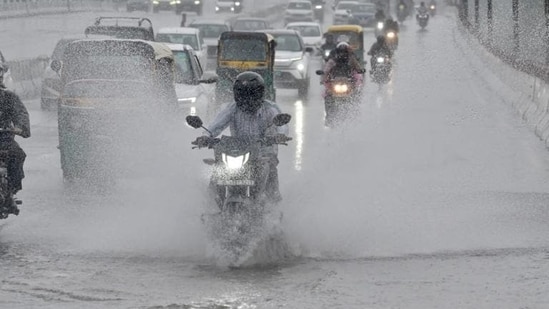
For decades, economists viewed climate change largely as an environmental concern. That distinction is becoming increasingly difficult to sustain. A delayed monsoon, an extended heatwave or widespread flooding now reverberates far beyond agriculture. It influences production, employment, inflation, public finances and business confidence. Climate no longer sits outside the economy. It has become one of the forces shaping it.
The evidence is becoming impossible to ignore. According to the Centre for Science and Environment, extreme weather affected 9.47 million hectares of cropped land during the first nine months of 2025—almost three times the area affected during the corresponding period a year earlier. The same assessment recorded more than 4,000 deaths and damage to nearly 100,000 houses. These are no longer isolated disasters. They are becoming recurring features of India’s growth story.
The first signs usually appear in the neighbourhood market. Food and beverages account for 36.75% of India’s Consumer Price Index. When heatwaves, droughts or floods damage crops, supplies tighten and prices climb. Families stretch household budgets, businesses absorb higher input costs and supply chains become less predictable. Inflation increasingly begins in the sky before it reaches the supermarket.
But vegetables are only where the story begins. The same heatwave that shrivels crops also slows construction sites, disrupts logistics, cuts factory productivity and keeps customers away from neighbourhood businesses. The damage spreads quietly—from fields to factories, from highways to household budgets. Every extreme weather event now carries an economic price tag.
The impact is equally visible in the labour market. Heat stress shortens working hours, lowers productivity and makes outdoor work increasingly hazardous across construction, transport and India’s vast informal economy. According to the International Labour Organization, rising temperatures could reduce India’s total working hours by 5.8% by 2030—among the highest projected losses globally. GDP never sweats. Workers do. National income simply keeps the score.
Governments, too, face mounting costs. Every flood, cyclone or drought demands spending on disaster relief, crop compensation and rebuilding damaged infrastructure. These are unavoidable expenditures, but they also divert scarce public resources from schools, hospitals and long-term investments that strengthen future growth. Climate shocks, therefore, weaken not only today’s economy but tomorrow’s development prospects as well.
They also complicate the task of the Reserve Bank of India. Monetary policy was designed to cool demand, not cool the weather. Raising interest rates cannot replace a failed harvest, restore damaged crops or rebuild washed-away roads. Yet repeated weather-driven spikes in food prices can reshape inflation expectations, making the central bank’s job increasingly difficult. Climate risk is no longer tomorrow’s inflation problem. It is today’s.
This is precisely why climate indicators such as the Southern Oscillation Index (SOI), the El Niño–Southern Oscillation (ENSO) and the Indian Ocean Dipole deserve a place alongside oil prices, exchange rates and other traditional macroeconomic indicators. The monsoon has quietly become one of India’s most important economic indicators. Increasingly, a weather bulletin tells us as much about tomorrow’s economy as today’s market report.
That calls for a broader policy response. Climate adaptation is no longer simply environmental policy; it is sound macroeconomic policy. Investments in irrigation, climate-resilient agriculture, logistics, urban water systems and more accurate weather forecasting are investments in lower inflation, stronger productivity and more resilient growth. Building resilience before disasters strike is invariably less costly than rebuilding after they do.
For decades, weather was treated as little more than the backdrop to India’s economic story. Today, it has become part of the main narrative. The next major economic disruption may not begin in financial markets or global commodity exchanges. It may begin with a failed monsoon, a prolonged heatwave or an unexpected weather bulletin. India’s future prosperity will depend not only on how fast the economy grows, but also on how well it learns to grow in a changing climate.
(The views expressed are personal)
This article is authored by Manas Paul, professor, economics, IMT Ghaziabad.