
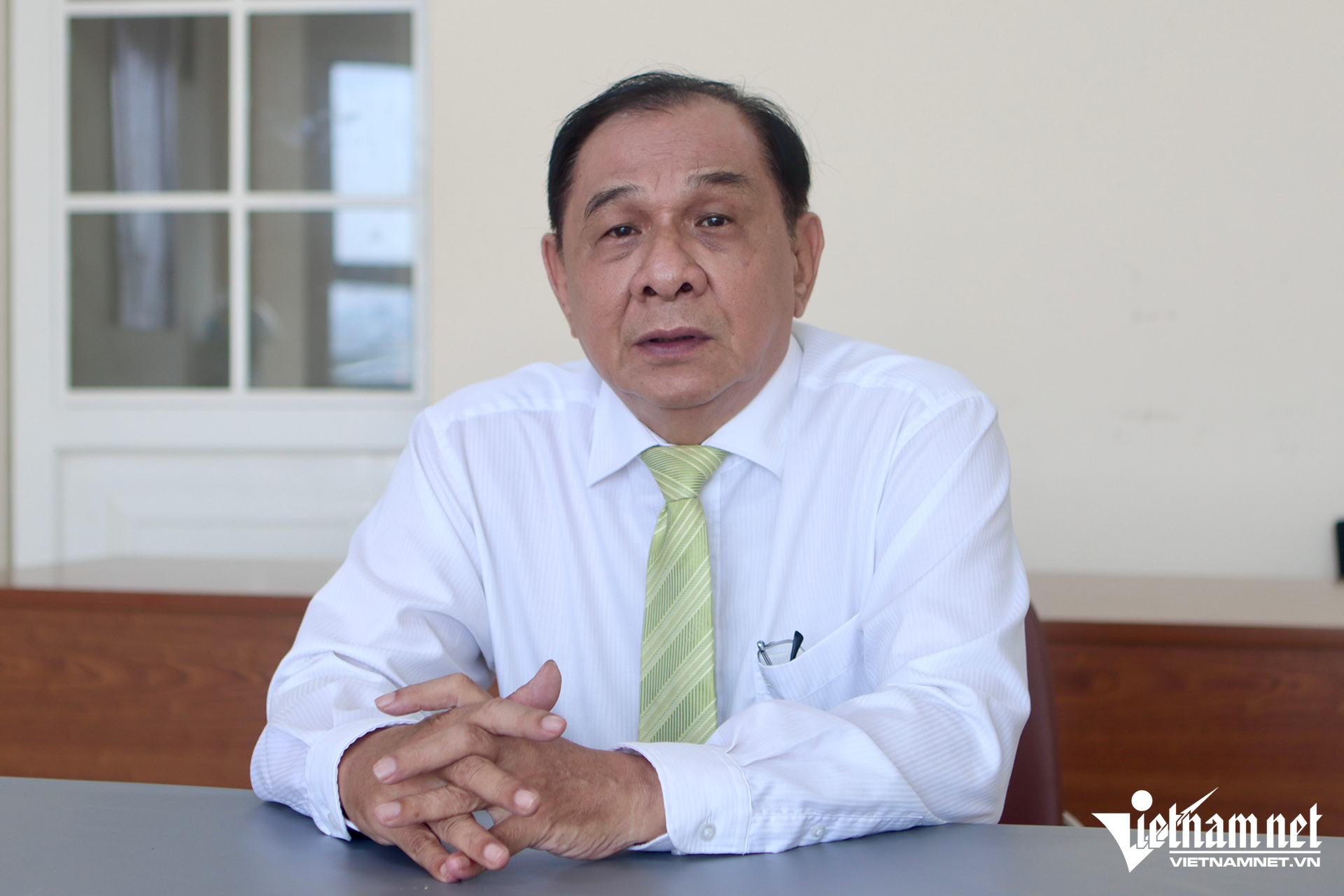
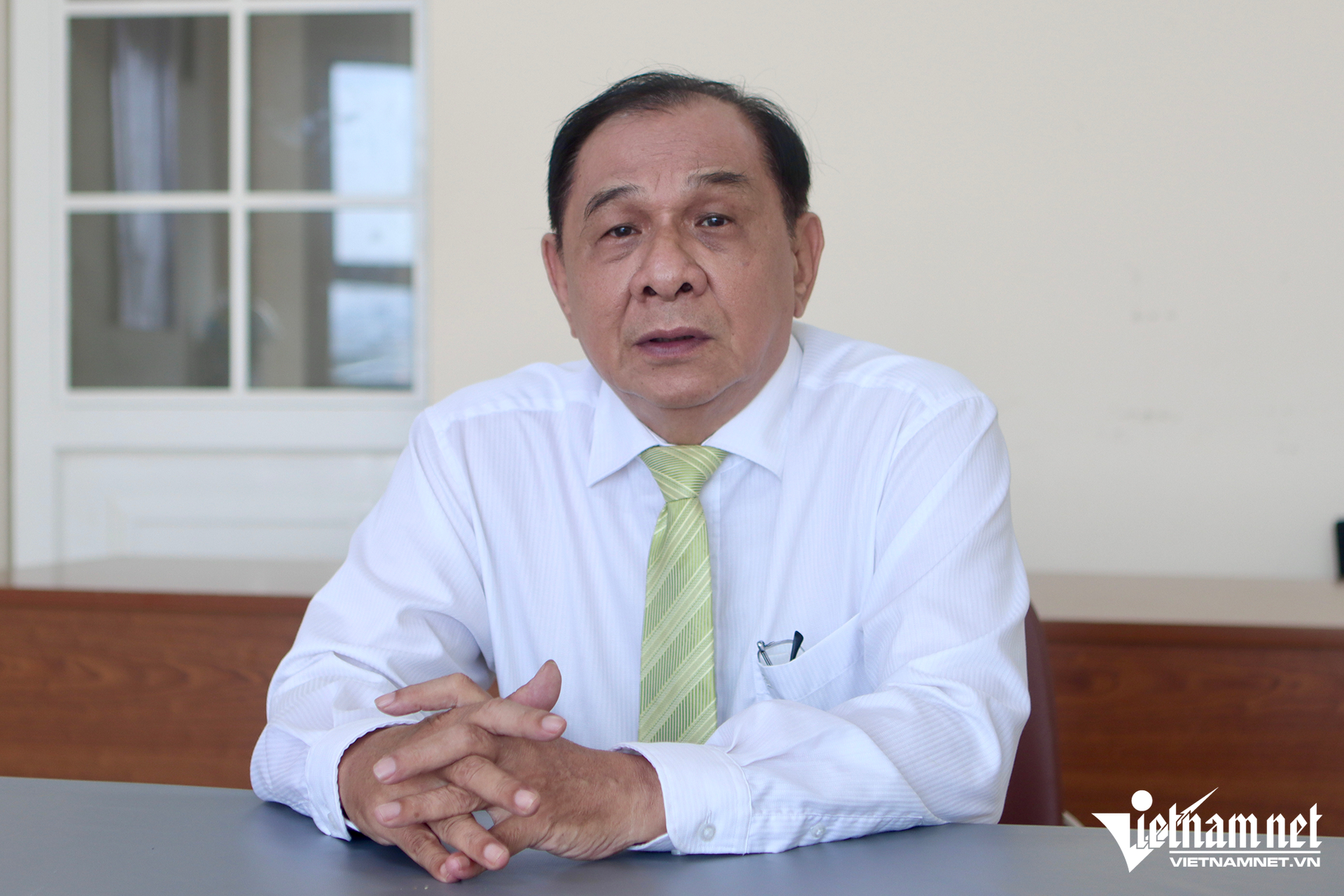
VietNamNet talked with Dr. Tran Quang Thang, director of the HCMC Institute of Economics and Management. about breakthrough milestones in the journey, the transformation of the growth model, the role of the digital-green-circular economy, and expectations for the country’s upcoming development phase.
In the journey of Doi Moi, in your opinion, what are the largest milestones and breakthroughs in transforming from a centrally planned economy to a socialist-oriented market economy?
In my view, the largest milestone was the 6th National Party Congress in 1986, when Vietnam shifted from a centrally planned, subsidized mechanism to develop a multi-sector commodity economy operating under a market mechanism with State management.
Important breakthrough steps include: abolishing subsidies, granting autonomy to enterprises and producers; innovating agriculture with contracting policies, especially Khoan 10 (Contract 10); recognizing a multi-sector economy in which the private sector and foreign investment became development drivers; gradually refining the socialist-oriented market economy institution; and opening up for deep international integration, notably joining ASEAN, the WTO, and participating in free trade agreements.
The core point of this process was innovating development thinking, effectively combining market laws with equity goals, social progress, and the guiding role of the State, aiming toward a rich people, a strong nation, democracy, equity, and civilization.
Compared to the early period of Doi Moi, how has the current economic growth model overcome core limitations?
Compared to the early period of Doi Moi, the current economic growth model has overcome several core limitations. From growing mainly by exploiting natural resources, cheap labor, and expanding investment capital, Vietnam has gradually shifted to emphasizing productivity, quality, efficiency, and innovation.
The economy focuses more on macroeconomic stability, improving competitiveness, developing the private sector, integrating deeply into global value chains, and paying greater attention to sustainable development, digital transformation, green economy, and circular economy.
An important progressive point is that growth is increasingly tied to institutional reform, science and technology, prioritized human resource quality, and inclusive development goals.
To continue improving the growth model, Vietnam needs to focus on several solutions: accelerating institutional reform, creating a more transparent and favorable business environment; shifting strongly from capital-, resource-, and cheap labor-based growth to growth driven by productivity, science-technology, innovation, and digital transformation.
At the same time, another solution is improving human resource quality, especially high-tech human resources, and developing the private economic sector into an important driver of the economy.
In your assessment, how have the scale and standing of Vietnam’s economy in the international arena changed after more than 40 years?
After more than 40 years of Doi Moi, the scale and standing of Vietnam’s economy have changed profoundly.
From a small, poor, food-deficient, and closed economy, Vietnam has risen to become an economy of considerable scale in the region, maintaining a relatively high growth rate, becoming an important destination for foreign investment, and participating ever deeper in global supply chains.
Vietnam’s international standing has also been significantly elevated through deep economic integration, trade relations with many major partners, and an increasingly active role in trade agreements and regional and international forums.
The highlight is that Vietnam has not only expanded in terms of GDP scale, import-export turnover, and FDI attraction, but has also begun to be viewed as a dynamic, stable economy with long-term development potential.
The National Assembly has officially passed the Law on Urban Development. What expectations can be held for HCMC after the law officially takes effect?
This law is expected to grant real autonomy to the city, helping local government make prompt decisions that align closely with the socio-economic reality of the Southern region. This is also the foundation to establish regional linkage mechanisms, spark creativity among the people, and attract domestic and foreign talent through breakthrough policies.
Vietnam’s mechanisms for attracting talent and resources still face many bottlenecks. To develop, mechanisms must be open and flexible, and human resources must be competent and qualified to serve the community. The greatest expectation is that HCMC will make a strong transformation, affirming its role as the country’s economic engine.
For this law to truly enter the lives of citizens and businesses, the prerequisite factor is granting sufficiently strong decentralization and delegation of power to the locality, while promoting a spirit of voluntary contribution and strict compliance from the business community as well as all citizens.
Ngan Anh – Phuoc Sang