
Close Menu
Aspire Market Guides
  • Home
  • Alternative Investments
  • Cryptocurrency
  • Economics
  • Equity Investments
  • Mutual Funds
  • Real Estate
  • Trading
What's Hot

Why are gold and silver prices down now, and will precious metals continue to drop or rise again? Gold extends fall after US Fed keeps rate unchanged. Here's analysts insights, market outlook – The Economic Times

April 29, 2026

Barclays: Confirmed guidance despite updated macroeconomic scenario

April 29, 2026

Why Michael Jackson left Neverland for $150k-a-month rental

April 29, 2026
Facebook X (Twitter) Instagram
Trending:
  • Why are gold and silver prices down now, and will precious metals continue to drop or rise again? Gold extends fall after US Fed keeps rate unchanged. Here's analysts insights, market outlook – The Economic Times
  • Barclays: Confirmed guidance despite updated macroeconomic scenario
  • Why Michael Jackson left Neverland for $150k-a-month rental
  • What Looked Like a Food Delivery Was Allegedly a Violent Home Invasion for Cryptocurrency, and Rapper Is Charged
  • World Bank confirms reliable financing for Kazakhstan’s energy infrastructure
  • Commentary: America chugs along in a ‘K-shaped’ economy
  • 10 Day Trading Tips for Beginners Getting Started
  • Share of equity assets in insurers’ portfolios to rise
  • An Altcoin Got Hacked; Most of the Supply Fell into the Hackers’ Hands
  • Planning income from mutual funds? These 5 hybrid funds delivered best returns over 3 years – The Economic Times
Wednesday, April 29
Facebook X (Twitter) Instagram
Aspire Market Guides
  • Home
  • Alternative Investments
  • Cryptocurrency
  • Economics
  • Equity Investments
  • Mutual Funds
  • Real Estate
  • Trading
Aspire Market Guides
Home»Economics»IMF puts defence spending and conflict economics at centre of April outlook release
Economics

IMF puts defence spending and conflict economics at centre of April outlook release

By CharlotteApril 8, 20264 Mins Read
Share
Facebook Twitter Pinterest Email Copy Link


72

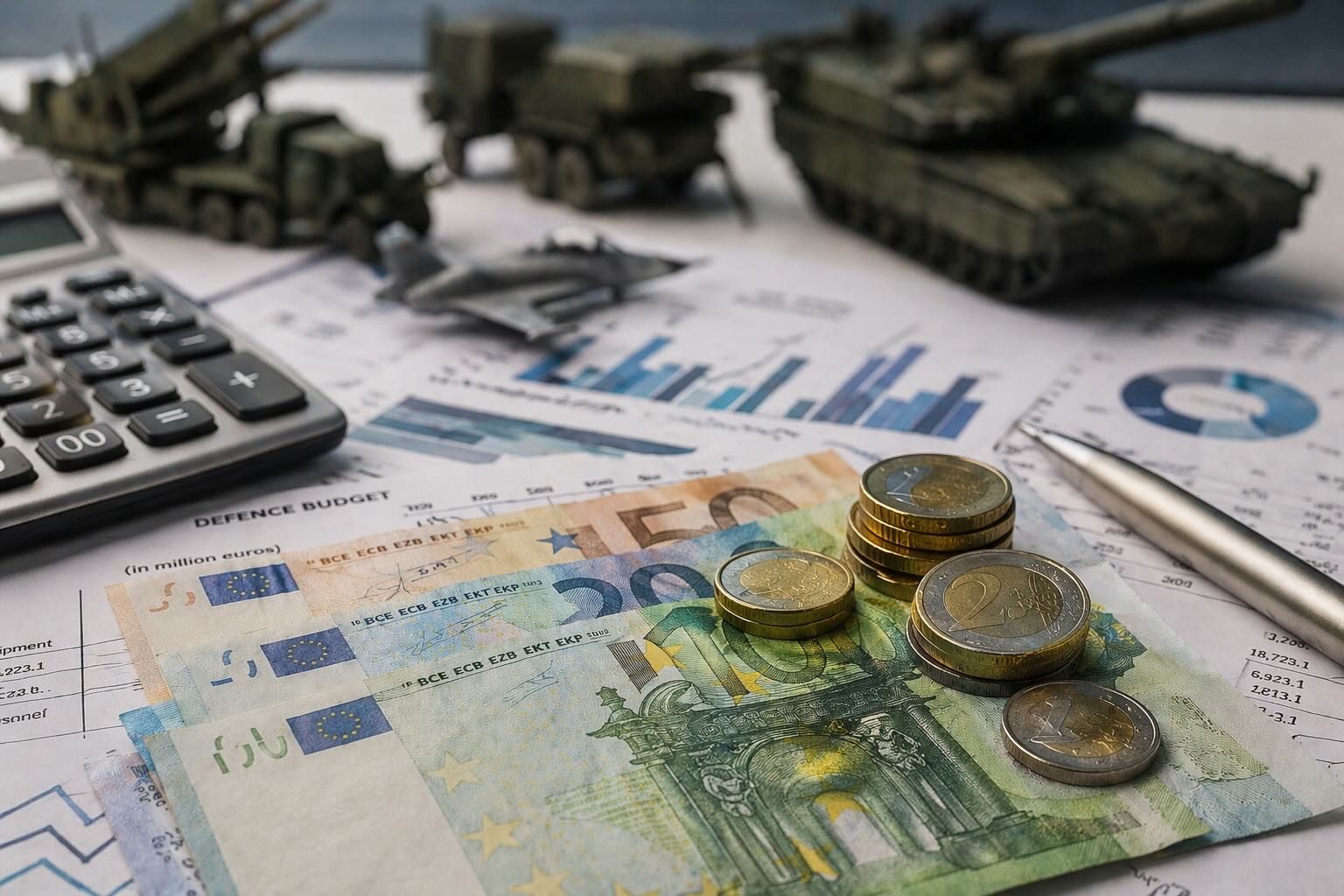
The IMF released analytical chapters on 8 April examining the macroeconomics of defence spending, conflict and recovery, placing security-driven fiscal pressures at the centre of its spring outlook cycle.

The International Monetary Fund placed defence spending, conflict and post-war recovery at the centre of its April World Economic Outlook cycle on Wednesday, with the release of analytical chapters examining the macroeconomic effects of military expenditure and armed conflict. On its World Economic Outlook page, the IMF said Chapters 2 and 3, grouped under the heading The Macroeconomics of Defense Spending, Conflicts, and Recovery, were scheduled for release on 8 April.

That is a notable choice of emphasis at a time when European governments are under sustained pressure to raise defence budgets, expand industrial capacity and absorb the fiscal consequences of a more dangerous security environment. The IMF’s framing indicates that defence economics is no longer being treated as a narrow specialist issue, but as a central macroeconomic question with implications for growth, inflation, public borrowing and reconstruction planning. The official release schedule makes clear that these chapters are being published in advance of the Fund’s main World Economic Outlook press briefing on 14 April.

The timing matters for Europe in particular. Over the past two years, the debate over rearmament has shifted from political signalling to budget arithmetic. Governments are now dealing not only with headline spending targets, but also with the practical effects of higher military outlays on fiscal space, debt management, industrial policy and labour markets. By dedicating analytical chapters to defence spending and conflict recovery, the IMF is signalling that these pressures are now substantial enough to shape wider economic outlooks rather than sit outside them.

The same IMF publication page shows that the 8 April release was designed as a distinct event within the broader spring meetings cycle. The listed speakers included Moritz Schularick, president of the Kiel Institute for the World Economy, alongside IMF economists Andresa Lagerborg and Hippolyte Balima. That speaker line-up suggests the Fund intended the launch not simply as a technical document drop, but as a substantive discussion about how defence spending and conflict dynamics are now interacting with mainstream macroeconomic policy.

For defence policymakers, this matters because the economic argument has become inseparable from the strategic one. European states can declare new spending ambitions, but the real policy question is how those commitments are financed, sustained and translated into output. Higher defence budgets do not automatically produce greater capability. They have to pass through procurement systems, industrial bottlenecks, workforce limits and budget constraints. A macroeconomic assessment from the IMF does not answer all of those questions, but it does place them inside a framework that finance ministries and central banks cannot easily dismiss.

The conflict-and-recovery element is equally important. In Europe’s current strategic environment, the cost of war cannot be measured solely in destroyed assets or emergency military aid. It also includes the longer-term burden of reconstruction, institutional repair, displaced labour, damaged credit conditions and weaker investment confidence. The IMF’s description of the chapters indicates that it is treating these issues as part of a single macroeconomic field rather than as separate humanitarian and security questions.

That approach is relevant well beyond active conflict zones. For governments supporting Ukraine, for example, the economics of recovery are inseparable from the economics of deterrence. The more prolonged the war environment, the more reconstruction, fiscal support and defence production begin to overlap. A serious assessment of that overlap is valuable because it moves the discussion away from slogans and towards policy trade-offs that can actually be measured.

The broader IMF calendar underlines the point. On its live events page, the Fund sets the 8 April analytical release ahead of the formal World Economic Outlook press briefing due on 14 April at the Spring Meetings in Washington. That sequencing gives the defence and conflict chapters independent weight. They are not buried in the wider publication; they are being staged as a distinct policy intervention in their own right.

For Europe, the significance is straightforward. Rearmament, resilience and recovery are no longer separate policy conversations. They are increasingly parts of the same fiscal and strategic problem. By foregrounding that reality in its April outlook cycle, the IMF is acknowledging a shift that defence ministries, finance ministries and governments across the continent are already confronting in practice.

First published on defencematters.eu.

Post Views: 912


Source link

Related Posts

Economics

Barclays: Confirmed guidance despite updated macroeconomic scenario

April 29, 2026
Economics

Commentary: America chugs along in a ‘K-shaped’ economy

April 29, 2026
Economics

Crony Capitalism and Socialism – The Heartland Institute

April 29, 2026
Economics

CDAE Welcomes New Instructor Anne Nelson Stoner

April 29, 2026
Economics

The Economics Department Needs To Raise Its Standards | Opinion

April 29, 2026
Economics

Understanding Socialist Economies: China, Cuba, and North Korea Explained

April 29, 2026
Add A Comment
Leave A Reply Cancel Reply

Editors Picks

Why are gold and silver prices down now, and will precious metals continue to drop or rise again? Gold extends fall after US Fed keeps rate unchanged. Here's analysts insights, market outlook – The Economic Times

April 29, 2026

Barclays: Confirmed guidance despite updated macroeconomic scenario

April 29, 2026

Why Michael Jackson left Neverland for $150k-a-month rental

April 29, 2026

What Looked Like a Food Delivery Was Allegedly a Violent Home Invasion for Cryptocurrency, and Rapper Is Charged

April 29, 2026
SUBSCRIBE TO OUR NEWSLETTER

Get our latest downloads and information first. Complete the form below to subscribe to our weekly newsletter.


I consent to being contacted via telephone and/or email and I consent to my data being stored in accordance with European GDPR regulations and agree to the terms of use and privacy policy.

Featured

Imelda Mashalia | University of North Dakota

April 14, 2026

‘Harder than ever’ for global investors to achieve diversification: Orbis

April 23, 2026

Silver (XAG) Forecast: Momentum Fades as Traders Search for Value in Silver Market

April 23, 2026
Monthly Featured

Hedge funds are spending fortunes to win the talent war. It’s changing the industry in the process.

April 18, 2026

Needingworth plans for up to nine homes refused by council

April 19, 2026

Social Solidarity Ministry reviews economic empowerment finance system for vulnerable groups

April 7, 2026
Latest Posts

Why are gold and silver prices down now, and will precious metals continue to drop or rise again? Gold extends fall after US Fed keeps rate unchanged. Here's analysts insights, market outlook – The Economic Times

April 29, 2026

Barclays: Confirmed guidance despite updated macroeconomic scenario

April 29, 2026

Why Michael Jackson left Neverland for $150k-a-month rental

April 29, 2026
SUBSCRIBE TO OUR NEWSLETTER

Get our latest downloads and information first. Complete the form below to subscribe to our weekly newsletter.


I consent to being contacted via telephone and/or email and I consent to my data being stored in accordance with European GDPR regulations and agree to the terms of use and privacy policy.

© 2026 Aspire Market Guides.
  • Contact us
  • Privacy Policy
  • Terms and Conditions

Type above and press Enter to search. Press Esc to cancel.

SUBSCRIBE TO OUR NEWSLETTER

Get our latest downloads and information first.

Complete the form below to subscribe to our weekly newsletter.


I consent to being contacted via telephone and/or email and I consent to my data being stored in accordance with European GDPR regulations and agree to the terms of use and privacy policy.