
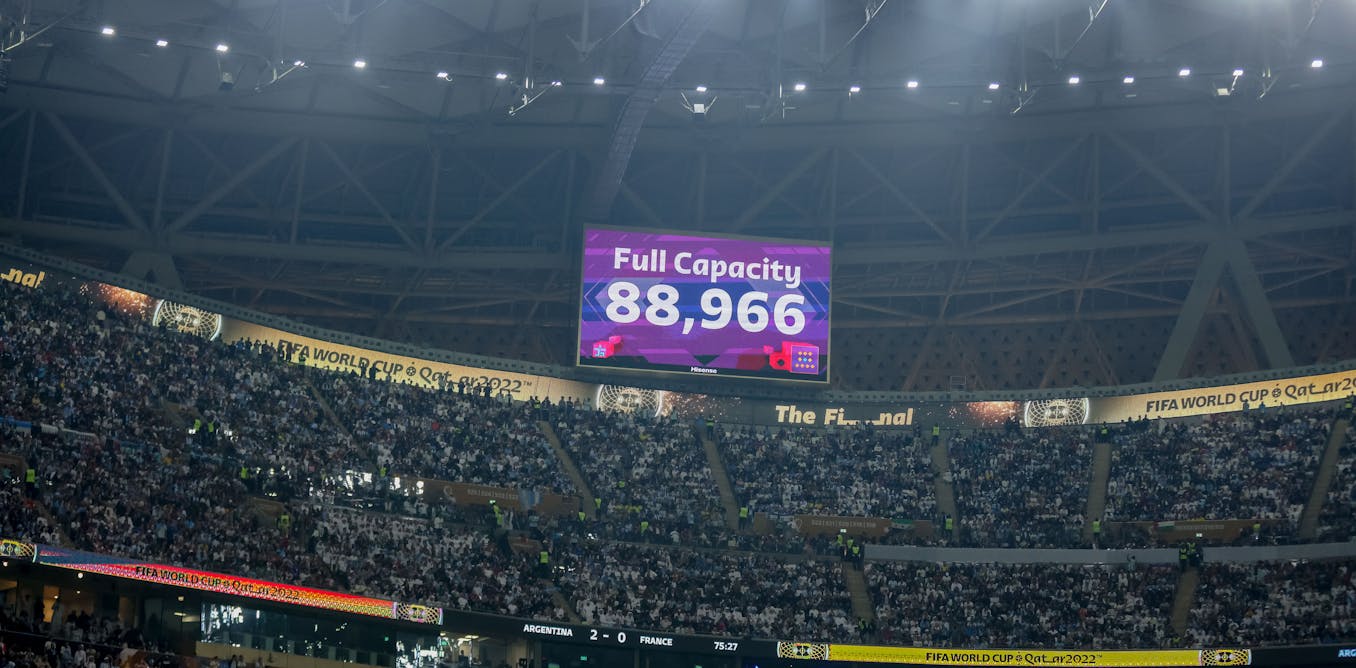
When the U.S. last hosted the World Cup in 1994, the event drew unexpectedly large crowds. At that time, soccer wasn’t as popular among Americans as it is now, so expectations for attendance had been fairly low.
So as the U.S. prepared to host the World Cup again in 2026, expectations for tourism were high.
But in the run-up to this year’s World Cup, the ongoing war in Iran has resulted in soaring inflation and high fuel prices, neither of which bodes well for tourism or event attendance.
Recent tourism reports indicate there will be fewer hotel reservations than anticipated due to reduced international travel confidence and a growing uncertainty related to U.S. immigration policies, geopolitical instability, tariffs and inflation.
We are a professor of hospitality and tourism management and a professor in international sports management. We believe there is good reason for concern in the 11 World Cup host cities in the U.S. An additional five cities in Mexico and Canada are likewise hosting games, and the next 10 days leading up to the event will be crucial for them to capitalize on it.
Falling short
The month leading up to the world’s largest sporting festival should be a period of excitement and celebration. But a few factors are putting a damper on that.
First, the price of tickets, plus parking and public transportation to games, is incredibly high. This has led to widespread criticism, with even President Donald Trump stating that he would not pay the US$1,000 ticket price for matches once he learned of the high prices.
In Boston, the Massachusetts Bay Transportation Authority plans to charge $80 for a ride to Gillette Stadium that would typically cost $20. New Jersey Transit originally set fares for train tickets from Penn Station in New York to MetLife Stadium at $150 for World Cup travel, which it reduced to $105 this month after public backlash – still way above its normal fares.
According to a survey from the American Hotel and Lodgings Association, hotel bookings are softer than expected in all 11 U.S. cities hosting World Cup events. Miami is in the best position, with only 45% of local hotel owners projecting a shortfall. That’s compared with 75% reporting bookings below expectations in cities like Philadelphia and San Francisco. The worst off is Kansas City, with a whopping 85% to 90% of hotel owners reporting fewer bookings than expected – lower than even a normal summer without a mega event coming to town.
Welcome to Miami
Based on early 2026 forecasts for hospitality and tourism, Miami was expected to welcome millions of visitors during the World Cup period. However, many tourism analysts project that economic gains may fall short if current negative trends do not improve dramatically.
Hotel reservations in South Florida made by international travelers are weak compared with previous mega events. This is particularly the case when it comes to visitors from Latin American and the Middle East. The American Hotel and Lodgings Association survey notes that current U.S. immigration procedures and visa delays may be discouraging international visitors, thus causing the majority of cities to report shortfalls as of May 2026.
With Trump’s Mar-a-Lago Resort just 75 miles (120 kilometers) north of Miami, perceptions of heightened security in the area may be exacerbating safety concerns about attending World Cup matches. Indeed, civil rights groups like the Florida Immigrant Coalition have warned international travelers of risks of detention when visiting Florida in particular.

Icon Sportswire/Icon Sportswire via Getty Images
Despite these challenges, we believe Miami still has strong potential to maximize economic benefits if strategic actions are implemented immediately for short-term and pre- and post-event lodging, food and tourism experiences.
Miami’s international brand recognition, multicultural environment and entertainment infrastructure remain significant advantages over other U.S. host cities. It also helps that the city is home to one of world soccer’s most recognizable face: Lionel Messi. Messi’s presence in Miami has been worth billions to the regional economy, according to The Wall Street Journal.
There’s still time on the clock
Miami’s success will heavily depend on active and agile planning, leadership and administration from government and organizational officials. The next 10 days will be critical in determining whether Miami can fully capitalize on the economic opportunities associated with one of the world’s largest sporting events.
Aggressive destination campaigns between tourism boards, airlines and hotels, especially those targeting Latin America, could help rebuild traveler confidence and increase advanced bookings. In particular, expanded Spanish-language marketing and multilingual communication strategies are an important competitive advantage both for the World Cup and beyond. Telemundo, one of the two main U.S. Spanish-language networks, is headquartered in Miami.
And even with many travelers feeling price-sensitive due to inflation and economic uncertainty, bundled offers can help stimulate tourism. Affordable travel packages and value-added promotions may encourage longer stays and higher visitor spending, even for travelers on a budget.
Campaigns and travel packages that encourage visitors to explore local neighborhoods, cultural attractions, culinary tourism and sustainable tourism activities – in addition to the World Cup games – can help distribute economic benefits more broadly throughout the city.
The hospitality industry can help allay the fears of travelers worried about safety by prioritizing safety communication and visitor assistance services. Transparent communication and multilingual services go a long way toward assuaging international travelers’ anxiety about security and immigration. People feel more comfortable traveling when there are clear rules and requirements around airport procedures, visas and security measures.
We believe that the key to success of the 2026 World Cup in the U.S., including Miami, is to understand current economic and political concerns fairly and correctly first, and then implement innovative short-term strategies before the event kicks off.