
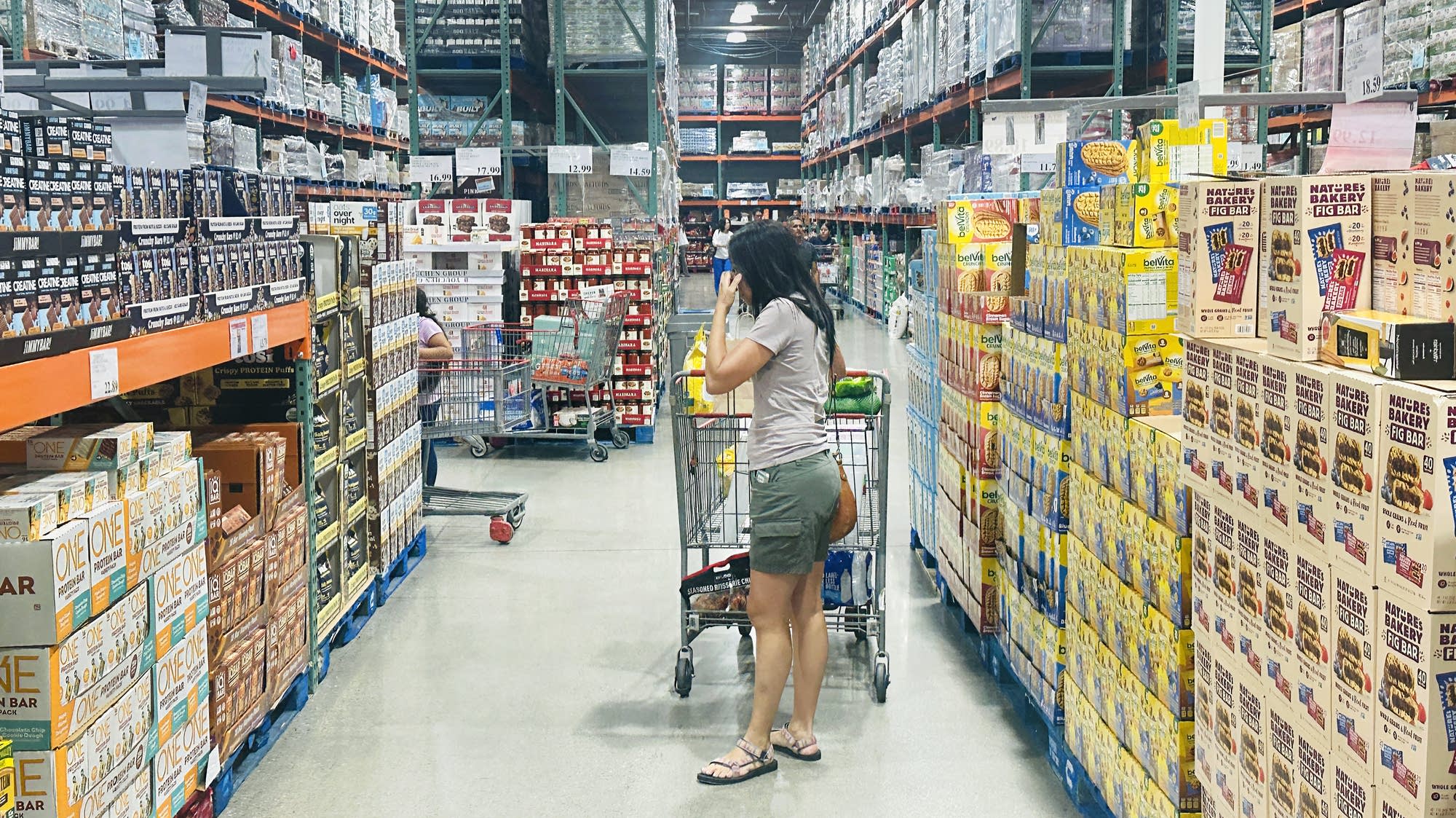
Heading into the last half of August, back-to-school shopping is well underway, Halloween displays are already up at big box stores, and retailers will soon start promoting early sales for the holidays.
So, where is the American consumer through all of this? How are they doing financially? How are they feeling about what they have to spend, and what they can afford to buy? Well, the data isn’t looking great.
Consumer sentiment took a tumble in early August, according to preliminary results for the University of Michigan’s survey for the month, driven principally by rising energy prices as the war in Iran heated up. July retail sales were pretty lousy — down more than half a percent from June. And AAA reported the average price of a gallon of regular gas nationwide at $4.06 a gallon on Monday, near a record high for August.
A lot of economic warning signs were flashing red after the sharp pullback in consumers’ retail spending in July.
“(But) this is a one-month report, and you had pretty strong numbers all throughout the year,” said Jeffrey Roach, chief economist at LPL Financial.
However, Roach admitted some categories of discretionary spending have started to weaken.
“Hotel occupancy rates, TSA throughput — because travel is a leading indicator for how consumers feel,” he said.
The job market has also weakened, and wage gains have started to fall behind overall inflation, said Joanne Hsu, director of the University of Michigan surveys.
“Only 8% of consumers believe that their income growth is going to exceed inflation — that’s really not very many people at all,” Hsu said. “What we’re seeing is that consumers are expecting to be squeezed. They’re not anticipating anything catastrophic.”
What that means going forward is probably that consumer spending doesn’t fall off a cliff, but it doesn’t rebound to stronger levels from earlier this year, either.
“Consumers—yes, they are spending,” said Dana Peterson, chief economist at The Conference Board. “But they’re starting to spend less, and the things they are spending the most on are things that they need. And if they do spend on discretionary items, it’s on the cheap.”
The Conference Board has asked consumers about their plans to buy stuff over the next six months.
“So in terms of big-ticket items — like cars and furniture, that sort of thing — most people are saying ‘maybe?’” she said.
And consumers are cutting their spending on discretionary services, as the cost of more necessary ones — like medical care, insurance and utilities — keeps rising.
“Streaming and internet is pretty high on the services that people continue to spend on, whereas movies are lower,” Peterson said. “It costs more to take a family out — a family of four — to the movies, it’s like $100 at least.”
She said that could be before you even hit the popcorn-and-candy counter.