
Key Takeaways:
- Treasury’s OFAC, under “Operation Economic Outcast,” sanctioned people and firms it says help Kata’ib Hizballah and Lebanese Hizballah—Iran-linked groups already listed as FTOs/SDGTs—in Iraq, Lebanon, the UAE, and Türkiye.
- OFAC also penalized an individual for services to Iranian companies and tightened its Iran licensing stance to a presumption of denial except in narrow cases (authorities cited: E.O. 13224 and E.O. 13902).
- Secretary Bessent framed the August 24 campaign as cutting Iran’s remaining oil, finance, and sanctions-evasion channels, with higher secondary-sanctions risk for anyone still doing business with the regime.
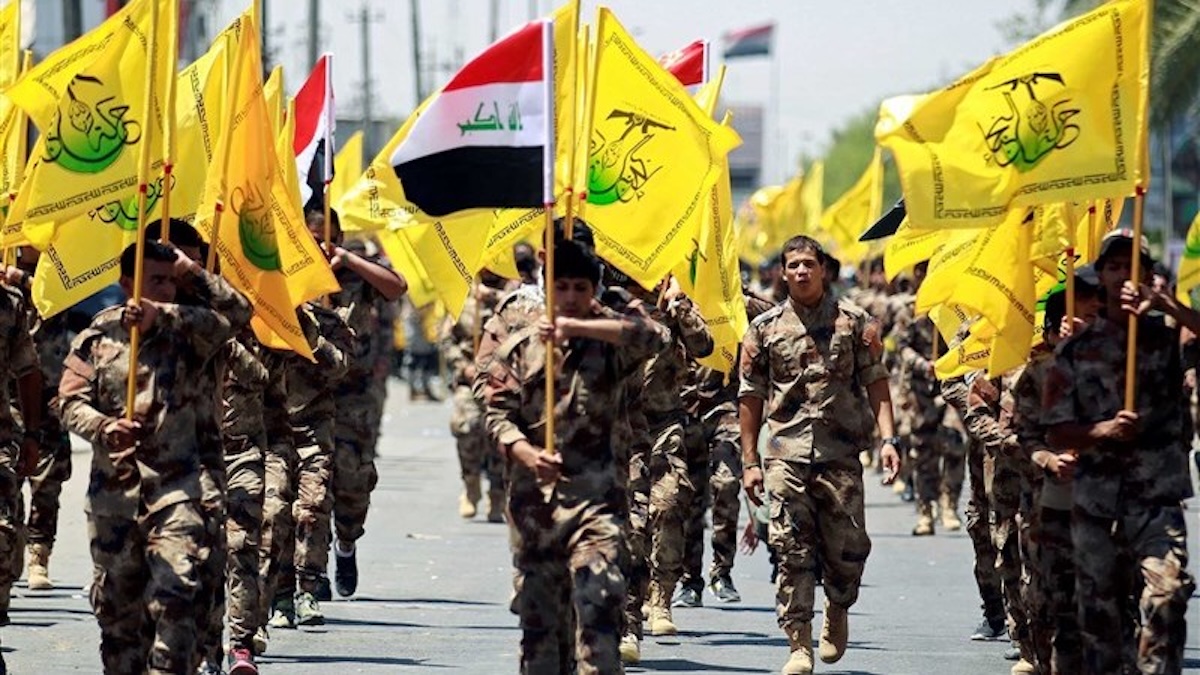
As part of Operation Economic Outcast, the U.S. Department of the Treasury’s Office of Foreign Assets Control (OFAC) took action Thursday against the networks enabling the Iranian regime to wreak havoc in the Middle East through its terrorist proxies. Today’s action targets entities and individuals that support Kata’ib Hizballah (KH) and Hizballah.
Additionally, OFAC announced today an enforcement action against an individual for providing services to companies in Iran, and updated its Iran Statement of Licensing Policy to a presumption of denial except in limited circumstances.
“Operation Economic Outcast is targeting those who continue to stand with the failing Iranian regime,” said Secretary of the Treasury Scott Bessent. “Whether they finance terror, launder money, or help Iran evade sanctions, we will find them, cut them off from the U.S. financial system, and dismantle the networks keeping the regime afloat.”
KH and Lebanese Hizballah fuel Iran’s destabilizing influence in the Middle East, endanger U.S. and partner forces, and facilitate extensive sanctions evasion schemes. Spread across Iraq, Lebanon, the United Arab Emirates, and Türkiye, today’s targets underscore the global reach of the Iranian regime’s illicit networks and the serious threat posed by the terrorist proxy organizations that operate on its behalf. Today’s designations strike at the core of Iran’s most dangerous proxies—groups that not only terrorize civilians across the Middle East but also serve as Tehran’s primary instruments for projecting violence, subversion, and global destabilization.
Today’s action is being taken pursuant to Executive Order (E.O.) 13224, as amended, which targets terrorists and their supporters. The U.S. Department of State designated KH as a Specially Designated Global Terrorist (SDGT) pursuant to E.O. 13224 and as a Foreign Terrorist Organization (FTO) pursuant to section 219 of the Immigration and Nationality Act on June 24, 2009 for being responsible for multiple terrorist attacks against Iraqi, U.S., and other targets in Iraq. Hizballah was designated as a SDGT pursuant to E.O. 13224 on October 31, 2001, and as an FTO pursuant to section 219 of the Immigration and Nationality Act on October 8, 1997. Today’s action is also being taken pursuant to E.O. 13902, which targets persons operating in the petroleum, financial, petrochemical, and other sectors of the Iranian economy.
Announced by Secretary Bessent on August 24, 2026, dubbed Economic D-Day, Operation Economic Outcast is severing the remaining economic lifelines that sustain the Iranian regime. Treasury has mapped the networks, facilitators, and financial channels that Iran uses to smuggle oil, evade sanctions, and fund terror. Working with partners across the U.S. government, the European Union, United Kingdom, Gulf partners, and others, Treasury is targeting any source of the regime’s illicit revenue, as well as its sanctions evasion schemes to move funds.
Operation Economic Outcast significantly expanded sanctions risk for those who continue to choose to do business with Iran. Treasury warned that any entity facilitating money laundering or sanctions evasion on behalf of Iran risks being cut off from the U.S. financial system. It also expanded secondary sanctions exposure for those who continue doing business with the Iranian regime and will accelerate the pace of U.S. enforcement.
