
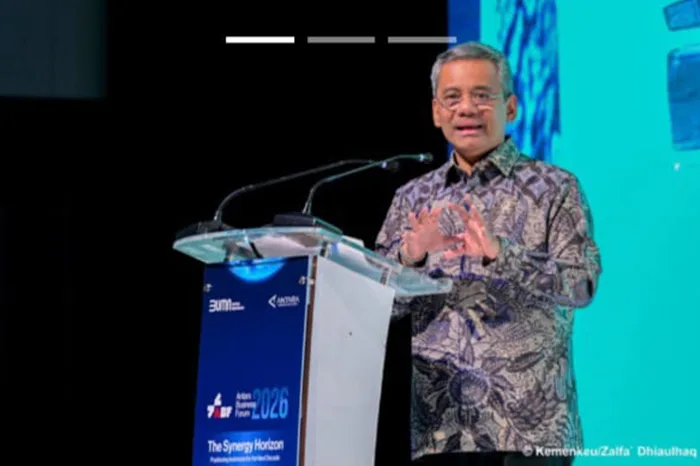
Jakarta, IO – Amid rising geopolitical tensions and volatility in global financial markets, Finance Minister Suahasil Nazara has highlighted the importance of adopting a new approach to managing Indonesia’s macroeconomy. He said the approach centers on three key pillars to maintain resilience and promote more inclusive economic growth.
Suahasil said the new approach combines fiscal policy through the state budget (APBN), which serves as a catalyst for growth and public welfare. “We continue to push the APBN to meet public needs and support priority development programs to achieve growth through eight development priority clusters,” the minister said in Jakarta on Wednesday, September 23.
Danantara Indonesia is another key pillar, serving as an investment catalyst outside the APBN and driving strategic investments in partnership with the private sector.
Meanwhile, fiscal and monetary policy coordination through the Financial System Stability Committee (KSSK) will support a more inclusive, deeper, and stable financial sector.
Suahasil also highlighted Indonesia’s resilience in the first half of 2026, marked by solid economic growth, controlled inflation, and a return of capital inflows. As of September 14, cumulative inflows through government securities (SBN) and Bank Indonesia Rupiah Securities (SRBI) had reached Rp140.7 trillion.
Read More: Enlit Asia And MKI Electricity Connect 2026 Opens In Jakarta, Driving ASEAN Energy Resilience
In 2026, the government is also expected to provide Rp576 trillion in tax incentives, equivalent to 2.2% of GDP, to strengthen competitiveness and household purchasing power.
“The money isn’t lost. It circulates within the economy, supporting household consumption and investment in strategic sectors such as manufacturing and agriculture,” the state treasurer said.
Suahasil also outlined six priority sectors expected to become key drivers of Indonesia’s future economic growth: digital infrastructure, downstream processing of natural resources, high-value-added manufacturing, strategic upstream industries and energy, food security, and new and renewable energy. (eka)