
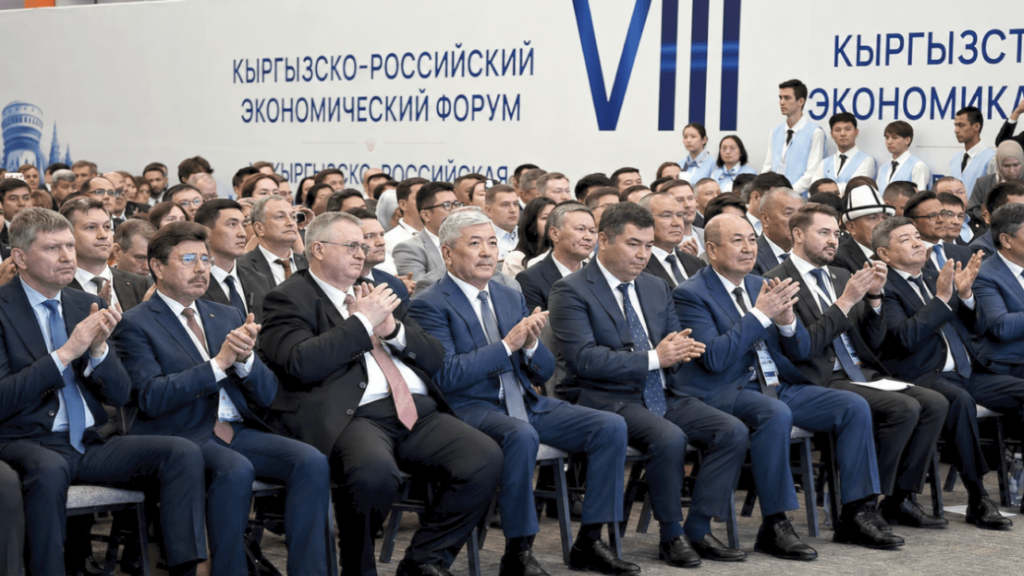
The 8th Russia-Kyrgyzstan Economic Forum, held from August 5 to 7 on the shores of Lake Issyk-Kul alongside the XII Russia-Kyrgyzstan Interregional Conference, represented one of the clearest demonstrations yet that economic cooperation inside the Eurasian Economic Union (EAEU) is entering a more mature stage, one increasingly defined by industrial integration, technological cooperation, infrastructure development, regional connectivity, and investment rather than conventional merchandise trade alone.
This trend is additionally underlined by the fact that intra-EAEU regional trade is showing growth rates of 7.3% so far in 2026, as we reported here. That makes the EAEU one of the fastest growing regions in the world. In bilateral terms, Russia’s trade with Kyrgyzstan has also experienced a strong boom, with the trade turnover reaching US$2.5 billion in the first five months of 2026 alone – a 25% increase over the same period last year.
The forum’s theme, “Kyrgyzstan 2030: Partnership Between the Regions of Kyrgyzstan and Russia as a Driver of Growth,” accurately reflected this transformation, shifting attention from national governments to regions, industrial enterprises, development institutions, and businesses that increasingly shape bilateral economic relations.
The scale of participation alone illustrated this transition. More than 1,000 representatives from government agencies, businesses, regional administrations, development institutions, universities, financial organizations, and international partners gathered in Issyk-Kul. Russian Deputy Prime Minister Alexey Overchuk led Moscow’s delegation, while Kyrgyz Prime Minister Adylbek Kasymaliev headed the host country’s delegation. The event combined plenary discussions, business negotiations, investment presentations, an exhibition of Russian and Kyrgyz companies, meetings of bilateral business councils, an off-site session linked to the St. Petersburg International Economic Forum, and specialized discussions organized by the Eurasian Economic Commission. President Vladimir Putin addressed participants of the Forum and the Conference in a video message.
Unlike previous editions, the 2026 forum demonstrated measurable economic outcomes almost immediately. According to Russian-Kyrgyz Development Fund CEO Artem Novikov, more than 40 agreements worth over US$800 million were signed during the forum, covering investment projects, infrastructure construction, industrial cooperation, railway modernization, renewable energy, telecommunications, and private-sector commercial contracts.
Both governments also agreed to increase the capital of the Russian-Kyrgyz Development Fund (RKDF) to US$1 billion, significantly expanding one of the EAEU’s most successful bilateral development financing mechanisms.
The central message emerging from Issyk-Kul was unmistakable: Russia and Kyrgyzstan are no longer measuring success simply by annual trade turnover. They are attempting to build an integrated production ecosystem capable of generating long-term industrial growth throughout Central Asia.
Russia, Kyrgyz Bilateral Relations Have Entered a New Phase
Economic data presented during the forum reveal an increasingly diversified relationship. President Vladimir Putin noted that bilateral trade expanded by 26% during 2025, exceeding US$5 billion for the first time. Only two years earlier, bilateral trade had stood at just US$3.5 billion, highlighting the pace of expansion despite continued geopolitical uncertainty and sanctions affecting Eurasian logistics.
Even more significant were the figures presented by Russian Deputy Prime Minister Alexei Overchuk and Minister of Economic Development Maxim Reshetnikov. Russia accounts for 27.1% of Kyrgyzstan’s total foreign trade. During the first five months of 2026, bilateral trade already reached almost US$2.5 billion, representing growth of more than 25% compared with the same period last year. Particularly noteworthy was the structure of trade. Kyrgyz exports to Russia increased by 60%, making bilateral trade substantially more balanced than in previous years.
These figures reveal an important structural shift. For many years, Kyrgyz-Russian trade was dominated by agricultural products, food processing, petroleum products and consumer goods. Today, industrial equipment, engineering cooperation, mining, machinery manufacturing, digital commerce, logistics services and investment projects are becoming increasingly prominent – more than 2,000 Russian invested companies operate in Kyrgyzstan.
Reshetnikov emphasized that nearly 60 major joint projects are currently under implementation across energy, machinery manufacturing and mining sectors. Russian online marketplaces are simultaneously providing Kyrgyz manufacturers with direct access not only to Russian consumers but also to broader international markets, creating an entirely new export channel for Kyrgyz small and medium-sized enterprises. This evolution matters because value-added manufacturing creates stronger multiplier effects than simple commodity trade. Every industrial project stimulates suppliers, logistics providers, financial institutions, technology firms and workforce development simultaneously.
Putin’s Speech Defined the Economic Philosophy Behind Bilateral Cooperation
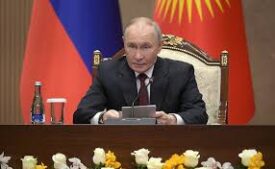
President Putin’s address avoided geopolitical rhetoric almost entirely. Instead, it focused on measurable economic achievements and long-term production capacity. Putin highlighted the importance of interregional cooperation for strengthening economic ties, calling direct contacts between the regions of the two countries the foundation for implementing joint investment projects. The head of state expressed confidence that the interaction of the forum participants will lead to the launch of new initiatives in key areas such as energy, industry, logistics, and tourism
His speech highlighted that Russia continues investing directly in Kyrgyzstan’s energy infrastructure, including a planned 300-megawatt photovoltaic power station in eastern Kyrgyzstan and preparations for a modern wind farm.
These statements illustrate a carefully constructed economic architecture. Instead of relying primarily on sovereign loans, Moscow increasingly employs a diversified investment model consisting of development finance, regional cooperation, SME support, industrial partnerships and infrastructure investment.
Equally significant was Putin’s emphasis on education. Russia is constructing nine Russian-language schools, developing a new campus for the Kyrgyz-Russian Slavic University in Bishkek and establishing a joint IT and cybersecurity education centre in Nizhny Novgorod. More than 10,000 Kyrgyz students are already studying in Russian universities. Human capital development has therefore become an integral component of bilateral economic integration rather than a separate humanitarian initiative. This reflects a broader understanding that industrial cooperation cannot expand without engineers, programmers, technicians and managers capable of supporting increasingly sophisticated production networks.
Kyrgyzstan’s Message Was Equally Significant
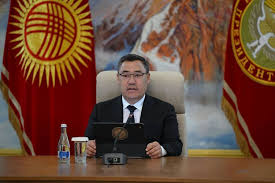
President Sadyr Japarov used the forum to reaffirm Russia’s status as Kyrgyzstan’s strategic partner while simultaneously inviting Russian investors to participate in new large-scale projects throughout the country. Prime Minister Adylbek Kasymaliev developed this argument further. Rather than describing the forum as a diplomatic event, he called it “a space where concrete decisions are made, joint projects are launched and direct ties between businesses and regions are strengthened.” That distinction is important. Traditional diplomacy often produces declarations. The Issyk-Kul forum was designed to generate implementation.
Kasymaliev stressed that Kyrgyzstan continues modernizing industry, improving its investment climate, expanding transport infrastructure, developing tourism and strengthening its energy sector while remaining open to wider Russian participation. His emphasis on regional cooperation also reflects recognition that future investment increasingly comes from Russian federal subjects and industrial regions rather than Moscow alone.
Former Prime Minister Akylbek Japarov contributed another important perspective. He argued that Kyrgyzstan’s rapid economic growth resulted from governments making quick decisions that respond directly to businesses and citizens rather than allowing bureaucratic delays to accumulate. Over the past three years, Kyrgyzstan’s economy expanded by roughly 35%, making it among the fastest-growing economies in Central Asia. Russia itself recorded approximately 10% cumulative growth over the same period, creating a favourable environment for expanding bilateral investment. This shared economic momentum explains why both governments are now discussing cooperation through 2030 instead of negotiating individual annual projects.
Akylbek Japarov proposed five key priorities for deepening the Kyrgyz-Russian partnership through 2030 at the Forum. The priorities include strengthening industrial cooperation, developing transport and logistics corridors to position Kyrgyzstan as a regional hub, advancing energy projects including renewable energy and hydropower, accelerating digitalization, and expanding trade, investment, and educational ties. These initiatives build on existing bilateral programs and the work of the Russian-Kyrgyz Development Fund while aligning with Kyrgyzstan’s National Development Program to 2030, which emphasizes industrialization, logistics, agriculture, tourism, and green energy. Overall, the proposals outline practical measures to enhance strategic economic and interregional cooperation between the two countries over the coming decade.
US$800 Million In Signed Agreements & An Additional US$1 Billion In Development Funds

The most tangible outcome of the Forum was the scale of commercial commitments. The headline announcement of more than 40 agreements worth over US$800 million only tells part of the story. To put that figure into context, it represents the equivalent of 3.4% of Kyrgyzstan’s total nominal GDP – a huge amount for just one forum.
The most important point however is the composition of these agreements. These have generated a pipeline of bankable projects concentrated in the sectors that will determine Kyrgyzstan’s industrial transformation over the next decade, renewable energy, transport infrastructure, logistics, digital connectivity, manufacturing, financial cooperation, higher education and regional industrial integration.
According to Kyrgyz Deputy Chairman of the Cabinet of Ministers Daniyar Amangeldiyev and Russian-Kyrgyz Development Fund (RKDF) Chairman Artem Novikov, these agreements are supported by established financing mechanisms, including the Russian-Kyrgyz Development Fund (RKDF) and the Eurasian Development Bank (EDB), significantly increasing the likelihood of implementation rather than political declarations.
The forum also produced one of its most important institutional decisions. Moscow and Bishkek agreed to increase the authorised capital of the Russian-Kyrgyz Development Fund by another US$1 billion. Since its establishment, the RKDF has financed approximately 4,000 projects with cumulative investments already exceeding US$1 billion, supporting industrial enterprises, agro-processing, manufacturing, logistics, tourism and thousands of small and medium-sized businesses across Kyrgyzstan. Expanding the Fund’s capital represents more than additional financing; it transforms the RKDF into the principal development institution underpinning Russia-Kyrgyzstan industrial integration through 2030.
Energy Becomes the Largest Destination for Bilateral Capital
The sectoral distribution of the US$800 million investment package reveals where both governments expect future economic growth to originate. Renewable energy accounted for the largest share of announced investments, underlining that industrial expansion and energy security have become inseparable policy objectives. The flagship agreement provides for the construction of a 250 MW solar power station in Naryn Region, attracting approximately US$250 million in investment through cooperation between the Russian-Kyrgyz Development Fund (RKDF) and the Eurasian Development Bank (EDB). It represents one of the largest renewable-energy investments currently under development in Kyrgyzstan and will provide additional generating capacity for industrial zones, mining operations and manufacturing enterprises while reducing the country’s dependence on seasonal hydropower generation.
A second strategic agreement covers the construction of a 100 MW wind power plant in Issyk-Kul Region, valued at approximately US$126 million. The project is expected to be implemented with the participation of NovaWind, the wind-energy division of Rosatom, introducing Russian turbine technology, engineering services and operational expertise into Kyrgyzstan’s renewable-energy sector. Combined, the solar and wind projects account for nearly US$376 million, or almost half of the total investment value announced during the forum, illustrating that clean energy has become the centrepiece of Russia-Kyrgyzstan industrial cooperation rather than a peripheral initiative.
Former Kyrgyz Cabinet Chairman Akylbek Zhaparov’s proposal for joint oil production with Russian companies reflects Kyrgyzstan’s efforts to strengthen energy security, though experts note that such projects require major investment and will not replace Russian fuel imports in the short term.. The forum also reaffirmed President Vladimir Putin’s announcement that Russia intends to commission a 300 MW photovoltaic power station in eastern Kyrgyzstan during 2026 while continuing preparations for additional wind-generation facilities. Discussions further covered hydropower modernization, transmission-grid upgrades and longer-term cooperation in advanced nuclear technologies through Rosatom, indicating that Russia intends to provide Kyrgyzstan with a diversified energy partnership spanning hydroelectricity, solar, wind and future nuclear technologies.
Energy Security Has Become an Economic Priority
One of the most immediately practical achievements preceding the forum was the agreement on monthly Russian fuel deliveries. Kyrgyzstan and Russia agreed to supply 100,000 tonnes of fuel and lubricants every month, helping stabilize the Kyrgyz domestic fuel market following supply disruptions caused by reduced Russian exports and operational challenges at Russian refineries after drone attacks. Fuel prices were still under negotiation, but the volume agreement itself represents an important strategic guarantee for Kyrgyzstan’s economy. First Deputy Prime Minister Daniyar Amangeldiyev said Russia will begin supplying fuel and lubricants to Kyrgyzstan within two weeks to one month under signed contracts, following an agreement for monthly deliveries of 100,000 tons through the end of the year.
The significance of this agreement becomes clear when viewed against Kyrgyzstan’s domestic energy balance. The country consumes roughly 2 million tonnes of fuel and lubricants annually, with about 95% of this demand met through imports from Russia. In recent months, shortages of AI-95 gasoline and diesel fuel created upward pressure on domestic prices and affected transport and industrial activity. Under these conditions, a guaranteed monthly supply equivalent to around 1.2 million tonnes annually covers a substantial share of national consumption and reduces market uncertainty for manufacturers, transport companies and agricultural producers. This agreement also illustrates how intergovernmental cooperation increasingly compensates for disruptions caused by global geopolitical instability. Although Russia extended restrictions on petroleum exports until January 2027, supplies under bilateral government agreements remain possible, demonstrating the strategic importance Moscow assigns to maintaining stable energy flows within the Eurasian Economic Union.
Russian Regions Become the New Engines of Bilateral Economic Integration:
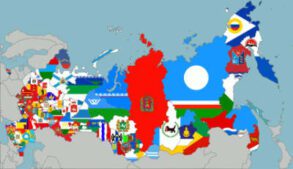
One of the most important structural developments emerging from the Forum was the growing role of Russia’s regional governments in driving economic diplomacy. Rather than relying exclusively on agreements negotiated by federal ministries in Moscow and Bishkek, both countries are increasingly allowing governors, regional development agencies, municipalities and business associations to become the principal architects of bilateral investment.
On August 06, Kyrgyz President Sadyr Japarov met with the heads of Russia’s regions in Cholpon-Ata to discuss expanding interregional economic cooperation, boosting trade, and launching joint investment projects in industry, pharmaceuticals, and agricultural processing. He said the eighth Kyrgyz-Russian Economic Forum and the twelfth Kyrgyz-Russian Interregional Conference generated new bilateral initiatives and invited Russian partners to invest through Kyrgyzstan’s High Technology Park and Tamchy Special Financial Investment Territory. Russian governors highlighted ongoing cooperation in the agro-industrial sector, information technology, and tourism, emphasizing that stronger regional business ties would support long-term trade and investment growth.
This reflects a broader transformation in Russia’s external economic strategy, where regional governments are competing to attract foreign investment, expand exports, establish industrial partnerships and integrate local enterprises into Eurasian value chains. Throughout the three-day conference, regional administrations, chambers of commerce, universities and private companies conducted direct negotiations, bypassing much of the traditional state-to-state bureaucracy. The result was a series of practical cooperation agreements that brings Russian investment closer to the local level, where industrial projects are ultimately implemented.
Among the most notable outcomes were new cooperation agreements between Nizhny Novgorod Region and Jalal-Abad Region, Irkutsk Region and Osh Region, as well as partnership agreements linking the city of Nizhny Novgorod with Bishkek and establishing a sister-city relationship between Tokmok and Kara-Kul. These agreements cover industrial cooperation, investment promotion, education, municipal management, tourism and SME development, creating institutional channels through which businesses and regional authorities can cooperate long after the forum concludes.
These agreements also build directly upon the momentum created during SPIEF 2026, where Kyrgyzstan concluded 14 cooperation agreements with Sakha (Yakutia), Omsk Region, Kaliningrad Region, the Saint Petersburg Chamber of Commerce and Industry, the Russian Foreign Trade Academy, MGIMO University, the Higher School of Economics, Business Russia, and VEB.RF. Together, these partnerships now form an increasingly dense institutional network connecting Russian regions with Kyrgyz provinces, universities, financial institutions and industrial enterprises. The significance is not simply diplomatic continuity; it is the emergence of a decentralized economic architecture in which regional governments increasingly serve as platforms for investment, technology transfer and industrial cooperation.
Infrastructure, Logistics, Digital Connectivity, Industry and Finance Support a New Industrial Economy
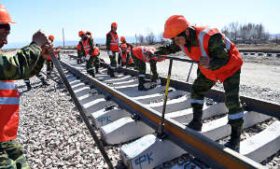
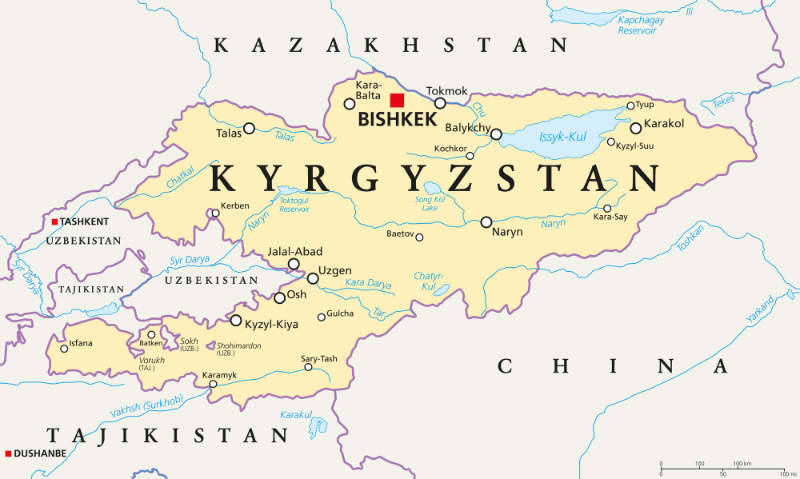
The second pillar of the forum focused on removing the structural constraints that have historically limited industrial growth. Approximately US$20 million will be invested in constructing modern logistics complexes designed to improve cargo handling, warehousing capacity and freight distribution across Eurasian transport corridors. An additional US$6 million has been allocated for advanced locomotive maintenance equipment and railway modernization, strengthening Kyrgyzstan’s rail infrastructure while reducing maintenance costs and improving freight reliability. It is important to note that rail development will link to the currently under-construction China-Kyrgyzstan-Uzbekistan (CKU) railway. This should be completed by 2030.
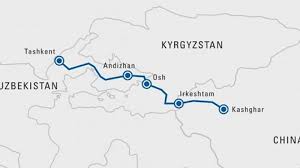
Russia’s rail connectivity with Kyrgyzstan runs via Kazakhstan, with direct routes between Bishkek and Moscow, as well as to other important Russian cities such as Kazan and Novosibirsk that lie en route. Russia also has rail connectivity with Uzbekistan, again via Kazakahstan.
The significance of this is two-fold – it creates additional rail corridors through to China and potentially positions Kyrgyzstan as an added value manufacturing base where Russian, Chinese and Central Asian sourced components can be processed together to make a finished product. With Kyrgyz worker salaries about 50% of comparable salaries in Russia, and most of Central Asia covered with suitable Free Trade Agreements, this is an economically feasible development that Kyrgyzstan should capitalize on.
Digital integration also featured prominently. The two countries agreed to establish a virtual mobile network operator (MVNO) with an investment of approximately US$4.2 million. Although relatively modest in financial terms, the project carries strategic significance by creating seamless mobile connectivity between Russia and Kyrgyzstan, reducing roaming costs, facilitating cross-border business operations and strengthening the digital infrastructure required for e-commerce, online financial services and the broader digital economy.
Supporting these projects is an equally important financial agreement. The Russian-Kyrgyz Development Fund and the Eurasian Development Bank agreed to expand a US$50 million credit facility, providing additional long-term financing for industrial enterprises, infrastructure construction and private-sector investment. Together with the additional US$1 billion capitalisation of the RKDF, these measures expand their ability to finance larger industrial projects under the long-term objective of creating 100 joint Kyrgyz-Russian production facilities by 2030.
Education and Human Capital Become Strategic Economic Assets

Over 10,000 students from Kyrgyzstan are studying in Russia. One of the less-publicised, but strategically important agreements is the US$88.9 million project to establish a new university in Kyrgyzstan. While modest compared with the renewable-energy investments, the initiative reflects a broader understanding shared by both governments that industrial development depends not only on infrastructure and finance but also on skilled engineers, technicians and researchers. Together with Russia’s ongoing construction of Russian-language schools, expansion of the Kyrgyz-Russian Slavic University, and wider educational cooperation, the agreement demonstrates that human-capital development is being integrated directly into the bilateral economic agenda. Rather than treating education as a separate humanitarian issue, Moscow and Bishkek increasingly view universities, technical training and scientific cooperation as essential components of long-term industrial competitiveness.
Kyrgyzstan Clarifies Russian Ruble – Som Exchange Restrictions

The National Bank of Kyrgyzstan commented on recent media reports that some commercial banks had stopped exchanging cash Russian rubles into Kyrgyz soms, explaining that the situation is linked to stricter controls by Russian banks when accepting cash rubles from foreign financial institutions. The regulator said similar difficulties have been observed in other regional countries, including Kazakhstan and Armenia.
The Bank noted that restrictions affect only cash ruble operations, while non-cash payments and money transfers continue normally. Kyrgyz commercial banks have adjusted tariffs and service conditions due to increased costs and operational risks, as they face limitations in sending cash rubles to Russian banks for correspondent account transactions. The bank stressed that it did not impose restrictions on cash ruble acceptance and did not instruct banks to suspend such operations, with pricing policies and commissions determined independently by financial institutions. The National Bank continues monitoring the foreign exchange market, while banks say conditions may change depending on market developments and payment system arrangements.
Russia, Kyrgyzstan Sustainable Agro-Industrial Development

Kyrgyzstan and Russia also agreed to deepen agricultural cooperation by expanding investment, food processing, agricultural trade, and the adoption of modern farming technologies. The discussions took place during a panel session of the eighth Kyrgyz-Russian Economic Forum, bringing together government officials, businesses, industry organizations, and research institutions from both countries. The two sides emphasized strengthening logistics infrastructure, veterinary and phytosanitary cooperation, and implementing joint investment projects to improve food security and increase the production of value-added agricultural products. Kyrgyz Deputy Minister Asylbek Satyvaldiev noted that closer partnership would support mutual agricultural trade, technology transfer, and sustainable agro-industrial development.
Agriculture remains a cornerstone of Kyrgyzstan’s economy, contributing significantly to employment and export revenues. Russia continues to be the leading market for Kyrgyz agricultural exports, including fruits, berries, dairy products, honey, and processed foods, while the Eurasian Economic Union (EAEU) has facilitated trade by harmonizing standards and reducing barriers. Beyond trade, bilateral cooperation has expanded into seed production, breeding, irrigation, agricultural machinery, and food processing. In 2025, agricultural trade between the two countries increased by 25%, with both governments identifying further opportunities to expand cooperation in fertilizers, veterinary products, agro-industrial technologies, and joint production projects to strengthen regional food security.
Kyrgyzstan’s Participation At SPIEF 2026 Pays Off

The Kyrgyz Republic participated for the first time with a National Pavilion at the St. Petersburg International Economic Forum (SPIEF 2026), held in June 2026, showcasing its investment, export, and economic potential. The pavilion presented national projects and opportunities in hydropower, agriculture, exports, tourism, and investment, including initiatives supported by the Russian-Kyrgyz Development Fund in industry, energy, and the agro-industrial sector.
It highlighted major projects such as the year-round mountain tourism cluster “Ala-Too Resort” and the Tamchy Special Financial and Investment Territory, designed to attract investment and create new economic growth centers. Kyrgyz enterprises, including JSC Uchkun and the Central Asian Security Printing House, also presented their capabilities in secure document production, banknotes, and security printing technologies. As a result of Kyrgyzstan’s participation in June’s SPIEF, a total of 14 agreements and memoranda were signed covering trade, investment, science, technology, education, and interregional cooperation. The agreements involved partnerships between Kyrgyz institutions and Russian organizations, including the Russian Foreign Trade Academy, Saint Petersburg Chamber of Commerce and Industry, MGIMO University, HSE University, Business Russia, and VEB.RF. The signed agreements strengthened cooperation in energy, industry, and education.
Other key deals included partnerships between JSC Chakan HPP and Rakurs Engineering LLC, JSC Electric Power Plants and JSC Elektroshchit Samara, as well as cooperation between the Russian-Kyrgyz Development Fund and leading Russian educational and business institutions to support innovation, research, and economic development.
For example, Kyrgyzstan and Russia’s Omsk Region signed a memorandum on trade and economic cooperation during the event. That agreement, signed by First Deputy Minister of Economy and Commerce of Kyrgyzstan Choro Seyitov and Omsk Region Minister of Agriculture, Food and Processing Industry Nikolai Drofa, focuses on expanding cooperation in agriculture, food processing, investment, trade, and joint projects, and strengthened international investment outreach and expanded economic cooperation with Russia. The signed agreements are expected to support long-term partnerships in agriculture, energy, tourism, technology, education, and industrial development.
Summary
The discussions held during the forum repeatedly returned to 2030. This timeline is important because it aligns with the long-term planning cycles of both governments and with broader Eurasian Economic Union integration strategies. For Russia, Kyrgyzstan occupies a strategic geographic position linking Siberia, Central Asia and western China. Stable industrial growth in Kyrgyzstan strengthens regional supply chains while creating new markets for Russian engineering, energy technology, financial services and digital infrastructure. For Kyrgyzstan, closer integration with Russia provides capital, industrial technology, export access and infrastructure financing that would be difficult to mobilize independently.
EFSD Managing Director Yaroslav Mandron said Kyrgyzstan remains one of Eurasia’s fastest-growing economies, recording an average annual GDP growth of 8.7% during 2021-2025, supported by sound macroeconomic management, strong business adaptability, and regional integration. The EFSD noted that Kyrgyzstan’s robust economic growth has created new opportunities for Russian companies to expand their presence in the Kyrgyz market, with deeper cooperation through 2030 expected in industrial development, logistics, digitalization, and investment.
The result is an increasingly complementary economic relationship. Russia supplies investment, technology, engineering expertise and finance. Kyrgyzstan offers industrial expansion opportunities, labour resources, logistics advantages and growing consumer demand. Taken together, these developments indicate that Russia and Kyrgyzstan are building more than a trading relationship. They are constructing a shared industrial ecosystem, one supported by infrastructure, finance, energy, education and regional cooperation. If the agreements signed at Issyk-Kul are implemented at the pace envisioned by both governments, the forum may ultimately be remembered not simply as another bilateral meeting, but as the moment when Russia–Kyrgyzstan economic relations shifted decisively from commercial exchange to long-term industrial integration.
This report was written by Ms. Begum, a reporter on Russia-Central Asia affairs for Russia’s Pivot To Asia. She may be reached at info@russiaspviottoasia.com