
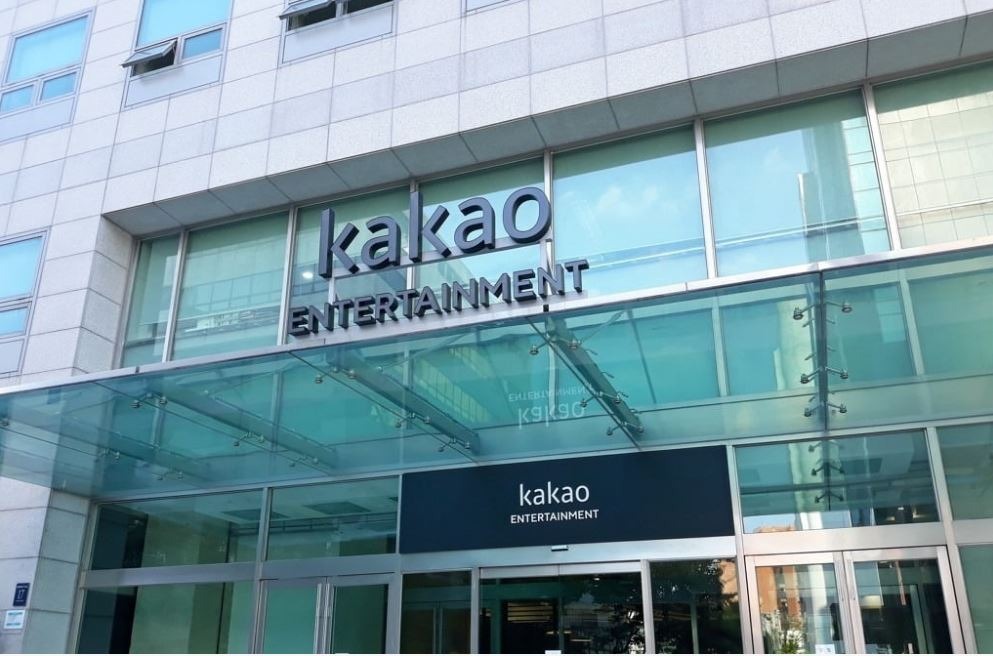
Global private equity firm Anchor Equity Partners is seeking to refinance the acquisition loan backed by its stake in South Korea’s Kakao Entertainment Corp., as rising interest rates increase its borrowing costs for the recapitalization amid a lack of exit options.
The Hong Kong-based buyout firm is currently in talks with several financial institutions, arranged by South Korea’s JB Woori Capital Co., over the terms and structure of the refinancing, according to investment banking industry sources in Seoul on Wednesday.
The loan is scheduled to mature at the end of this year.
They are reportedly weighing a structure where JB Woori Capital sets up a special purpose vehicle (SPV) to securitize the loan receivables, as securities firms have offered conservative interest rates that fell short of Anchor’s expectations, the sources said.
RECAPITALIZATION IN 2021
Anchor first tapped the debt markets in 2021, when it and Singapore’s sovereign wealth fund GIC Private Ltd. pledged a combined stake of 14.3% in Kakao Entertainment, then known as Kakao Page and Kakao M, for recapitalization.
Through the deal, the buyout firm repaid existing borrowings of 76 billion won ($51.7 million) and increased its total loan to 332 billion won.
Anchor used roughly the remaining proceeds of 256 billion won to distribute early capital returns to its investors through capital reductions and dividends.
While the strategy allowed Anchor to lock in early returns, it exposed the firm to sharp interest rate risks.
When the loan was refinanced via South Korea’s Hana Securities Co. in 2023, borrowing costs surged to nearly 7% from around 4% in 2021 as global central banks hiked interest rates.
The refinancing push highlights a structural problem.
Anchor holds a non-controlling common stake in Kakao Entertainment, a company that pays no dividends, and the stake generates zero cash flow. That caused Anchor’s fund alone to bear the annual interest payments.
Investment banking industry sources in Seoul suspected that Anchor may have used the fund’s remaining capital or additional contributions from its limited partners to cover borrowing costs of the loan.
This isn’t the first time a dividend recapitalization strategy has stung Anchor, which focused on investments in North Asia and South Korea. The firm previously faced similar headwinds after leveraging its minority stake in KakaoBank Corp. following a share price rally.
FEW EXIT OPTIONS AMID MOUNTING BORROWING COSTS
Kakao Entertainment has been considered one of Anchor’s stronger holdings, in contrast to portfolio companies such as Kurly Inc., whose valuations have declined.
Anchor invested a combined 334.8 won in Kakao Entertainment across two rounds in 2016 and 2020.
Following subsequent mergers, its stake was valued at over 1.3 trillion won, positioning the firm for a potential return of more than three times the original investment.
However, compounding interest expenses, which industry sources estimate at tens of millions of dollars a year, are rapidly eroding those projected gains.
Despite such a burden, Anchor has few clear exit pathways.
Following an aggressive mergers-and-acquisitions spree, Kakao Entertainment has suffered two consecutive years of revenue contraction alongside persistent net losses.
South Korea’s measures to curb dual listings have effectively blocked Kakao Entertainment’s path to an initial public offering (IPO).
Jongwoo Cheon edited this article.