
KEY POINTS
- Nigeria emerged as Africa’s top destination for equity investment in the first half, even as Egypt led total startup funding on the continent.
- Investors are increasingly favoring larger, more mature startups, while early-stage dealmaking below $1 million remains under pressure.
- Egypt continues to benefit from a dense local ecosystem of founders, angels and venture capital firms, while activity is also broadening into markets such as Tanzania and Morocco.
- Africa The Big Deal expects total startup funding in 2026 to come in slightly above 2025 levels, with debt financing also set to pick up in the second half.
Nigeria entered the second half of 2026 as Africa’s leading destination for equity investment, as venture capital investors continued to favor bigger, later-stage startups even while Egypt retained the top spot for overall funding in the first six months of the year.
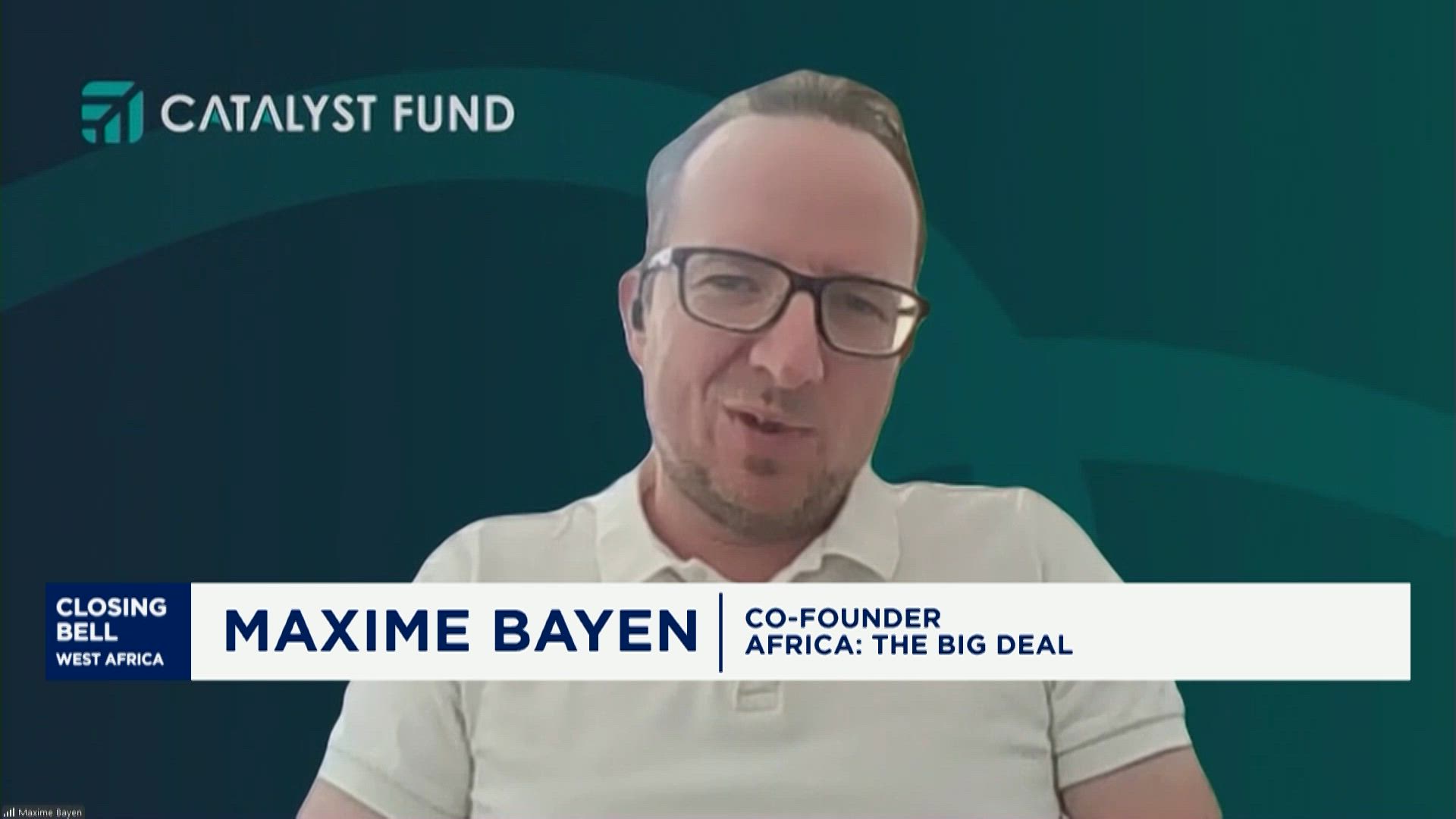
Speaking to CNBC Africa, Africa The Big Deal co-founder Maxime Bayen said the continent’s venture landscape had moved into a “quality over quantity” phase, but argued that Africa’s funding story does not materially weaken when large outlier deals are stripped out.
Bayen said megadeals worth more than $100 million now account for an outsized share of capital deployed across the ecosystem, making headline funding totals more sensitive to a handful of transactions. Still, he said activity remained broad-based, with multiple startup ecosystems across the continent continuing to expand.
“I wouldn’t say it’s weaker,” Bayen said. “It’s shifted, because of the size of the ecosystem when you have very large deals, it has a big impact.”
That shift, he said, reflects a more cautious market backdrop after the hotter funding conditions of 2021 and 2022. Investors are taking less risk, backing slightly more mature companies and showing less appetite for the smallest early-stage rounds, particularly those below $1 million.
At the same time, Bayen said some larger rounds are still attracting strong demand and are often oversubscribed, underscoring that capital remains available for companies that can demonstrate scale and traction. He described the trend as a natural market correction rather than a collapse in investor confidence.
The change in capital allocation also points to a maturing startup base in some African markets. Bayen said the ecosystem needs more companies to follow the path of earlier breakout names such as Paystack, with a broader pipeline of businesses reaching the stage where they can raise significantly larger rounds.
Egypt’s performance in the first half also stood out, with the country again ranking among the continent’s strongest fundraising markets. Bayen said Egypt’s rise has been building for several years and reflects the depth of its domestic startup ecosystem.
Since Africa The Big Deal began tracking the market in 2019, Egypt has moved from being outside the traditional “big three” of Nigeria, Kenya and South Africa to becoming a regular leader among Africa’s largest startup hubs. Bayen said the country’s advantage lies in its ability to support companies from idea stage through pre-seed, seed and into the early Series A stage using mostly local talent and capital.
He pointed to Egypt’s large universities, founder pipeline, active angel investor community and deep local venture capital network as key structural supports. That mix, he said, is relatively unique on the continent and gives Egypt a strong foundation for continued deal flow.
“We expect that trend to continue for sure,” Bayen said, referring to the high level of pre-seed activity seen in Egypt over the past one to two years.
Elsewhere in the so-called Big Four, the picture has been more uneven. Kenya and South Africa have both seen softer funding momentum, raising fresh questions about whether Africa’s venture map is being redrawn.
Bayen cautioned against reading too much into shifting league-table positions over a single half-year, arguing that Africa’s startup ecosystem remains young and can be heavily influenced by one or two major fundraising announcements. A large round from a major player in Kenya or another leading market could quickly alter the rankings in the second half, he said.
What concerns him more is the decline in the number of startups securing rounds above $100,000 across most markets, with Nigeria a notable exception. That trend suggests that while total capital raised could still improve this year, the pipeline of early-stage companies needed to sustain the next generation of scaleups may be thinning.
“That’s definitely a bit of a concern,” Bayen said, adding that underinvestment at the earliest stages risks putting the sector’s future growth at stake.
The weakness in smaller rounds comes as some investors and specialist funds continue trying to fill the gap. Bayen said Catalyst Fund, where he is also involved, remains focused on writing early checks, particularly into climate tech startups.
Beyond the Big Four, Bayen said investor diversification into second-tier markets is already well underway and has been building for roughly one to two years. He cited Morocco, Tanzania, Tunisia, Uganda and Ghana among the countries seeing faster activity growth, even if their total funding volumes remain well below those of the more mature startup hubs.
Those markets still face the structural challenge of competing against ecosystems that have a first-mover advantage and a larger base of companies already at Series A, Series B and later stages. That means percentage growth may be faster in countries such as Tanzania or Morocco, but the absolute dollar gap with the largest markets is unlikely to close quickly.
Even so, Bayen said both countries could be worth watching in the second half. He said Tanzania is seeing growing momentum, especially in climate tech fields such as agriculture, electric mobility and energy, while Morocco combines strong entrepreneurial talent with a proactive regulatory environment aimed at encouraging more startup investment.
Looking ahead, Bayen said he expects broad continuity in the second half, with the Big Four still leading African fundraising and total startup funding in 2026 likely to finish slightly above 2025 levels. He also said the market should see more large deals disclosed in the coming weeks and months.
A further shift he expects is a pickup in debt financing. While equity funding was relatively stronger in the first half, partly helped by larger transactions, Bayen said debt investment should grow over the coming months as founders seek a wider mix of capital sources.
Still, he pushed back against the idea that startups should abandon venture capital. Bayen said several funds have reached final or second closes in recent months, leaving meaningful dry powder available for deployable investments across the continent.
For founders facing longer fundraising cycles and more demanding due diligence, Bayen’s advice was to stay patient, remain resilient and focus on core business fundamentals. He said the market has moved away from the founder-friendly conditions seen two or three years ago, meaning entrepreneurs now need to bootstrap for longer and show stronger traction before securing even initial rounds.
His message to founders was to prioritize unit economics from the earliest stages and sharpen their differentiation, particularly as artificial intelligence makes software development more commoditized.
“Focus on your unit economics,” Bayen said. “Make sure that from the early days your model makes sense on an economic front so that investors can join with already existing traction.”
With investors becoming more selective and capital increasingly concentrated in proven operators, the second half is likely to test whether Africa’s startup ecosystem can keep producing enough early-stage winners to support its next wave of breakout companies.