
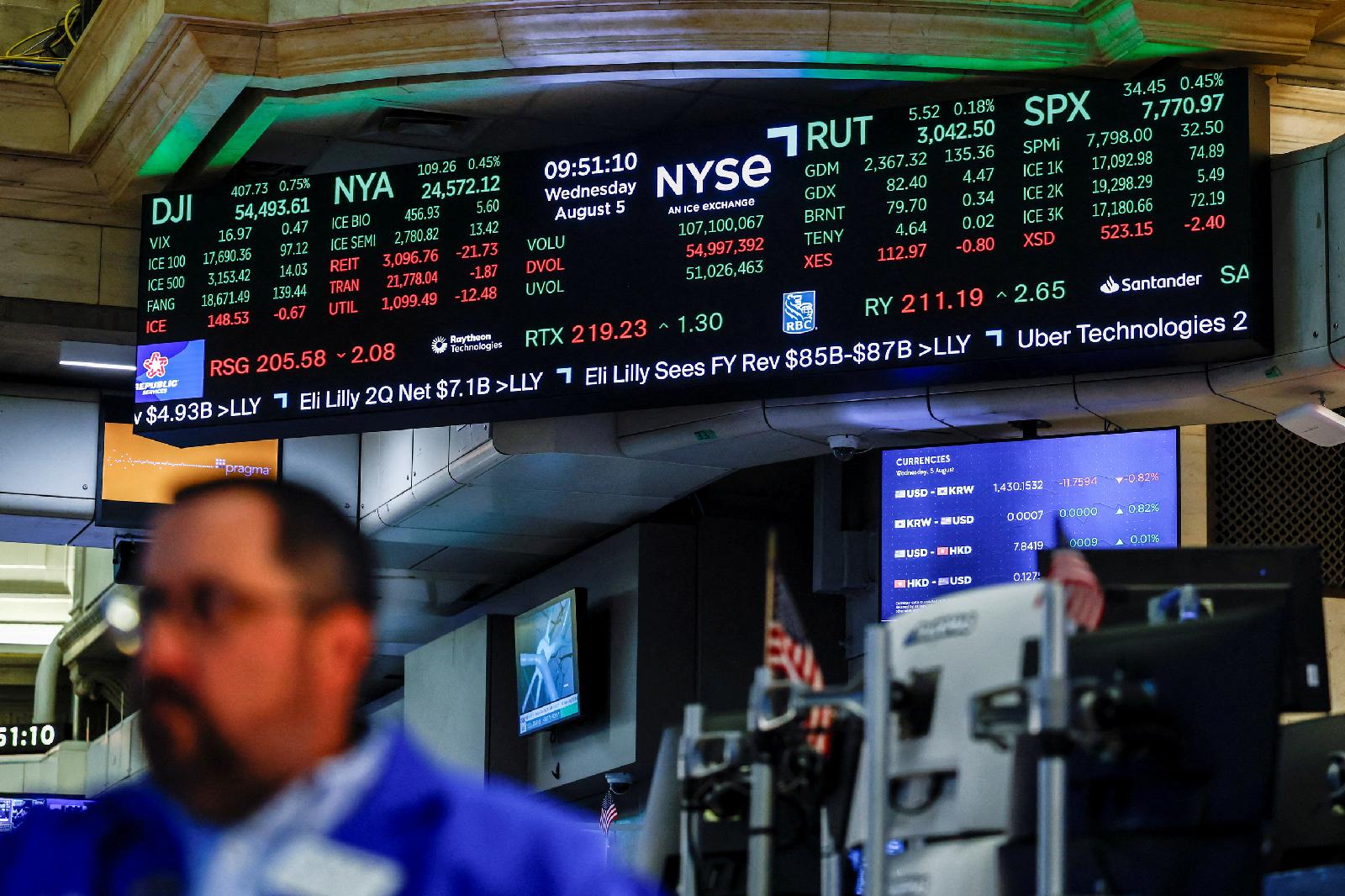
7 out of 10 U.S. large-cap active funds poor performance, worse than market benchmarks, failed to get on AI Rally due to management regulations and principles
Experts say, “Stocks are ETFs and bonds are funds.”

The Wall Street Journal (WSJ) reported on the 15th (local time) that the performance of large U.S. stock active funds has been sluggish, falling below the market benchmark index.
Only 27% of U.S. large-cap active funds outperformed market benchmarks in the past year through June 30, according to data from financial information firm Morningstar that analyzed returns after deducting fees. In other words, 7 out of 10 active funds performed worse than market benchmarks. The situation is worse if the time series is increased with 10-year long-term performance. Only 13% of large-cap active funds have beaten the benchmark over the past decade.
Major asset managers on Wall Street have emphasized that the selection of stocks has become important as the liquidity market from low interest rates has ended and the AI outbreak has begun. In fact, the “stock market variance,” which represents the gap in returns between individual stocks within the same index, soared to the highest level in decades in the U.S. stock market this year. Theoretically, if a fund manager selects “winning stocks,” conditions have been prepared to yield higher returns than index funds.
The problem is that the S&P 500 and Nasdaq 100 indexes are composed of a market capitalization weighted method. The stock price of a small number of big tech companies with large market capitalization has risen significantly in recent years, along with the return on index funds. According to Dow Jones Market data, the top 10 companies in the S&P 500 account for more than 40%, the highest concentration since the 1960s.
However, due to management regulations and distributed investment principles, it is difficult for active managers to concentrate their portfolios on specific tech stocks. As a result, it has not been able to keep up with the ‘big tech market’ that has continued in recent years. “That level of extreme concentration is a risk that most portfolios cannot afford,” said Holly Framstead, head of product at Capital Group.
As a result, investors’ funds continue to move away from high-paying active funds to passive exchange-traded funds (ETFs), which can save taxes and have low fees. Index-following passive funds, which caught up with the size of active funds in 2020, have grown to double the size of active funds now, according to the American Association of Investment Companies (ICI). Low-cost passive ETFs are expected to surpass $1 trillion in annual net inflows for the first time this year.
However, unlike the stock type, bond-type active funds are doing well. According to Morningstar, the ratio of medium-term bond funds, which account for the largest portion of active bond bundles, exceeded the benchmark for a year, reaching 66%. In addition, the majority of funds exceeded the benchmark for the third consecutive year.
Matthew Bartolini, head of research in the Americas at State Street Global Advisors, advised, “It is a smart strategy to secure the market return (beta) of the stock market as an ETF with low-cost and tax-saving benefits, and to allocate active funds seeking excess profits to bond markets with more opportunities.”